

The Best Type Of Ground Beef For Meatloaf That Is Less Greasy But Doesn't Dry Out
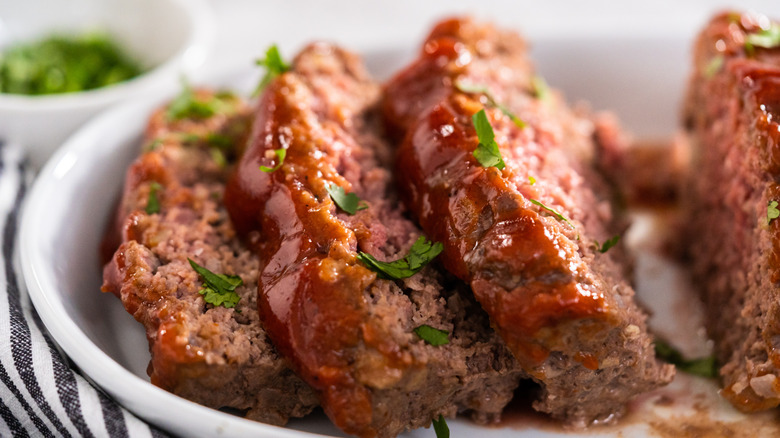
Every meatloaf lover has some opinions about what a goes into a perfect meatloaf. Bacon-wrapped or brushed with ketchup? Cooked in the oven or on the stovetop? No matter how you mix and slice it, there's one thing everybody can agree on: A great meatloaf shouldn't be dry or greasy. Managing moisture starts with the ground beef you choose. Cookbook author CookedByJess, the passionate cook behind CookedByJess.com, knows exactly what you should reach for.
"I would go with 80:20 ground beef for meatloaf," Jess says. Lucky for shoppers, 80/20 blends are the most common option at a butcher shop. Think of it like a burger. "You want it to still be nice and juicy when you bite into it, and meatloaf is pretty much the same idea," she continues. "That 20% fat gives you a really good balance without making everything too greasy."
The right amount of fat plays an important role in how your meatloaf looks — and tastes — when it comes out of the oven. "The fat is actually really important because it helps with moisture, flavor, and even browning," Jess says. "As the meatloaf cooks, some of that fat renders and helps keep the meat juicy and tender. It also adds a lot of flavor and helps you get that nice browning on the outside." She notes that a leaner blend, like 93/7, will dry out in the oven, while a high-fat blend like 70/30 will render too much and leave you with a greasy meatloaf in a pool of fat.
Other tips to keep meatloaf moist but not greasy
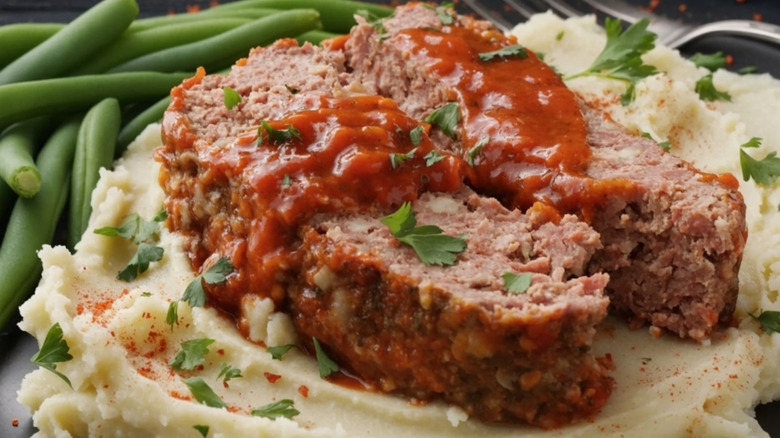
Ground beef isn't the only ingredient in a meatloaf, and it isn't the only thing determining if your meatloaf is dry, greasy, or just right. "[I would] soak the breadcrumbs in equal parts milk and beef broth to create a paste called panade," Jess says. "The breadcrumbs are going to soak up that liquid and help keep the meatloaf moist while it cooks." Milk is a classic meatloaf ingredient, but what about that beef broth? "I like using both because the milk adds richness and helps with that softer, tender texture, while the beef broth adds even more beefy, savory flavor," she adds. "So you're adding moisture without having to add a bunch of extra fat."
How you assemble and bake your meatloaf will also impact the final result. "I ... wouldn't overmix the meat. Once everything is combined, leave it alone," Jess directs. Overmixing is a major meatloaf mistake that leads to dry results. "Working the meat too much can give you a dense, tight, almost rubbery texture instead of a tender meatloaf."
Be sure to follow that instruction and move the oven rack in the middle before you preheat. This gives it time to cook all the way through, while allowing some browning. "If it's too close to the top of the oven," Jess explains, "the top can brown way too fast while the inside is still trying to cook." Now go preheat your oven, it's meatloaf time.