

The Most Common Type Of Ground Beef Found At Butcher Shops
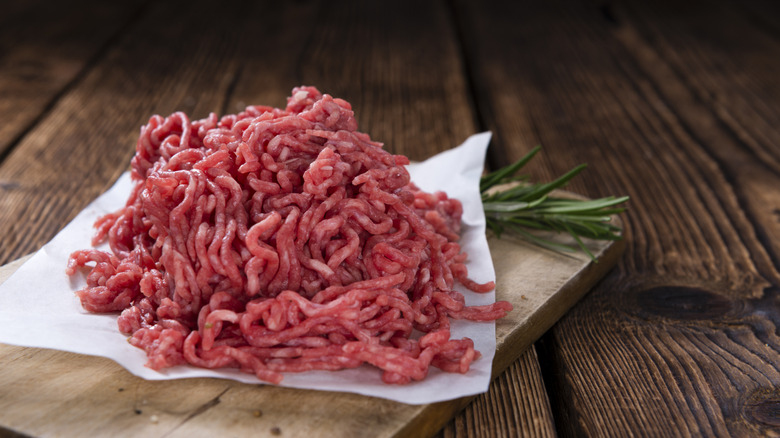
Back before the world had giant supermarkets and international chains, butcher shops were an essential part of the community. The owners often knew customers by name and people planned their meals according to what was available that day. Nowadays, we tend to do all of our shopping in one place but those who still venture to butcher shops are always in for a treat. Not only will you get a higher quality product, but if you opt for ground meat, it will often be minced freshly on site. The one issue is the fat ratio won't typically be printed on the label, so you'll have to ask. But in general, the ground beef from most butcher shops is an 80/20 chuck mix.
The 80/20 blend, which is made up of 80% lean meat and 20% fat, is considered the industry standard for cooking. It has just enough fat to add flavor and protect the moisture in the beef without being too calorific or over the top. It's the most versatile choice and often the preferred blend for making perfect burgers, juicy tacos, and casseroles.
While a 90/10 ratio might be better for those watching their fat intake, leaner blends tend to taste less interesting and often lead to a drier product. Fat renders during cooking and bastes the meat, which slows evaporation. Without enough fat, moisture escapes, leading to a tougher texture and shrinkage.
What cut does ground beef come from?
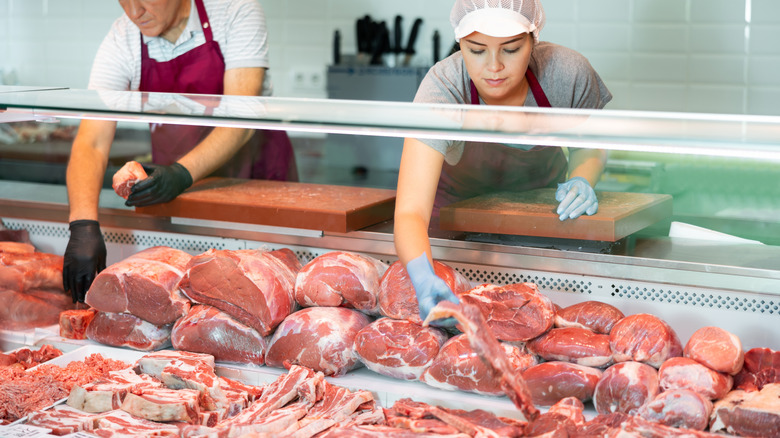
Butchers typically grind whatever is left on the chuck (neck and shoulder) after cutting roasts and steaks from it. This section of the cow has a lot of flavor but can be slightly tougher, which makes it perfect for ground beef. The trimmings from other areas of the cow are also sometimes added, which provides even more flavor. The USDA allows ground beef to be made from different cuts, so don't worry about the mixing.
A few things to consider when buying ground beef: Ask your butcher exactly where your ground beef came from and whether the meat is single source. Many butchers will be able to tell you how the cattle were raised as well. But the most important thing is to look for that 80/20 marker, especially if you're trying to make burgers, meatballs, or meatloaf. But some butchers may even grind a certain cut if you have a preference.
A 90/10 blend is fine for any dish with sauce, like a classic ragù alla Bolognese, or anything that is slow cooked or scrambled. However, burgers need extra fat so they remain juicy and don't shrink. The same goes for different types of meatballs or anything pan fried or grilled. If you're ever in doubt, just ask questions your first time at a butcher shop. They're still there for a reason.