

The Best Pans For The Perfect Fried Egg, According To An Expert
We may receive a commission on purchases made from links.
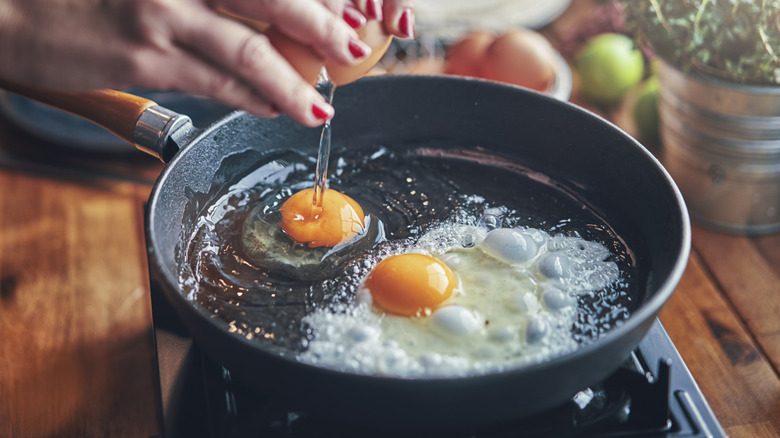
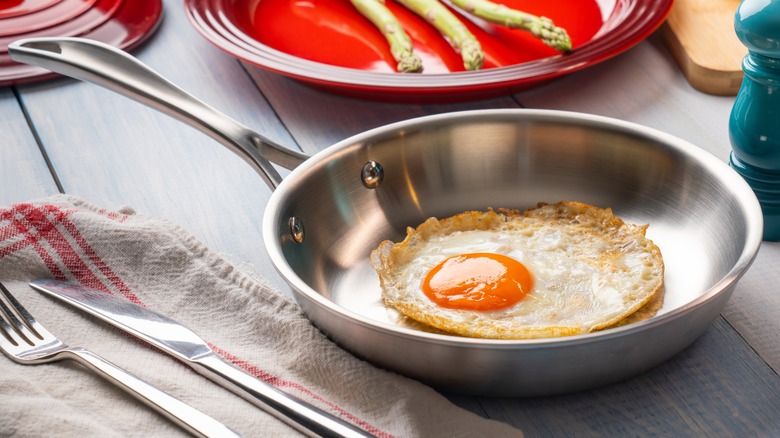
There's an art to making the perfect fried egg. The kind where the edges are slightly crispy, the yolk is warm and runny, and the whites are evenly set without being too rubbery. Many people think ruining a fried egg comes down to a lack of skill, and it very well might, but another big part of the problem comes down to what kind of pan you're using. We spoke to Lisa Steele, a fifth-generation chicken-keeper, creator of the popular FreshEggsDaily blog, and author of the new cookbook, "In Season: 125+ Sweet and Savory Recipes Celebrating Simple, Fresh Ingredients," who told us that stainless steel or carbon steel pans are best for whipping up a perfect fried egg.
"I personally love a stainless steel or carbon steel pan," she said, adding that she "find[s] them lightweight enough to easily lift or tilt with one hand, and also easy to clean without needing lots of TLC like other types of pans." While stainless steel pans are a familiar kitchen staple, carbon steel pans are also wildly popular. Both materials are known for being durable and heat-conductive, making them ideal for frying eggs. "I typically use a fairly shallow frying pan with sloped sides because that makes it easier to remove the egg or flip it if I'm going for over easy," Steele says.
Pans to avoid and other tips for the perfect fried egg
While Lisa Steele can recommend the best pans for a perfect fried egg, she admits that her opinion on which ones to avoid is "a very unpopular opinion." There are plenty of other recipes for your cast-iron pan, but Steele doesn't believe fried eggs should be one of them. "A cast iron skillet is very heavy and clumsy to tilt if you're basting your egg or flipping it," she says. Steele also doesn't like to use nonstick pans, saying they tend to be "so fussy — they scratch or chip so easily, not to mention the chemicals some brands use in their production."
Once you've got the right pan, making a perfect fried egg should be easy, but there are still opportunities to go wrong. "It's really important to be sure the pan is hot before adding the egg," Steele says. To keep the egg from sticking, she advises you to "turn on the burner to medium-low, then add the butter (or oil)," and only when "the butter has melted (or the oil is shimmering), then add the egg." You can also upgrade your fried egg by adding a lid to your pan. For easier cleanup, Steele says she'll "add water to the pan as soon as I've plated the egg and let that sit on the stove (with the burner off) while I'm eating. That way, when I'm ready to wash dishes, any egg that might have stuck has loosened."