

For Diner-Style Fried Eggs, Follow This 2-Minute Pan Tip
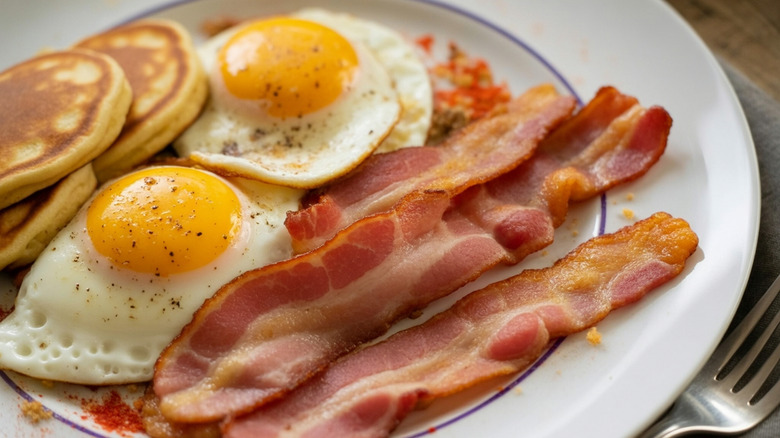
Remember those fried eggs you had at that roadside diner all those years ago? Maybe next to a short stack and crispy strips of bacon? Maybe you've been chasing that same flavor and texture for years in your own kitchen without luck. The whites are fully set all the way through — no translucent, wobbly patches anywhere — and the yolk stays soft and almost jammy in the center. The edges go golden and a little lacy. As it turns out, the secret isn't a commercial flat-top seasoned with nostalgia: it's a lid. Literally.
Next time you fry eggs, once the fat is hot and the edges start going white, put a lid on the pan. Give it a minute, then kill the heat — just don't lift the lid. Let the eggs sit for another minute in that trapped steam, and when you finally peek underneath, the whites will be fully set while the yolk is going to have a soft, barely-set texture of classic diner eggs.
If you wonder about the science, it's quite simple: egg whites need significantly more heat to set compared to yolks. When you fry eggs without a lid, the direct heat from below tends to overcook the bottom long before the top has a chance to catch up. A lid fixes that by trapping steam inside the pan, which heats the egg from both directions at once — so the whites fully set while the yolk stays soft.
There are plenty of great ways to upgrade fried eggs
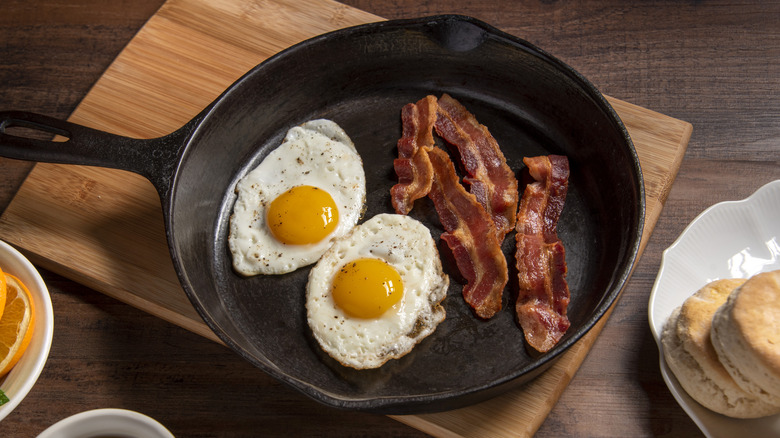
Once you have the basic technique locked in, there's a lot of room to make it even better. Start with the fat. Butter is classic, but it has a low smoke point — a hot pan can turn it bitter before the eggs even go in. A pour of neutral oil gives you more much more control over the heat. Better yet, if you're thinking of pairing the eggs with bacon or ham, cook them first before frying your eggs in what's left — pork drippings bring a smokiness to the whites that blow butter out of the water.
The pan also matters more than you'd think. A well-seasoned cast iron skillet holds heat steadily and gives the eggs a more assertive sear on the bottom, which plays well against a soft center. The most important rule, regardless of pan type, is to let it fully preheat before anything goes in — eggs hit cold fat and they'll steam instead of sear, which is how you end up with rubbery whites.
If you're after a breakfast sandwich, add a slice of American cheese directly on top of each egg right before the lid goes on. It melts completely in that same steam window without any extra effort. Stack it on a toasted English muffin with some crispy bacon, and you've got a breakfast sandwich that puts most fast food joints and diners to shame — without having to leave the house.