

Is There Really A Healthiest Cooking Oil?
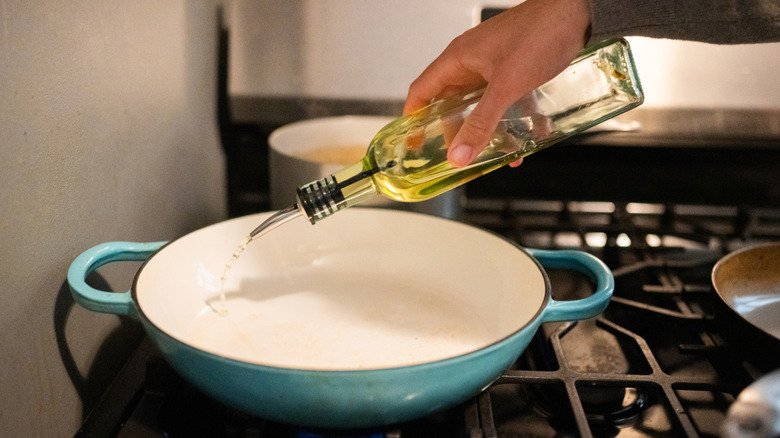
There's no shortage of unusual cooking oils available in grocery stores today, from hazelnut oil to argan oil to macadamia nut oil. But when it comes to which oil is the healthiest, we turned to Kelsey Kunik, the registered dietitian behind Graciously Nourished, to get all the facts. "While most plant-based cooking oils have nutritional benefits," she says, "the oil with the most robust research supporting health benefits is olive oil, specifically extra virgin olive oil (EVOO)."
We've long touted the nutritional benefits of extra virgin olive oil, and it's certainly been the cooking fat of choice among both chefs and home cooks for generations — and there's hard science behind its heart-healthy claims. "Olive oil is a rich source of monounsaturated fats, which are associated with improvements in heart health," Kunik says, "but the real magic comes from the high amounts of polyphenols found in unrefined extra virgin olive oil, which help protect the body from oxidative stress." Unrefined olive oil is extracted using mechanical or physical means rather than chemical refining. Because it undergoes less processing, more of the natural flavors, antioxidants, and other beneficial compounds of the olives themselves are retained.
However, you don't want EVOO to replace every oil in your kitchen, as its smoke point is a bit lower than other oils. "Because the polyphenol content of EVOO will start to degrade when cooked over high heat, I recommend using it when cooking at moderate heat," Kunik adds, "like light sautéing on the stove, or as a dressing or finishing oil to get the most value."
Premium extra virgin olive oil offers potentially more health benefits
Of course, you don't have to give up nutritional benefits if you want to sear or stir-fry, either. "If you're cooking at high heat, or want a more neutral flavor, avocado oil is a good option," Kunik notes. "It's rich in monounsaturated fats, antioxidants, and vitamin E, all of which offer anti-inflammatory and heart-protecting benefits." That said, this may require you to be a bit savvier when shopping.
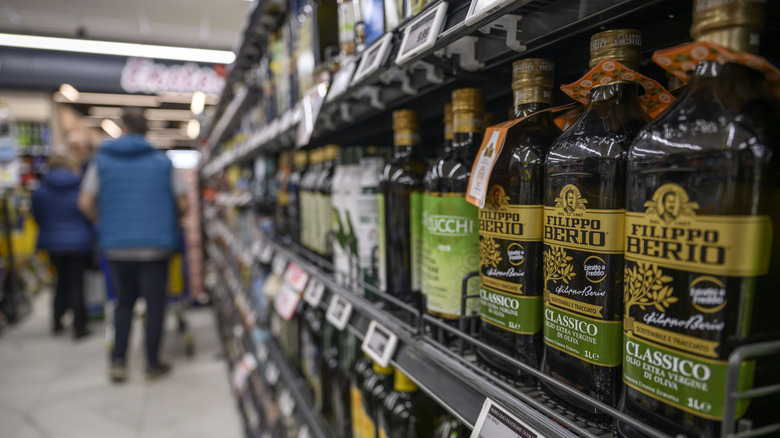
"Look for an oil in a dark bottle, which limits how much light can reach the oil, and in a size you'll be able to use within a few months," the expert suggests. Light, heat, and oxygen gradually degrade olive oils' flavor and antioxidants, so don't be skimpy and save it only for special occasions. There are also good reasons for why spending more on high-quality olive oil is worth it. Premium olive oil costs more because it usually involves earlier harvesting, careful extraction, and stricter quality controls. "Check the harvest date and best-by date and choose an oil that's been harvested or bottled as recently as possible," Kunik advises. "The benefits begin to degrade over time."
While single-origin olive oils are great, Kunik also points out that they're not the only option. "Blending oils can create a unique flavor and experience without impacting the quality or nutritional benefits," she adds, "as long as the oils were harvested and handled with care and packaged appropriately." What matters most is the oil's freshness, production methods, and whether it meets extra virgin standards.