

Neutral Cooking Oils: What They Are And How To Use Them
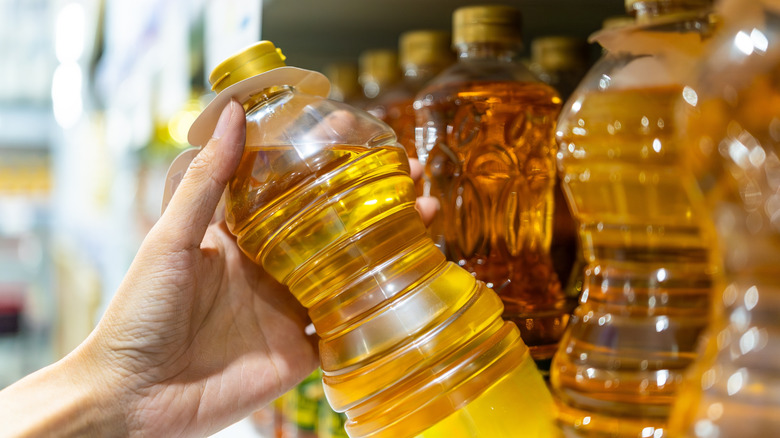
If you're someone who prefers to eat rather than cook, you may not think about oil much beyond knowing it's the hot, bubbly stuff that your onions rings come out of. Even if you know your way around the kitchen, you may not properly appreciate the distinctions between the different kinds of oil. Fortunately, Tasting Table spoke with Chef John Politte, founder and host of "It's Only Food," to get the exclusive low-down on what neutral cooking oils are and how to use them.
"Neutral cooking oils are oils that have very little aroma or taste," Politte explains, "and let other ingredients stand out in a recipe. A few examples are canola oil, sunflower oil, and vegetable oil." As for the benefits cooking with an neutral oil or the right instances in which a neutral cooking oil should be used, the chef offers some additional advice. "A neutral cooking oil provides the ability for other ingredients to stand out," Polittle explains. "It is good for baking, as it does not overpower the ingredients in cakes or muffins. It is also good for salad dressings and marinades."
On neutral oil's advantages in baking, we are in full agreement — there's a reason why canola oil is the easiest way to ensure perfectly moist fruitcake. While extra virgin olive oil may be prized for its high quality and rich, distinctive aroma and flavor, there are many dishes — particularly those with a more subtle flavor profile — which would not benefit from the assertive taste. These are the instances that make neutral cooking oil a more suitable substitute.
A high smoke point makes neutral oils excellent for deep-frying
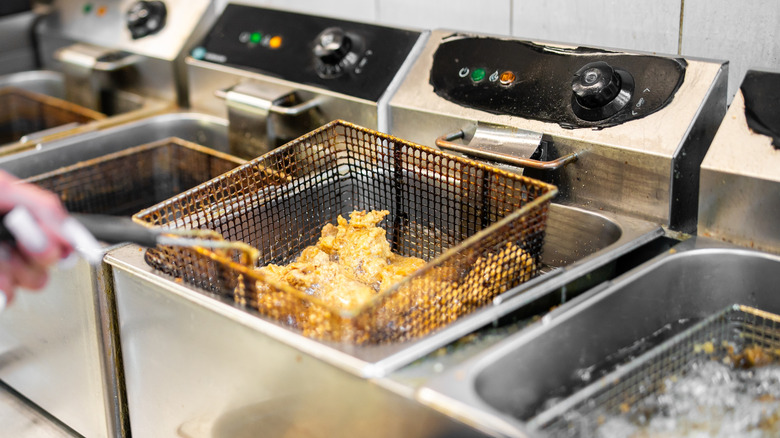
There is another advantage of cooking with neutral oil, one that is difficult to overestimate. "It has a high smoke point," Politte adds, "so it can be used for grilling, stir-frying, and deep-frying foods." If you are under the unfortunate misapprehension that the only difference between various kinds of oils is their flavor, you should consult a reliable guide to different oils' and fats' respective smoke points — you can start by reading up on which cooking oil has the highest smoke point.
If your oil begins to smoke while cooking, this is a warning sign that your oil has grown too hot. This can impart an unpleasant, acrid flavor to your food and release harmful byproducts (not to mention setting off your kitchen smoke alarm). As Politte points out, deep-frying is one of the areas where neutral cooking oils really come into their own, as a significant quantity of oil is necessary to immerse whatever you're frying. Yet, this large amount will not affect the flavor once it's finished. To take advantage of this, check out these 45 fried food recipes that bring comfort to the kitchen.
Beyond the temperature you plan on cooking at — for a range of 350 to 400 degrees Fahrenheit or higher, opt for an oil with a high smoke point — precisely which neutral cooking oil you choose is a matter of personal taste and possibly your own dietary needs. Whichever one you go for, just remember how vital a role it is likely to play in your day-to-day cooking.