

From '60s Darling To Rare Treasure: The Pink Pyrex Dish Collectors Dream Of Thrifting Themselves
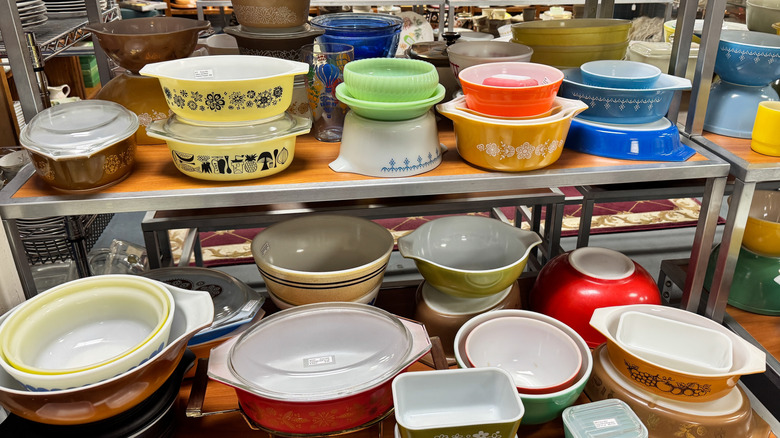
When we think of Pyrex, most of us think of glass measuring cups, bowls, and easy-to-use casserole dishes. If one thing is undeniable about the brand's identity, it's that it found its way into nearly every household. Even today, a century after the brand began conquering kitchens, it feels impossible to imagine a home without Pyrex.
Before the throes of minimalism took over our lives and kitchenware became sleek and sterile, kitchens were full of kitschy items, often designed to last a lifetime and be passed down from generation to generation. In 1945, Pyrex introduced color to its versatile repertoire through the Opal Ware line, including vibrant new hues and whimsical patterned pieces. Between the 1950s and 1970s, myriad collections emerged. Among them was the Gooseberry pattern, which debuted in 1957.
Characterized by delicate gooseberry vines and leaves, it became one of the first motifs, along with the sought-after Butterprint pattern, to appear on the Cinderella Bowls — a line of nesting bowls that combined a handle on one side with a matching spout on the other — making them exceptionally versatile. The Gooseberry line was sold primarily in sets featuring alternating pink and white dishes, although a less common black-and-yellow version was available for a shorter period. In 1966, the design was discontinued altogether. Its distinctive midcentury aesthetic, limited production run, and association with the Cinderella Bowl line helped make Pink Gooseberry dishes some of the most valuable pieces in the vintage Pyrex catalog.
How much is vintage Pyrex worth?
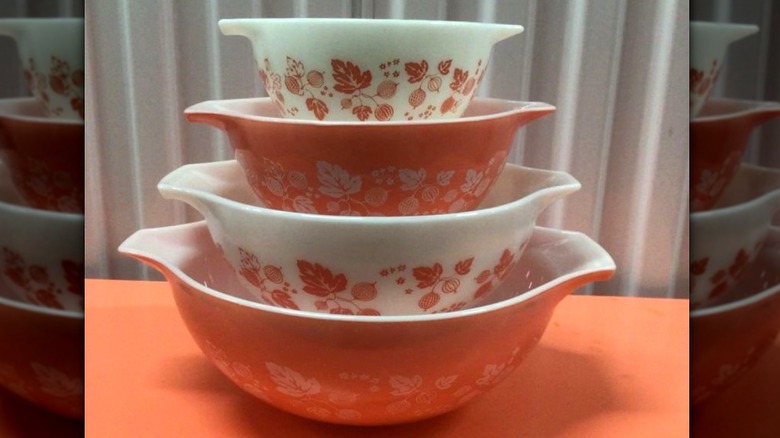
Thrifting and collecting colorful cookware has become popular in recent years, and vintage Pyrex remains highly coveted. Much of its appeal may be rooted in nostalgia, as these iconic dishes no longer produced tell the story of a company woven into America's collective memory. The brand remains deeply beloved by vintage enthusiasts and devoted fans, with entire websites and forums dedicated to its products and history. Because many sets were originally sold as everyday kitchenware, pieces still occasionally surface at flea markets and thrift stores. However, as more people become aware of their value, they are increasingly sold on platforms like eBay for considerable sums. Finding one in the wild can be a real stroke of luck.
Pink Gooseberry Cinderella sets can sell for anything from $200 to an eye-watering $1,000. Many other rare and valuable Pyrex pieces are also prized by collectors and can sell for similar prices. Value depends heavily on condition, of course. Complete, unused sets in their original packaging, or those with minimal fading, scratches or utensil marks fetch top dollar.
You can identify authentic vintage Pyrex bowls from the '50s by checking for the PYREX logo on the bottom. It should appear in all capital letters, indicating the piece was made from borosilicate glass. Newer products sold under the lowercase Pyrex branding are made from soda-lime glass. The vine pattern should appear flat and smooth, rather than embossed or raised.
Despite their humble beginnings as everyday cookware, Pink Gooseberry sets have become a thrifter's dream. Their nostalgic appeal has cemented their status as iconic treasures in the world of vintage kitchenware.