

French Vs Italian Bread: The Difference Between The Two Everyone Should Know
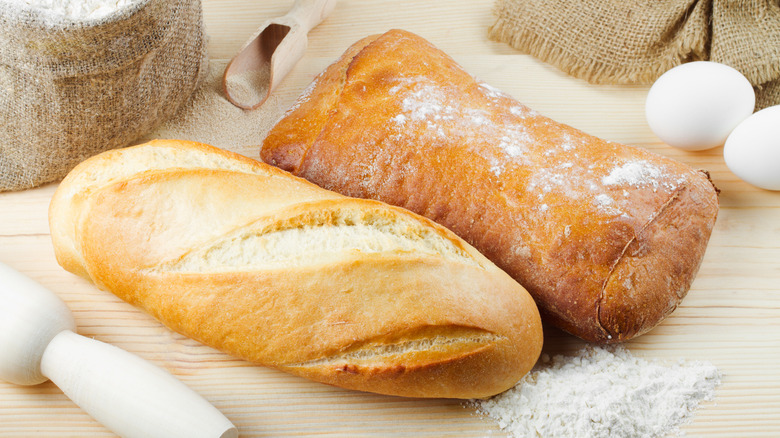
The world of bread is vast, but French and Italian style breads are two undeniable powerhouses. In their native countries, the differences between French and Italian breads are going to be hard to categorize — there is no one style of bread that characterizes each country. Sure, there is the baguette, but among all the different types of French bread, there is also brioche, fougasse, and more. Italian is maybe even more regional. There are dozens of different Italian breads throughout the country, ranging from the simple, crusty pane toscano to the rich, buttery focaccia. But in the U.S., things get a little more simplified, and the differences between the two mostly come down to texture and shape.
Lots of those regional bread styles are also available in the U.S. these days, but supermarkets also tend to have more generic loaves of "French" and "Italian" bread for you to buy that only bear a superficial resemblance to the real thing. Instead, they are American translations of the general idea of those cultures' breads. They can still be plenty good, and the simplification actually makes it a little easier to compare the two directly.
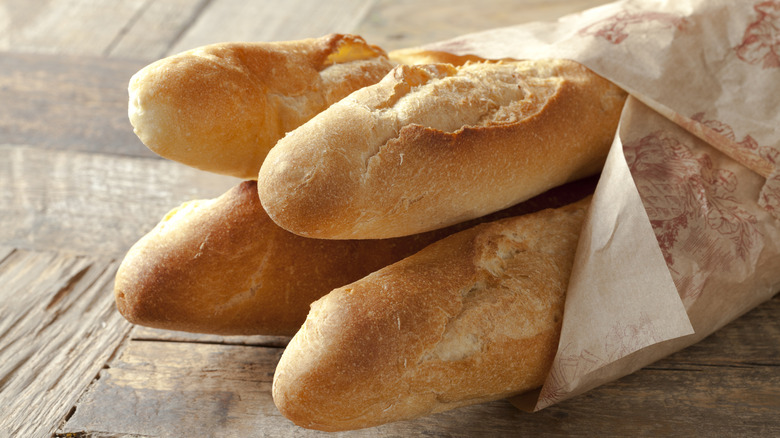
In general, a loaf labeled French bread in American grocery stores is using the baguette as its basis. It's going to be thinner and longer, with a crusty exterior and a light, airy, fluffy texture on the inside. It has a very simple flavor, as most are only made with the four basic ingredients of flour, water, salt, and yeast.
American-style French bread is more light and crusty than thicker Italian loaves
American-style Italian bread is a little less clear and more variable, but it tends to come in wider, thicker loaves. While the exterior can still be lightly crusty and chewy, it's not at baguette level. The interior of Italian bread loaves also tends to be thicker and more pillowy. The wider shape and thicker texture may be partially related to the fact that Italian bread in the U.S. developed alongside Italian cold cut sub sandwiches, and Italian loaves in American grocery stores are often still shaped in the style. Both Italian and French breads in the United States tend to be exclusively white breads as well. There isn't much of a flavor difference between the two, although Italian loaves are more likely to be enriched breads from added fats like olive oil.
The reality is that your standard "French bread" and "Italian bread" in the United States are both very similar to each other. They are both European styles of bread that developed to cater to the tastes of the U.S. market before the more regional and specific artisan styles we know today were popular. They are both softer white breads with slightly different shapes and lightly crusty exteriors. That also means they can be used pretty interchangeably in recipes, whether you are making a sandwich, garlic bread, or just dipping some in oil. If you find French and Italian breads that are truly unique and different from each other, they probably won't be labeled with those names, instead using their traditional names. So while it helps to know which loaf is best for your meal, you can't go wrong with either in most cases.