

Restaurant Menu Red Flags Chefs Notice First
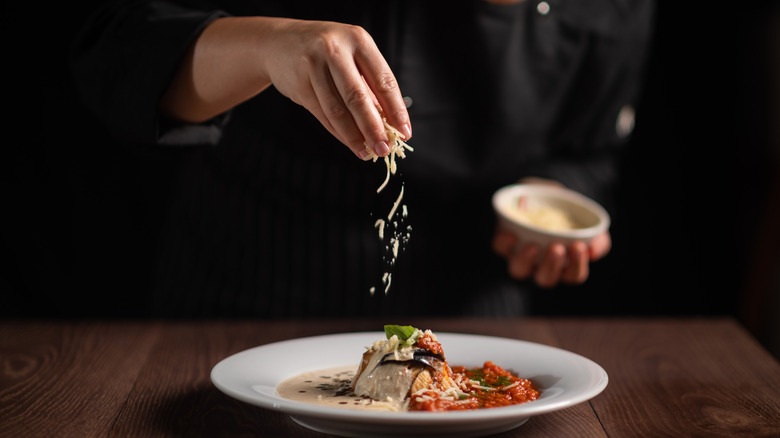
Whenever you go to a new restaurant, you are at the mercy of the menu. Online reviews and personal recommendations can only get you so far. At some point, you will simply have to read a list of dishes and decide what sounds tasty, which is easier said than done.
Menus vary greatly in their wording, formatting, and level of information. Sometimes, you'll get a short, simple menu with only brief descriptions for each item. Other times, you'll be handed a menu so large you have to rest it on the table to prevent your wrists from trembling under its weight. The number of offerings may be dizzying, and the descriptions may be so verbose that you struggle to remember them all. Both of these menus can reveal red flags about what's happening in the kitchen.
To help us understand what red flags to look out for in a restaurant menu, we spoke to five professionals who know this area intimately — Johanna Hellrigl, a James Beard Award Semifinalist and chef-owner of Ama in Washington, D.C.; Alex Reznik, a "Top Chef" and "Beat Bobby Flay" contestant and chef-owner of Hayworth Steakhouse in Henderson, Nevada; Zeynep Pınar Taşdemir, the chef-owner of the Michelin-starred Araka in Istanbul; Steve Ingber, the executive chef and owner of MileHighCook; and Ben Lee, the director of culinary services of Creative Food Solutions and former executive chef at A Voce Madison.
Selective language
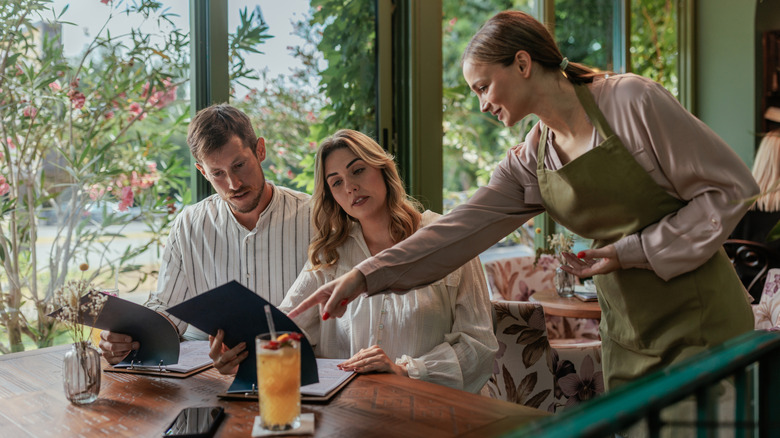
Sometimes the most conspicuous part of a menu is what isn't there rather than what is there. Chef Johanna Hellrigl, who is also a board member of the Environmental Working Group, says "one of the biggest red flags is when a restaurant uses one good decision to tell a much bigger story." Knowing where an ingredient comes from can tell you a lot about how it might taste, but it won't tell you anything about the rest of the ingredients in the dish, and it certainly won't tell you about the rest of the ingredients on the menu.
As Hellrigl says, restaurants are defined by thousands of choices, not just one easily marketed one. It's all well and good to champion the produce of a farm down the road, but if the majority of the other ingredients on the menu are traveling hundreds, if not thousands, of miles to get to your plate, that selectively detailed marketing about that single ingredient may be misleading. This rule of thumb isn't just limited to environmental concerns, either. If you see selective specificity on a menu for some items but not all, it's worth asking some follow-up questions to figure out what has been left out and why.
Too many options

American cuisine is famous for its scale, most notably in its portion sizes. But the chefs we spoke to pointed out that scale can be a major red flag when it comes to the menus themselves. "Unless I'm sitting in a diner at 2 a.m., I don't need six pages of choices," chef Alex Reznik says. "A smaller menu usually tells me the chef has confidence in what they're doing."
It's not about decision fatigue, though that is certainly a side effect of this phenomenon. An overly long menu suggests that the restaurant doesn't have a core identity. "When I read a menu, I want to know what the kitchen is trying to say," chef Zeynep Pınar Taşdemir says. "Not every restaurant needs to be built around one chef's vision. But every restaurant should make you feel something particular."
Most chefs have a niche that they have perfected, in the same way that many artists have a particular medium or a director has a particular cinematic style. If they're offering hundreds of ingredients and a world tour of cuisines, it suggests that they haven't found their culinary identity yet, and you're the guinea pig. "[The best menus] don't try to make everybody happy," says Reznik.
Repetition
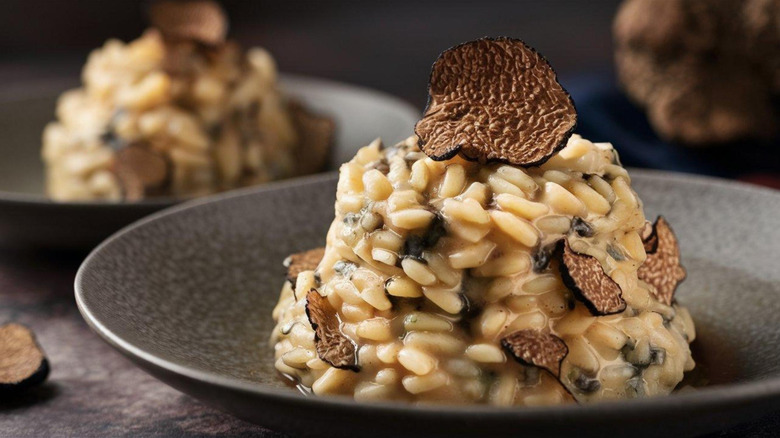
On the flip side of menus that are too broad are menus that are overly reliant on one thing. It doesn't have to be an ingredient. As Zeynep Pınar Taşdemir says, "Using something seasonal in different dishes, with different techniques, is smart. What bores me is the same idea over and over, not the same ingredient." A menu that lacks ideas is likely to yield an uninspiring meal.
On the other hand, for Alex Reznik, ingredient repetition can be a problem. Actually, the repetition of one particular ingredient is the problem. "Truffle oil everywhere? Immediate concern," he says. "If the fries, mac and cheese, pizza, and mashed potatoes all have truffle oil, you're not luxurious. You bought a big bottle of truffle oil."
Those of us who adore the pungent taste of truffles may enjoy a smattering of truffle oil on one dish, but when a restaurant uses it as if it were salt, it starts to look like a flavor crutch. Instead of using creativity and technique to create delicious food, the kitchen is just busting out one overwhelming flavor and calling it a day. Like repeating ideas, it's lazy and indicative of a lack of inspiration or artistic effort.
Dishes with too many elements
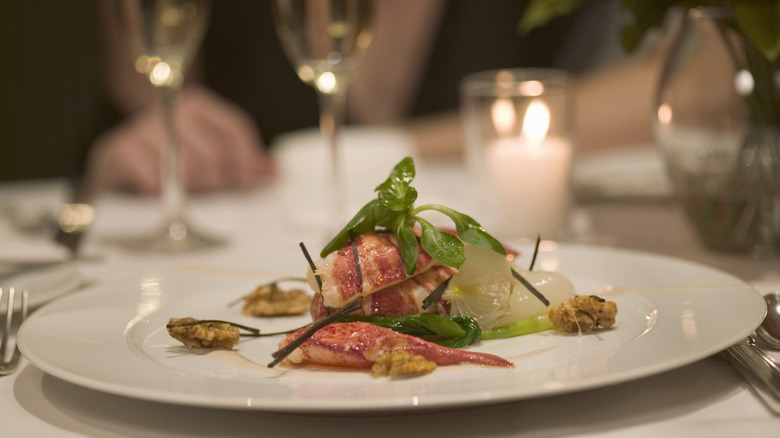
Some restaurant menus feature a dizzying number of ingredients and techniques. Even restaurants that only offer five or six dishes can crowd the page with all the elements that go into each one. This is a particular pet peeve of Alex Reznik, who likens this phenomenon to someone emptying an entire walk-in fridge onto a single plate. A dish that contains multiple sauces, a couple of purees, and the most popular of all gourmet flourishes — foam — is one that suggests, ironically, a key limitation in the chef. "At some point, editing is cooking," Reznik says. "Knowing what not to put on the plate is just as important as knowing what to put on it."
If you go to a restaurant and each item on the menu sounds as if it contains the contents of an entire culinary school syllabus, you may not like what comes out of the kitchen. You might like one or two elements on the plate, but chances are, they will be overshadowed by the other 10 elements competing for your attention.
Buzzwords

Buzzwords: We've all seen them on everything from cereal boxes to TV commercials, and they've become so pervasive in food marketing that they're almost a requirement. But what do they actually mean? When a menu promises you "clean" food, what is it actually promising? What are "natural ingredients?" And what does it mean for meat to be "responsibly sourced?" According to Johanna Hellrigl, the answer to all of those questions is not much at all. Such language, she explains, might sound impressive, but unless there is further elaboration, it is essentially meaningless. "A restaurant should be able to name the farm, cooperative, fishery, producer, region, or standard behind an ingredient," she says. Anything less than that is hot air.
Chef Steve Ingber has a similar perspective, noting that terms like "fresh," "artisanal," and "locally sourced" are not legally regulated. "If a menu says 'local' but can't say where, it isn't," he says.
For Alex Reznik, buzzwords aren't necessarily always vague. In fact, they can be the opposite: too wordy. For him, terms like "hand-crafted" and "chef-inspired" are just self-important filler. In his opinion, menus should just focus on the food itself and forget about the fancy terminology. "Calm down," he says. "It's dinner."
Out-of-season ingredients
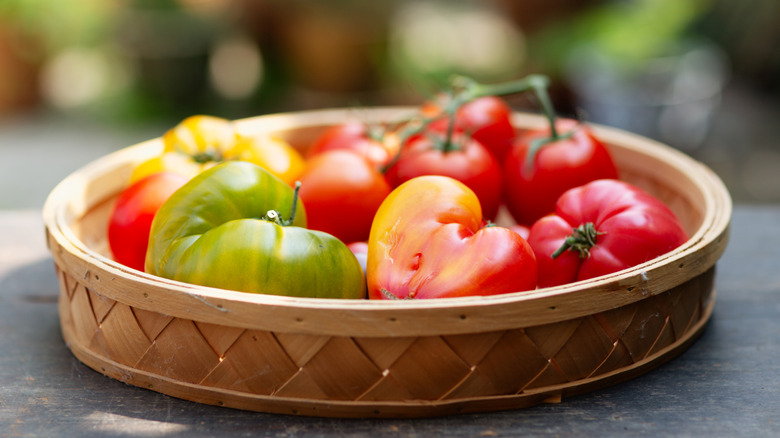
One buzzword that deserves its own special mention is "seasonal." While it is not a legally regulated term, it is more specific and verifiable than words like "artisanal" and "clean." Certain types of produce grow better during certain parts of the year. In the U.S., for example, corn and peaches are summer crops, while leeks and grapefruit are winter crops. The benefits of ordering seasonal menu items aren't just about reducing your carbon footprint due to lengthy transportation or encouraging sustainable farming; it's also a matter of flavor. Foods that are in season tend to taste better than those that are grown out of season. Restaurants know this, which is one of the reasons they often claim to change things seasonally. Unfortunately, their menus don't always back up their claims.
"I would be cautious when a restaurant presents itself as highly seasonal but offers the same highly perishable fruits, vegetables, or seafood in identical form all year," Johanna Hellrigl says. The caveat "in identical form" is important. You can serve winter produce in the summer if you've preserved it at its peak, such as by freezing or fermenting it, but if you see a menu that offers fresh peaches in December, it should raise alarm bells. Not only are they likely to be lacking in flavor and freshness, but the inclusion of them in the first place is a sign that the restaurant's sourcing might be subpar across the board.
'Health halo' terminology
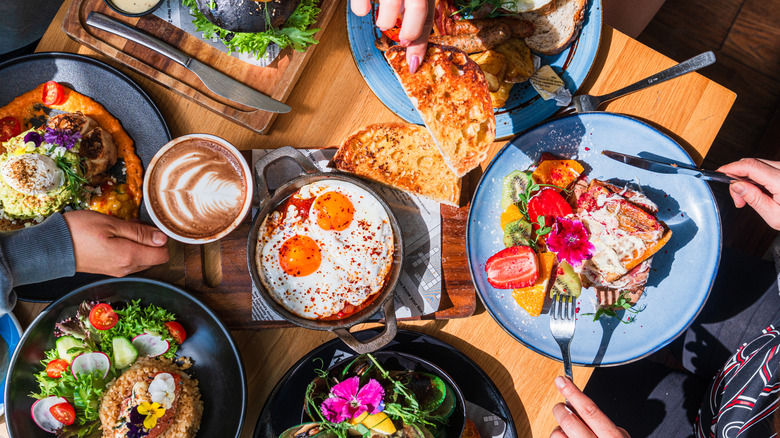
Some restaurants seem to be as focused on health and well-being as they are on flavor. In our diet-obsessed, image-conscious culture, it was probably inevitable that these establishments would fall back on punchy language and colorful, social media-friendly dishes to get their point across. However, as Johanna Hellrigl says, the vocabulary that restaurants put on their menus is important. "Be skeptical of health halo language such as 'clean,' 'guilt-free,' 'natural,' or 'wellness-forward,'" she says. "Health halos" are terms that make foods sound more nutritious than they actually are by using vague or selective language. As soon as you start looking out for them, you'll see them everywhere.
If you go to a restaurant with these health halos listed on the menu, Hellrigl suggests asking the staff to back it up with a deeper knowledge of the ingredients, nutritional context, and preparation that go into the food. If not, the restaurant's interest in health and nutrition probably ends with their marketing potential.
An over-reliance on adjectives

Restaurant menus come in all styles. Sometimes, they offer little more than bullet points of ingredients. Other times, it's as if they've been written by an out-of-work novelist who can't put down their thesaurus. Lengthy descriptions can be a menu red flag, per Steve Ingber.
"When a dish needs five adjectives, the food usually isn't doing the work," says Ingber. "Good ingredients don't need a paragraph. 'Roast chicken, lemon, thyme' tells me the chef is confident. 'Succulent farm-raised heritage chicken kissed with fragrant herbs' tells me the opposite." There's no harm in poetic language, of course, but food is for eating, not for reading, and if the wording is too flowery, it starts to look like overcompensation.
Zeynep Pınar Taşdemir echoes this sentiment and specifies certain recycled terms that send her running for the exit. "Things like 'just like mom used to make,' 'legendary,' 'our special sauce,' or 'traditional family recipe' — none of that tells me anything," she says. Usually, it's a thinly-veiled excuse to say what is actually in the dish.
No prices or inconsistent ones

Many of us find it difficult to talk about money. It's especially awkward to bring it up in a service industry setting, like a restaurant or a hair salon, when you don't want to sound stingy or disrespectful of the work. But according to Steve Ingber, you are not the problem when a restaurant decides not to list prices at all. In fact, it's a major red flag for him. "A menu that hides prices entirely is managing your psychology, not your dinner," he says. When you go to a restaurant and open the menu, you should be thinking about which dish you want, not trying to guess how much something costs.
Another pricing issue that Ingber mentions is inconsistency. If most of the entrees cost around $19 but one rogue entry demands $58, you should assume that it's "a vanity item the kitchen isn't set up to execute." Restaurants should stick to their lane, and if they don't, the results probably won't be worth the inflated price point.
Seafood at a non-seafood restaurant
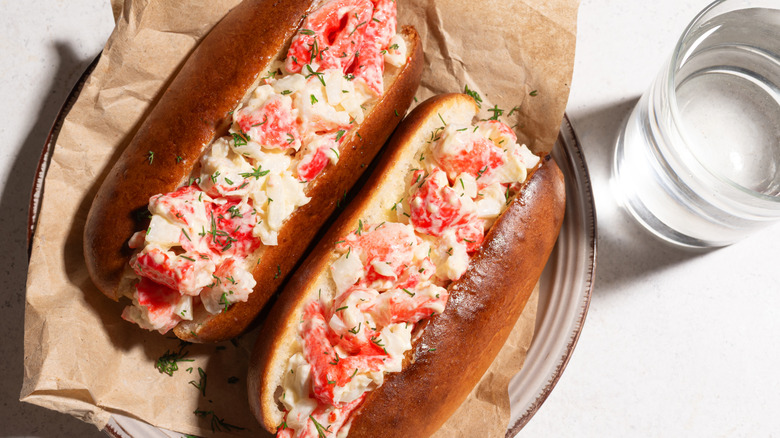
This may come as a painful reality check for those who live in landlocked areas, but if you aren't close to the ocean, it's best to avoid ordering seafood. There are environmental reasons for this, of course; transporting raw seafood across the country or internationally requires resource-intensive climate control. But there are also quality reasons to take into consideration. Coastal restaurants have a wealth of fresh, local options, not to mention rich culinary traditions to draw upon. If you live in Oklahoma and are hankering after a lobster roll, you should probably plan a trip to Maine instead of doing an internet search for the best seafood in Stillwater.
There are even reasons to avoid ordering fish at a restaurant closer to the coast if the kitchen clearly specializes in something else. "Ordering a whole branzino at a steakhouse two states from the coast is a gamble," Steve Ingber says. It's not a judgment on the abilities of the chef; it's a simple question of supply and demand. "Order what the kitchen sells the most of. That's the freshest thing in the building," he says.
Misspelled ingredients or techniques
If you want to know the very first thing chefs notice when they look at a restaurant menu, it's not the type of ingredients or the way the dishes are described; it's the typos. Even if you aren't a stickler with wording and punctuation, misspelled ingredients and techniques should raise alarm bells about the level of care that is taken in the rest of the operation. According to chef Ben Lee, menu typos suggest "a lack of precision that might carry over into the food and service." If it's an Italian restaurant and it spells its Italian ingredients incorrectly, you should question how familiar the kitchen actually is with Italian cuisine.
Lee also stressed that restaurants must be able to deliver on what they promise. If the menu describes crispy salmon skin, the salmon it's serving should have crispy skin. It's impossible to anticipate this just by reading the menu, but if there are a lot of descriptions being thrown around, you should be extra attentive about whether the kitchen follows through.
Playful dish names
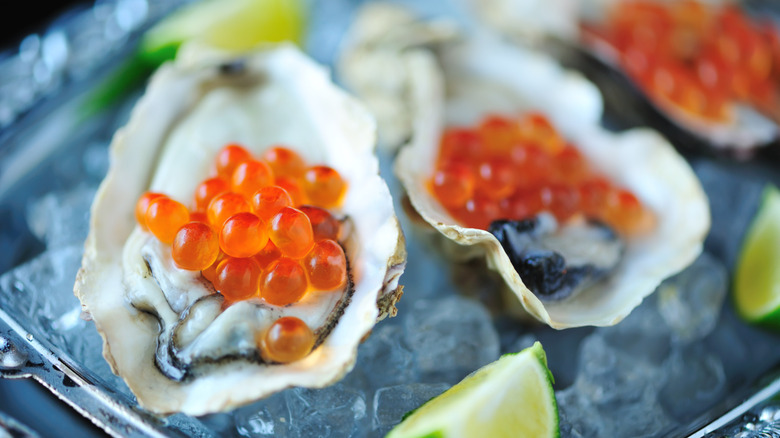
It's no secret that the world of haute cuisine can take itself far too seriously, but it is also possible to lean too hard in the other direction. Local sandwich shops can afford to be cutesy and goofy with their branding, but if you're at a sit-down restaurant and the menu is full of lengthy puns, it's worth pausing to consider what that might mean for the food. This is one of the major red flags Ben Lee called out. "Naming an oyster and caviar dish 'When Harry Met Sally' is suspect," he says. "The iconic scene in 'When Harry Met Sally' that everyone knows about was filmed in Katz's Deli. And even they never named a sandwich after the movie."
Like menus with too many adjectives and overly elaborate descriptions, punny menus can indicate an over-reliance on marketing and a lack of confidence in the food itself. When the menu tells you exactly what the chef is serving and not much else, you can be confident that the people behind the food have faith in their abilities.