

Edamame Vs Chickpeas: Which Is The Better Protein Snack
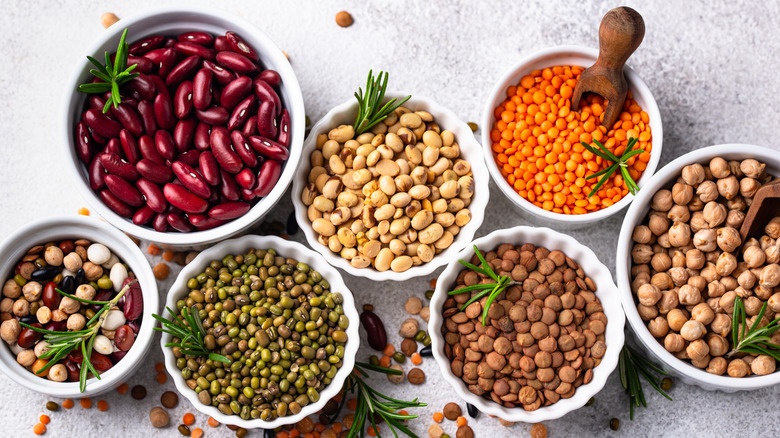
Edamame and chickpeas are both legumes, make easy snacks, and a handful of either is nutritionally substantive. But in the great chickpea vs. soybean debate, measuring only the protein category, edamame wins by a fair margin. A one cup serving of boiled edamame contains about 18 grams of protein, compared to roughly 14 grams in the same amount of cooked chickpeas.
Soybeans are unusually protein-rich, ranking high even among other protein-packed legumes, and soy protein contains all nine essential amino acids the human body can't make on its own. That makes edamame a complete protein, which is a useful distinction, especially for anyone relying heavily on plants for their protein intake.
But dissecting single nutrients out of their whole-food context only tells you so much, and chickpeas start gaining ground when you start moving down the nutritional panel. A cup of cooked chickpeas contains around 12.5 grams of fiber, compared with about eight grams in a cup of edamame. The proportions flip again with fat: A cup of edamame has around eight grams of fat, whereas a cup of chickpeas has about four. Most of the fat in soybeans is unsaturated, though, so the higher number alone isn't much reason to rule edamame out. If you're choosing between them based on a particular dietary need, scrutinizing the protein, fiber, and fat gives three different ways to call the race.
Bean counting
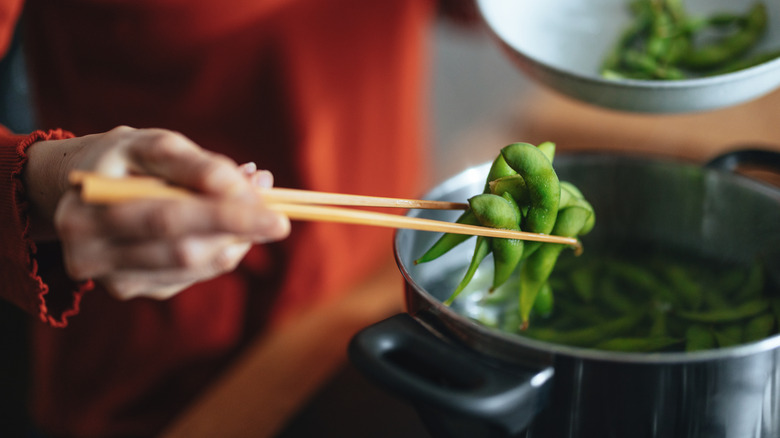
Those numbers make for a neat side-by-side comparison, but most people don't eat a plain cup of carefully measured beans, and preparation changes the equation. The traditional preparation for edamame is about as simple as snacking gets: The fresh, raw pods are boiled or steamed, lightly salted, then popped open and eaten straight. That would drive up the sodium, but nothing else. Shelled, frozen edamame can also be scattered over salads, stirred into rice, or kept as an easy snack for mindless high-protein munching.
Chickpeas can be similarly added to salads or seasoned and roasted for a crunchy snack. They're also a good high-protein food to stock for emergencies, and are used in a broad variety of recipes, like soups, curries and whipped into hummus. Their mild, starchy character allows chickpeas to slip into many recipes fairly subtly, while pushing up the macros in a meaningful way.
Understanding the nutrient profile of your food can be very empowering, and there's times when keeping close track of every gram can make sense. If you're strictly going by protein, edamame contains the highest amount, but if you're prioritizing fiber or concerned about the quantity of fat-per-bean, chickpeas have a slightly stronger argument. But, there's no nutritional reason to swear allegiance to one bean. Find ways you genuinely enjoy eating either, or both, and incorporate them into your diet and you'll be well on your way to a healthy, varied diet full of whole foods that bring you real joy.