

Not The Pantry Or Garage: A Better Way To Store Potatoes Through The Fall And Winter
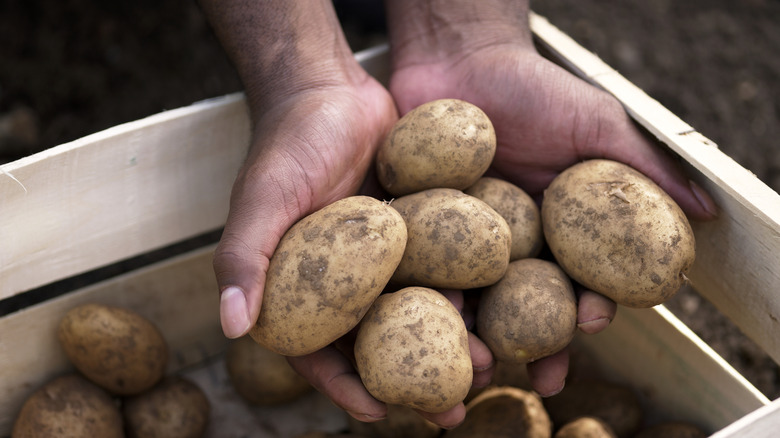
While potatoes aren't as easy to spoil as delicate raspberries or tender lettuce, no one wants to leave a spud behind. If you've harvested or purchased more than you can eat in a few weeks, your first instinct may be to haul them down to the basement, pantry, or garage. However, depending on where you live, you may not need to move them at all. Leaving mature potatoes in the ground is a surprisingly effective form of all-natural storage. Considering that potatoes don't seem to last as long as they used to, it's a useful (and free) option to consider.
The basic idea is this: Keep mature potatoes underground and insulate them with a thick layer (around six inches) of straw or leaves. Mother Earth acts like a natural root cellar here, protecting those tubers from rapid temperature changes. Some of the best ways to keep potatoes fresh are to avoid light and moisture. Storing them underground provides darkness, cool temperatures, and relatively stable humidity — which is basically what a dedicated root cellar offers.
Conventional potato storage calls for consistent temperatures around 40 degrees Fahrenheit with high humidity. While that's almost impossible to maintain indoors, your soil will do it for free. Like all fresh food, timing is important here. Potatoes intended for storage should be fully matured, which generally occurs after the foliage has died back. Immature potatoes, often called "new potatoes," have thinner skin and don't store as well, whereas mature taters will be happy to hang out underground.
Your garden soil can double as a root cellar
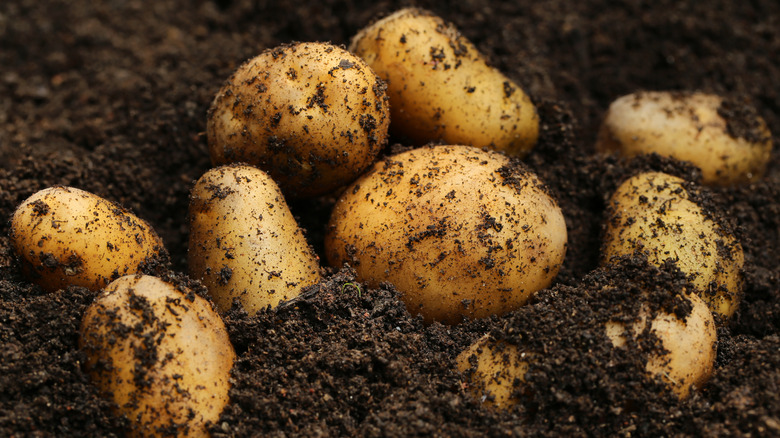
Of course, anytime you're working outside in the elements, nothing is foolproof. A good potato home should also be in loose, well-drained soil, as excess moisture can encourage rot. Heavy rain can encourage fungal or bacterial decay in poorly drained beds. If you're fortunate enough to live somewhere with mild winters and soil that doesn't freeze so deeply, potatoes can potentially remain underground for most of the winter. In colder climates, your window is much shorter.
The trick is knowing when to pull them. Watch the forecast and always dig out your potatoes while the soil is still workable, not when it's solid as an ice cube. All potatoes should be removed before the ground freezes solid. Just like raw potatoes shouldn't be stored in the refrigerator, repeated freeze-thaw cycles can cause potatoes to rot. And, as any good gardener knows, always be ready for some uninvited visitors to potentially crash your potato party. Leaving your tubers underground does give rodents and other pests an extended opportunity to snack on them. Though the thick mulch provides some protection, wire mesh over the planting area is also a good deterrent.
Before you fill your pantry with sacks of potatoes this fall, consider letting the garden itself become your storage bin. In the right climate, a good layer of straw, leaves, or even mulch can keep your potatoes cool, calm, and protected for much longer than you might expect.