

The Major Mistake Almost Everyone Makes When Adding Cheese To Pasta (It's So Simple)
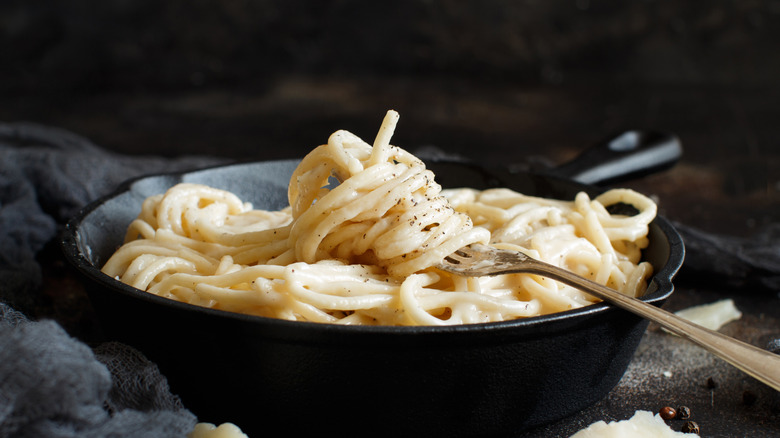
Cheese sauces like cacio e pepe are supposed to be simple to make. You grate cheese, mix it into the pasta, and eat. But it's never that easy, unless you know the correct technique. If you don't, that cheese can seize up, clump together, and become stringy.
The mistake everyone makes is adding cheese while the pasta is still on the heat. Cheese is basically a suspension of fat, casein proteins, and water. The protein surrounds the inner fat and water, giving cheese structure. Once heat is introduced to the cheese, that fat will begin to melt. If the heat is too high and this introduction happens too quickly, it can cause an imbalance in the levels of water and fat in the cheese, separating the fat from the protein and causing the protein to tighten and clump together, leaving you with strands of cheese instead of a smooth sauce.
Typically, younger cheeses with a higher water and fat content will melt easier than older cheeses. As a cheese ages, moisture within it evaporates, and its proteins tend to form tighter bonds. This is why it's much easier to melt fresh mozzarella without it breaking when compared to a harder cheese.
All this means is that the secret to a creamy cheese sauce is low or indirect heat, especially when using hard cheeses like Parmigiano Reggiano or Pecorino Romano. That means taking your pan off the heat before adding the cheese. When you add heat slowly, those protein bonds will relax instead of tensing up and clumping.
Other tips you should know for making a creamy cheese sauce
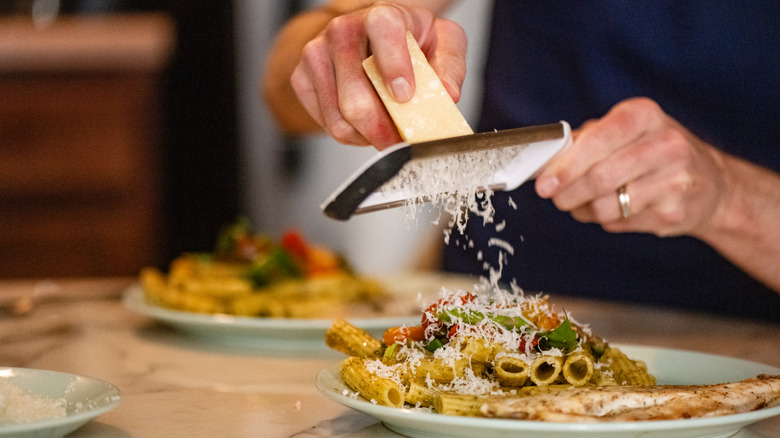
The way you grate cheese matters. For hard cheeses like Pecorino Romano or Parmigiano Reggiano, you'll want to grate the cheese as fine as possible to make it easier to melt. And avoid using pre-shredded cheese, as they typically contain anti-caking agents like cellulose which work to keep the strands separated.
While a box cheese grater with large holes works well for softer cheeses, you'll need a microplane or the smallest side of the cheese grater to properly grate hard cheese. Before adding it to your pasta, you'll want the cheese to be grated so finely that it looks like snow. This increases the cheese's surface area, allowing the cheese to break down evenly.
You can use these rules to make a perfectly executed, budget-friendly cacio e pepe with only three ingredients (pasta, black pepper, and Pecorino Romano). Start by grating your Pecorino finely into a bowl. Pour a drizzle of the hot pasta water over the Pecorino and mix until it becomes a paste. This effectively warms up the cheese. Next, remove the pasta from the heat, wait a minute for it to cool, then mix the pasta and cheese in that separate bowl, off the heat. The heat of the pasta will be enough to melt the cheese. Be sure to continue to mix the pasta with the cheese so it melts evenly. If the sauce is too thick, you can add more pasta water, a tablespoon at a time, until it's the consistency you want. Then top with black pepper and serve.