

Eat Your Next Pizza Norwegian-Style By Drizzling On One Creamy, Flavor-Packed Sauce
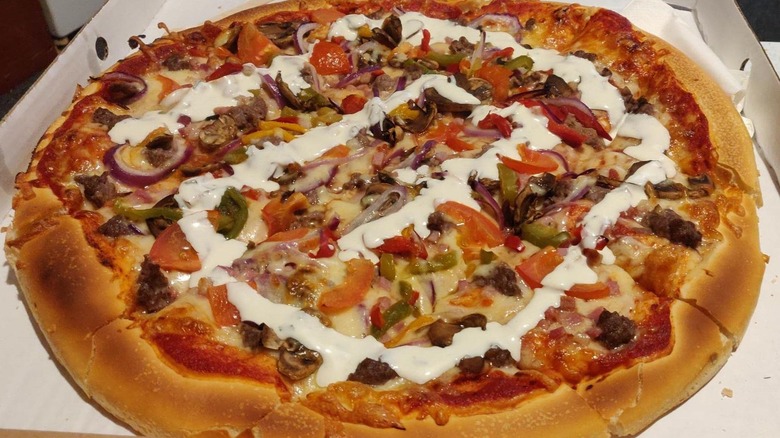
Pizza and dipping sauce go together like a burger and cheese. Once upon a time, you'd have to improvise your own dipping sauce for pizza, but pizza places eventually caught on to the idea. Papa John's developed its garlic dipping sauce back in 1984. Little Caesars offered Crazy Sauce with its breadsticks in 1985. Now there are many kinds of dipping sauces for your pizza crust, but what about sauce for the pizza itself? If you want to combine the burst of flavor from a dip with the coverage of a regular topping, give your pizza a Norwegian twist with a sour cream-based garlic sauce sometimes called a rømmedressing.
Rømmedressing translates to "sour cream dressing" and refers to a type of sauce rather than one specific recipe. The acidic dressing cuts through the fat from the cheese and pepperoni. There is also a milder version, but the bolder mayo-and-garlic sauce stands up better to the stronger flavors of pizza.
Some pizza places make the sauce in-house, but you can also buy a commercial version in stores. The main ingredients often include sour cream, mayo, and crushed garlic, but some recipes call for acidity from lemon or vinegar, as well as a bit of spice from a small amount of paprika or cayenne. A bit of sugar is also part of some recipes, which makes the sauce similar to Canadian donair sauce, which is also served on pizzas but features sweetened condensed milk or evaporated milk instead of sour cream.
Pizza with rømmedressing is the Norway way
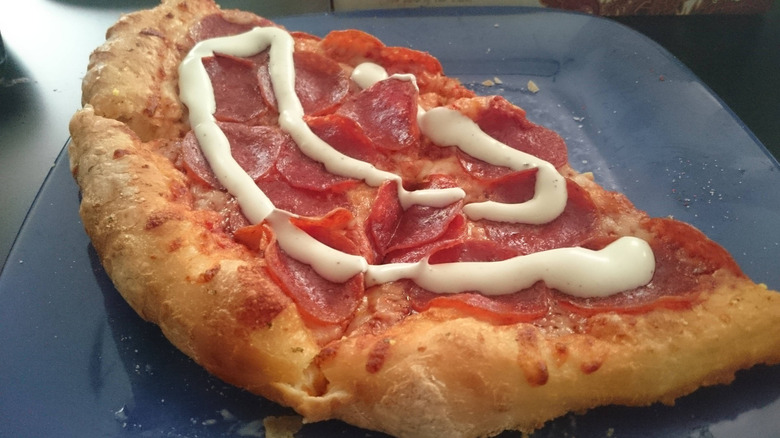
The main difference between Norway's rømmedressing and a dip you'd find at an American pizza place is that the rømmedressing is a finishing sauce. You could have a bowl of it on the side for dipping, but it's best as a sauce drizzled over a finished pizza. It's akin to the condiments you'd find at a New York pizza place to add to your slice. It's also meant to be served cold, so it's not to be used as a base incorporated into the pizza before cooking, like you might with a white sauce.
Even though the sauce is fairly simple, it brings a lot to a pizza in terms of contrast. The cool temperature, creamy texture, acidity, and slight sweetness all add elements not traditionally found in a hot, savory pizza. These elements add another layer of flavor and make each bite more complex.
Not every pizza needs a rømmedressing, but some would benefit from it more than others. Pizzas with a lot of bold flavors, heavy with salty cured meats, or spicy toppings such as hot sauce or jalapeños would pair nicely with the cool sour cream sauce. Those types of pizzas can often taste unbalanced, overwhelmed by the rich, salty, and spicy flavors. The acidity, sweetness, and creaminess of the rømmedressing bring it back into balance with a tangy, garlicky bite. Whip up a simple version with some minced garlic and sour cream the next time you have a pizza and see if Norway becomes your way.