

Value Wine Vs Cheap Wine: Is There A Difference?
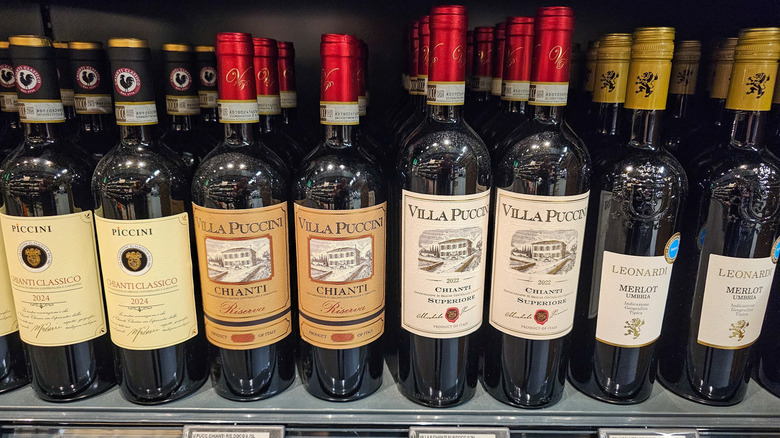
The world of wine can be overwhelming. Trying to understand vintages, food pairings, and what makes a wine a good value is daunting. People can devote years to becoming experts. For the average person who just wants to enjoy a glass now and then, it can be less about tannins and oakiness and more about whether a bottle of wine is worth the money. There are plenty of cheap wines out there, but they may not be very good. There are also affordable wines that offer good value for the money, and knowing the difference is key.
Tasting Table spoke to David Kravitz, beverage director for The Group Hospitality, about what separates a good value wine from one that's simply cheap. "It's really about quality outperforming the cost," he said. "A cheap wine is just inexpensive. A value wine delivers a tasting experience that should cost more than it does." A low price doesn't necessarily mean low quality, as evidenced by our list of cheap wines that taste expensive.
The idea of wines that "taste more expensive than they cost" has been around for years. In a 2010 article, The Guardian offered several ways to define what "value" means when it comes to wine. After all, different wine drinkers are going to value different things. The most expensive bottle of wine isn't necessarily a good value if you don't like the way it tastes. And since you usually won't know whether you like a wine until you try it, price isn't the only factor worth considering.
Finding value in wine

Production scale can be an important indicator of a wine's quality, according to David Kravitz. "One of the first things I would look for is a wine being made in smaller quantities by a family or an individual producer," he said. "Large-scale production may lead to more affordable wines, but it doesn't always lead to a quality drinking experience."
The Guardian touched on a similar idea, noting that wines can offer good value when they're "made with care and respect for the environment." But there's more to consider than the region where a wine was made or the type of grapes used. "Often, finding great value means looking for the style or grape that you enjoy from a region that doesn't come with the premium pricing," Kravitz said. In other words, finding a good-value wine can come down to knowing what you like and looking beyond the regions and varieties that command the highest prices.
"Value wines are not always cheap, and cheap wines are not always good values," according to Wine Enthusiast. The publication also warns against wines with labels like "Barrel Select" or "Winemaker's Selection," generic phrases that can sometimes be used to disguise substandard products. Echoing Kravitz's advice, it recommends looking for lower-production wines, which may have a better chance of offering a quality drinking experience. We've covered some questions you should ask before buying wine, and the more you know about what you're buying, the better equipped you'll be to determine whether a wine is truly a good value.