

The Lay's Potato Chips Your Grandparents Ate Looks Very Different Now
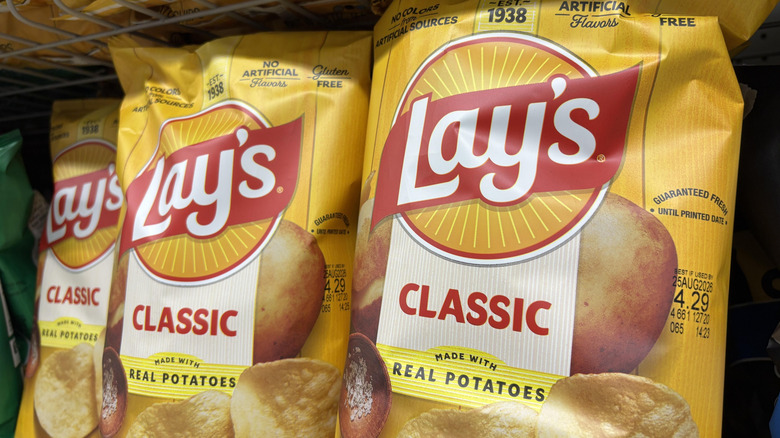
Early Lay's potato chip bags had a basic white backdrop with a red Lay's logo header and two words splashed across the bag's midriff to pretty much state the obvious: "Potato chips," it read. Today, the company is hoping its bags say more — quite a lot more, in fact. According to Fortune, a 2021 market test survey had revealed a few unpleasantries to the potato chip conglomerate, including the fact that consumers, to the tune of 42%, didn't know that their Lay's baggies held potato chips made from actual potatoes. Now, that misconception is to be dispelled immediately, if the Lay's classic chips bags have anything to say about it.
A full-court redesign got underway in 2025, making the bags bright yellow (that's not new), with a backdrop that has something going on. Can you see a potato crate by chance? The bag has sketched wood planks meant to mimic an old-fashioned crate of spuds. "Made with real potatoes" is splashed across the lower bit of the bag, over photos of full-size, partially-peeled potatoes. Salt gets its own mise en place pinch bowl off to the side.
If the look is meant to highlight that the bag is filled with simple ingredients, it's working. It may look a lot different than its counterpart from days of yore, but in one way, times haven't changed much. The bag itself has been the company's lynchpin from its inception.
The baggie that got Herman Lay to believe in the potato chip industry
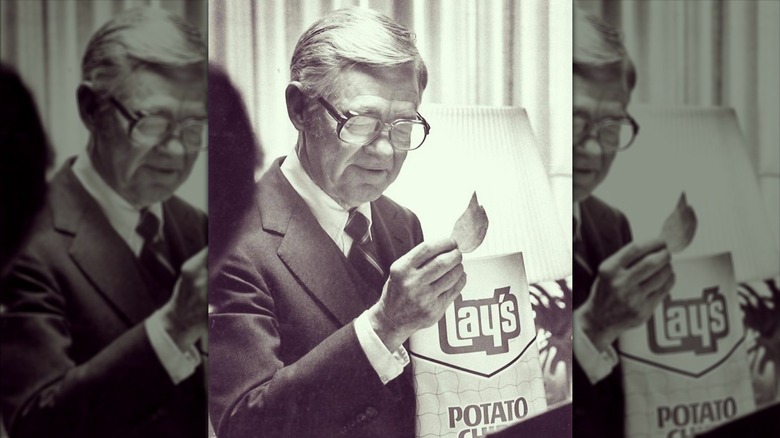
Lay's potato chips had a humble start. The late 1920s were rough on the future architect of the potato chip industry, Herman Lay, but they were great for industry-altering breakthrough innovations on sealing little wax paper bags. Lay had just dropped out of Furman University, was laid off from his job, and the stock market had crashed. He had a stroke of luck when he found work as a traveling salesperson for Barrett Potato Chip Company (despite his reservations that potato chips had no future). But he took the job because it was the only one he could find, and those new bags — with the clever heat-sealed edges that kept the snack inside fresh — soon made it obvious that the potato chip snack industry had potential after all.
In 1932, Lay started his own snack food company using those wax paper baggies. Then, in the early 1940s, he purchased Barrett Potato Chip Company and rebranded it Lay's Potato Chips. However, it wasn't until the '60s when the white background of the Lay's chip bags was changed to the yellow grid background that they would have until the mid '90s. After future mega-mergers with Frito Company then Pepsi-Cola, the company's trajectory made Lay's classic potato chips the potato chip brand that people in the U.S. eat the most. The recipe for the original chip has remained pretty consistent (with an example of one change being when sunflower oil replaced cottonseed oil in the mid-2000s), but Lay's has introduced many new flavors over the years. After dropping the grid from its branding, the company also experimented with a few different bag designs, all mostly yellow.
In case you're wondering just what you can expect from today's Lay's potato chips, in 2025, Lay's removed artificial flavors and dyes as part of the rebrand. How do you know? That little bag tells you so.