

Why McDonald's Ice Cream Tastes So Good (When The Machine Actually Works)
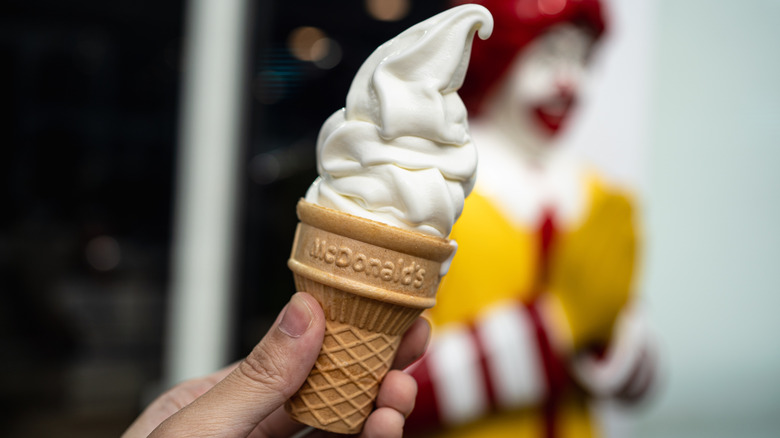
When was the last time you had McDonald's ice cream? It has probably been a while, given that the ice cream machines seem to always be broken, but when you can get your hands on a cone or a McFlurry, it might surprise you just how tasty the ice cream is. There's a good reason those creamy cones are so good. It's because that ice cream is actually ice cream.
The regulated definition of ice cream is surprisingly strict. According to the International Dairy Foods Association, "Ice cream is a frozen food made from a mixture of dairy products, containing at least 10% milkfat." McDonald's soft serve is made with milk, sugar, cream, and corn syrup, alongside stabilizers like cellulose and guar gum. Both the corn syrup and gums help keep the ice cream smooth.
On their website, McDonald's lists their vanilla soft serve as "Vanilla Reduced Fat Ice Cream," which means that it has at least 25% less milkfat than standard ice cream. Meanwhile, most soft serve ice cream contains even less — around 5% milkfat — which would categorize it as light ice cream. The distinction between reduced fat and light ice cream means McDonald's soft serve has more fat than most soft serve contains, giving it a creamier texture and better flavor.
How does air impact McDonald's ice cream?
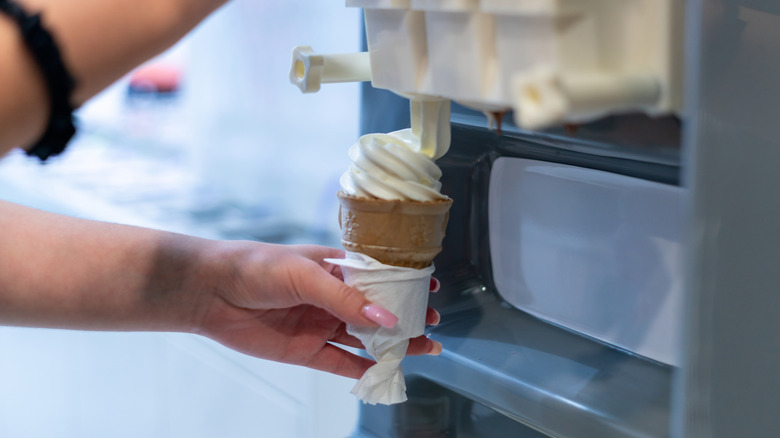
Whether it's McDonald's soft serve or an artisanal scoop at your local ice cream shop, all ice cream contains air. Air gets introduced during the churning process, and helps make the ice cream scoopable. In the ice cream industry, this air is called overrun. The name comes from the fact that churning air into the base increases the volume of the final product, giving you more (by volume) than you started with.
In addition to increasing the volume of ice cream, overrun impacts how ice cream tastes — meaning that air is one reason soft serve and hard ice cream taste different. Ice cream products with additional air have a less intense flavor, as there are more air molecules and fewer ice cream molecules in each bite. But this isn't entirely a bad thing. Ice cream is made up of ice crystals, and less air means those crystals are touching your tongue right away. A cold tongue can't detect flavors as well, no matter how rich the ice cream is. Introducing air protects your tongue from some of the ice crystals, and a warmer tongue can better taste the flavor you're enjoying.
Soft serve (like that served at McDonald's) is a prime example of how this works. A higher percentage of air is what makes soft serve so smooth, so even though there's less milkfat in McDonald's ice cream, the air means you can more readily taste the creamy sweetness.