

Pre-Prohibition Grenadine Wasn't Actually Pomegranate — It Was 10X More Flavorful
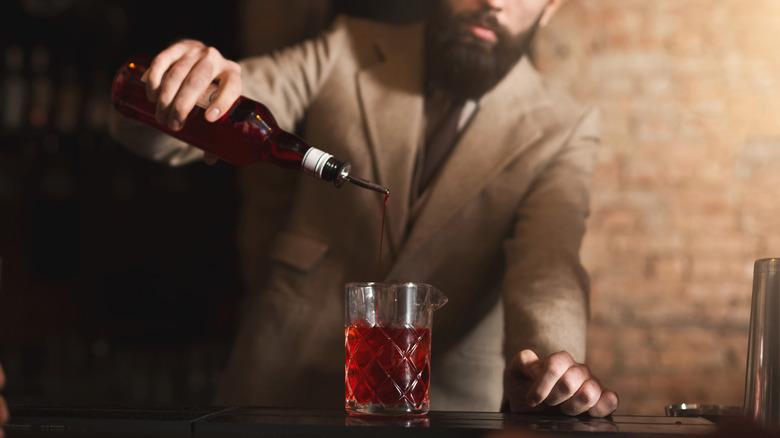
If you've ever enjoyed a Jack Rose, Tequila Sunrise, or a grown-up Shirley Temple mocktail, you can thank grenadine, that delicious but unnaturally bright-red syrup. The ingredient has a much more complicated history than its association with neon-colored drinks suggests. Before Prohibition, grenadine was intensely aromatic, spicy, and floral, with flavors of clove, ginger, vanilla, and Maraschino liqueur. In other words, it was a lot more complex than the sweet red syrup with a tart, fruity flavor and distinct taste.
The earliest version of grenadine was a pomegranate syrup used by French apothecaries to mask unpleasant medicinal odors. In 1869, French immigrant Victor Rillet patented a grenadine syrup that used the ancient fruit, along with natural additives. But competitors soon appeared, and their recipes rarely contained any real pomegranates. In fact, some historic formulas show that some grenadines weren't built around the fruit at all. A deep dive into a 1901 publication of The Standard Manual of Soda by a cocktail historian revealed an entirely different recipe for the syrup. This formula called for clove oil, orange peel oil, ginger tincture, vanilla extract, and cochineal coloring, a popular food dye that actually uses ground-up beetles.
Another eye-catching ingredient in the recipe was clove pinks, an old name for heirloom carnation flowers. Historically, carnation petals were used in drinks, syrups, and medicine. They have a spicy, floral aroma that is not unlike the actual spice clove.
The modern version of grenadine is a historic spice-and-floral formulation

Historically, clove pink flowers were used more like an aromatic herb or spice than the decorative flowers we know today. They were also made into syrups and cordials, valued for their rich red color and floral-spicy flavor. This discovery of clove pinks and its various other names reveal that cocktails made between 1900 to Prohibition quite possibly used this version of grenadine, rather than the assumed pomegranate. For imbibers that are especially interested in crafting accurate pre-Prohibition cocktails, it's quite an important discovery.
Just like cocktail bitters have medicinal origins, so too does this clove pink version. You can imagine how different a Scofflaw or Hurricane would taste if made with this historical spice-and-floral formulation, rather than the mass-market red syrup or even the modern craft grenadine recipe made with actual pomegranate juice. The pre-Prohibition syrup isn't necessarily better because it doesn't use pomegranate, it's just wildly different for the entire spectrum of spice, floral, citrus, and bittersweet flavors it brings to the glass.
If you want to experiment with both syrups, there are many cocktail recipes that make grenadine the star. While artisanal grenadine syrups made with pomegranates are easy enough to purchase these days, the clove pink syrup, for now, exists only in historical soda fountain documents and intrepid cocktail enthusiast's home bars.