

5 Ways To Choose (Or Avoid) The Spiciest Jalapeños At The Grocery Store
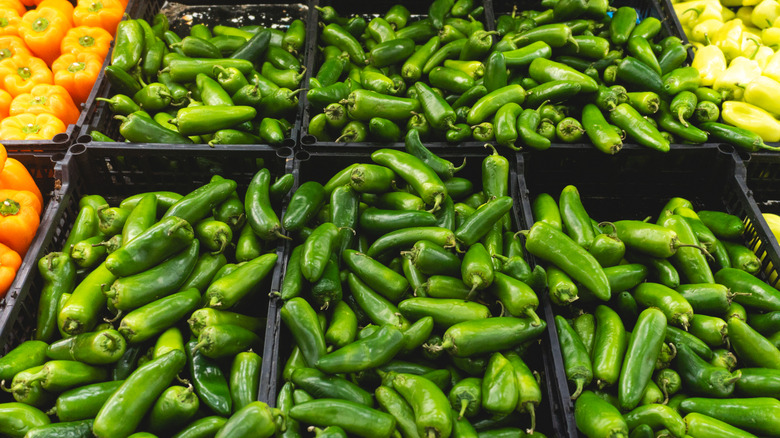
When it comes to popularity and availability, jalapeños are at the top of the scale. They are versatile chilies that can be used in dozens of ways — chopped raw into pico de gallo or guacamole, roasted and incorporated into salsas, added to beans and stews, pickled for a zesty sandwich addition, and much more. But as is the case with most chilies, it's difficult to gauge their heat level before we bite into them.
Chilies don't keep their word, my mom always says. Chilies that are supposed to be mild, like poblanos, can turn out fiery, while others can disappoint when we need them to be spicy but instead turn out tasting grassy. Once, I almost passed out at a bar from the unbelievable heat of a not-so-innocent shishito. It's like playing Russian roulette.
So, when following a jalapeño recipe that turns up the heat, it's tough to know whether it will turn out too mild, extremely spicy, or just right. Their heat depends on many factors, such as where and how they were grown, what variety they are, and even their age, shape, and size. But these characteristics also give us clues to help us determine whether they will be hot or not. While no method or visual cue is 100% accurate, here are five things to keep our eye on when shopping for jalapeños.
Cracks on the skin could indicate heat levels
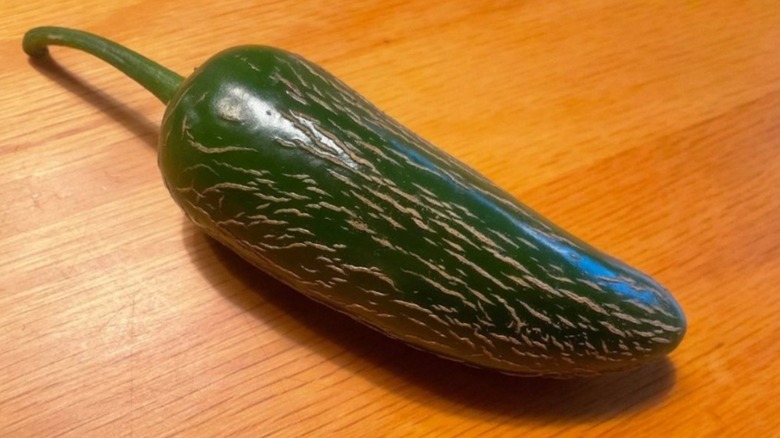
If you buy jalapeños often, chances are you've seen chilies with odd-looking, whitish cracks on their skin. This is called corking, and it's commonly believed to indicate that a jalapeño will be hot. Corking happens when plants are exposed to certain conditions, which make the flesh of the chili grow faster than its outer skin. This makes the skin stretch and tear, forming woody scabs as the surface heals. Think of them as stretch marks that form as the chili grows.
In garden lore, it's believed that chili plants that experience stress, such as high temperatures and lack of water, produce hotter chilies. If this happens, and then the plants are suddenly exposed to heavy rains or more frequent watering, the chilies will experience a growth spurt that will lead to corking. Therefore, it would make sense that corked jalapeños have developed more heat while growing in stressful circumstances before plumping up and cracking.
Does size matter?
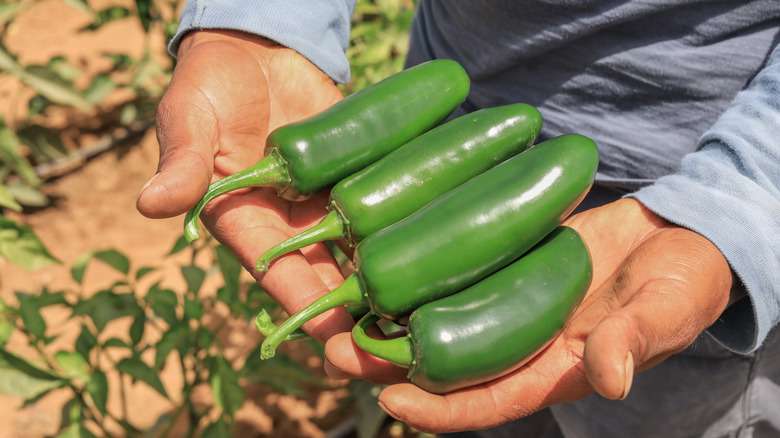
You might think that the bigger the chili the hotter it will be, but the opposite is usually true. In general, smaller chilies have a higher concentration of capsaicin, the compound that gives chilies their piquancy. That's why small chilies like Thai and chiltepin are hotter than larger chilies like poblano and Anaheim. This is also true for jalapeños; however, it applies to fully mature chilies. Younger chilies will obviously be smaller, but they won't have developed enough capsaicin to be hot yet. Older chilies have more time to accumulate the heat-inducing compound, so therefore they will be hotter.
There's also another important thing to know: certain varieties of jalapeño have been genetically engineered to be larger and milder, such as TAM I and TAM II, developed by scientists at Texas A&M University. If they are exceedingly large, chances are they will be on the mild side, but they are perfect for stuffing as they still will have a nice flavor and crunch.
Different colors could mean different heat
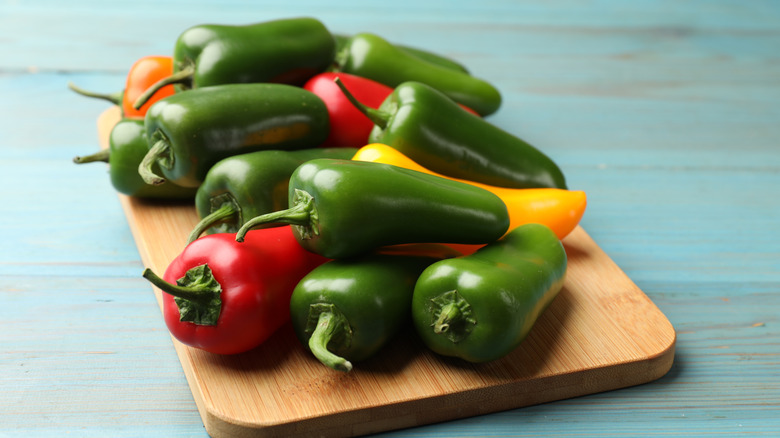
As is the case with most fruit, chilies change color as they ripen and age, going from pale to dark green, then orange and red when fully mature. And since we've learned that chilies develop heat as they age, it makes sense that mature jalapeños will pack a bigger punch of heat, so look for dark green and red chilies if you want them on the spicy side. Darker green chilies might also show black sections, which are a normal sign of ripeness. And here's an extra: since fruits concentrate sugars as they ripen, red jalapeños will have a deeper sweetness than their green counterparts, which would make them perfect for making sweet and spicy cowboy candy.
As a side note, there are also yellow, orange, purple, and even black jalapeño varieties, developed to be that color. While not common at the grocery store, chili-loving gardeners should look for Pumpkin Spice jalapeño, Jalapeño Jaloro, or the spicier NuMex Lemon Spice yellow jalapeño for a unique addition to their crops.
What does shape show?
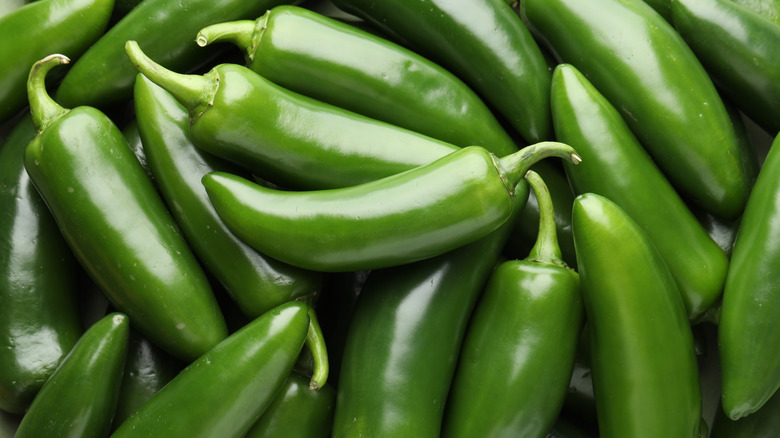
Just as there are many varieties of the same vegetable, there are many cultivars of jalapeños, developed with different characteristics including heat level, shape, and size. But in general, the belief is that narrower and pointier jalapeños tend to be spicier than rounded or flat-tipped ones. This helps as we shop for jalapeños at the grocery store, since unfortunately we won't know what kind they are or how they were grown.
This can also be a bit tricky, since chili serrano — jalapeño's close cousin — features those precise shape characteristics, and they are often sold next to each other at the shops. Jalapeños will always be bigger and wider than serranos, however, the latter chili will set your mouth on fire — about 10,000-23,000 Scoville heat units versus 2,500-8,000 of the jalapeño.
Determining chili heat from its smell
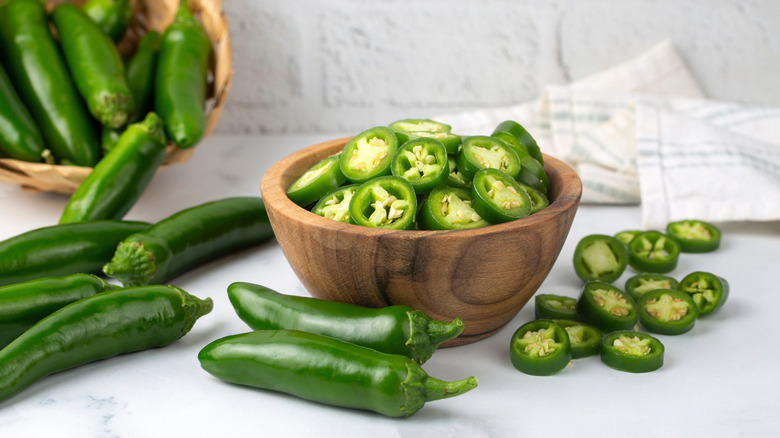
This is the least accurate method to tell the spiciness of a chili from the outside at the grocery store. That's because the capsaicin is contained in the white membrane that surrounds the seeds of the chili, so the heat level is best appreciated once the jalapeño is cut. Even so, capsaicin itself is colorless and odorless, so the flavor and smell of chilies is determined by other compounds in their flesh.
Still, based on all the previous cues, you can give the chili a quick scratch-and-sniff and see if you detect a peppery, sweet, or grassy aroma, as long as it's OK with the seller. Some chilies, like habaneros, have a distinct fruity smell. If it feels pungent on the nose, chances are it could be spicy. But you probably won't know for sure until you cut into it. You won't technically "smell" the heat, but more like feel it — capsaicin doesn't hit your taste buds or olfactory receptors; rather, it's perceived by the receptors that detect heat and pain.