

The Soda To Buy When You're Done With Pepsi And Coke
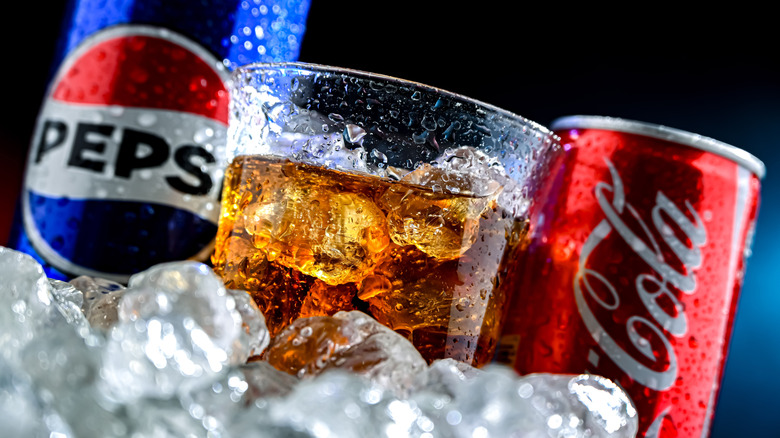
It might seem like Pepsi and Coca-Cola are the only sodas still standing, but there's actually an old-school alternative that deserves way more respect: RC Cola. Now, it may not have the enormous marketing budgets or the ubiquitous fast food presence of its two competitors, but that's exactly why I like it. The mostly forgotten soda was actually a pioneer in the industry, becoming the first to introduce soda in aluminum cans, as well as diet and caffeine-free varieties. Take that, Cola Wars! RC has a different, one could say old-fashioned, take on cola: it's sweeter, smoother, and less aggressively acidic.
RC's origin story actually begins with a dispute involving its frenemy and fellow Georgian, Coca-Cola. In 1905, pharmacist and grocery wholesaler Claud Hatcher began making his own soft drinks in the basement of his family's store in Columbus, Georgia, after a disagreement with the local Coke representative over the price of its syrup. He started with ginger ale and cherry-flavored cola before eventually launching Chero-Cola. In 1925, Chero-Cola was reformulated and reborn as Royal Crown (RC) Cola.
Some folks may say RC doesn't have the pronounced "bite" of Coke, and they're right. It's a rounder soda with a straightforward, caramel-like character. I refuse to drink Pepsi, but even I have to admit some naysayers describe RC as a generic, watered-down version of its rival. For every critic, though, there are legions of fans. Contrary to popular belief, RC isn't a cheap imitation of Coke or Pepsi; it developed its flavor profile and cultural following all on its own.
Folks in the South have a special relationship with RC
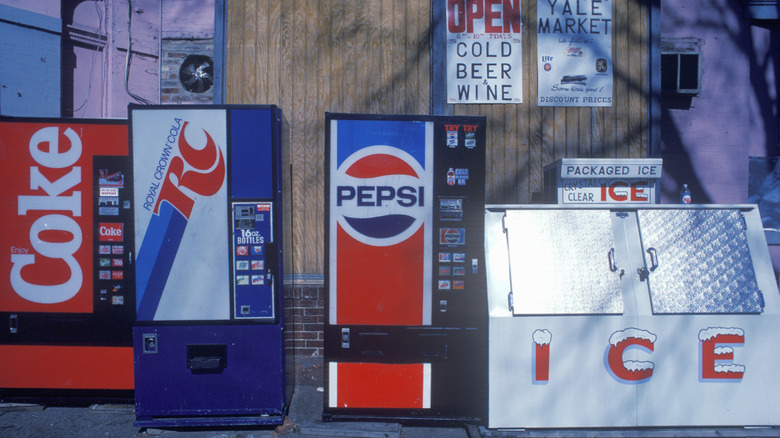
The soda's history and popularity is evident in the American South, where the love for RC runs deep. For many working class folks, the combination of a cold RC Cola with a MoonPie was their sole snack in the middle of a 12-hour shift in the mines. Every year, a tiny town in Tennessee (population 529) holds the RC Cola-MoonPie Festival, where people drink, dance, parade, and nosh on what they claim to be the world's largest MoonPie. Growing up in Texas, cans of RC were commonly found at small-town gas stations and regional stores — and you can still find 12-packs at the Texas-based superior grocery chain known as H-E-B.
For me, RC pairs exceptionally well with food. An ice-cold can alongside a burger or salty fried food provides just enough sweetness without overwhelming your palate. I also find RC's current underdog status particularly refreshing. The soda once had a much larger national presence; according to RC's history, its products were available in 47 of the 48 states by 1940. Nowadays, though, fans may have to seek out random Dollar Generals just to get their fix.
If you're tired of the Coke-versus-Pepsi debate, join me on the other, lesser-known side. Why keep arguing over which Big Soda brand makes the better drink when there's a third option with a much cooler identity? I'm not saying you should buy RC Cola because of its storied past, but having a little history behind your soda certainly doesn't hurt.