

The Traditional Puerto Rican Twist For Fall Pork Roast That's Twice As Comforting And Warm
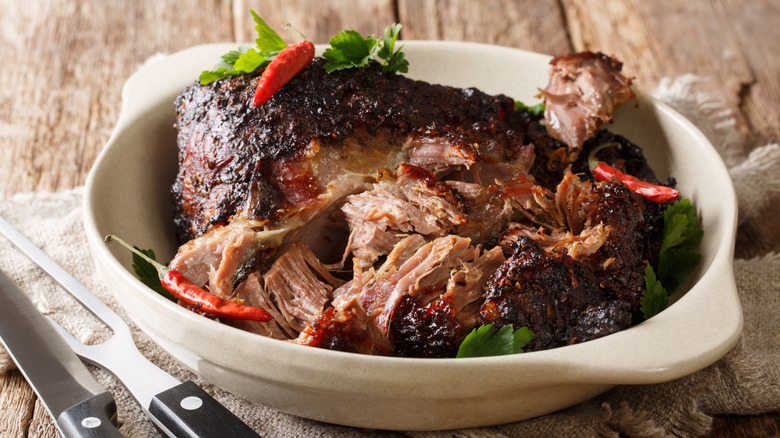
Fall has a way of making you want to pull out the slow cooker, fill it with meat and spices, and let it simmer away until your whole kitchen is redolent with the season's hearty comfort. Everything points to a pot of pork roast. After hours of cooking, it emerges full of warmth, especially if you've also given it a Puerto Rican twist — like with our slow-roasted Puerto Rican pernil recipe.
For starters, it might be important to learn a little bit about what Puerto Rican pernil is and how you can use it. This traditional dish stars skin-on pork shoulder, slow-roasted for at least five hours into fall-apart, juicy tenderness. What separates it from regular pork roasts is the use of many Puerto Rican condiments, either as a marinade or a dry rub for the meat. This can be adobo (a seasoning mix consisting of garlic, pepper, citrus zest, and dried herbs), sofrito (a blend of tomatoes, bell peppers, ají dulce peppers, onions, and fresh herbs), and many others.
In our version the pork is marinated with typical kitchen staples, along with sazón – a Latin American spice mix made primarily with achiote seeds — and sofrito. The sazón adds unique flavors and a bright hue, while sofrito's tomato acidity might also tenderize the pork. Marinated overnight and roasted for several hours at 325 degrees Fahrenheit, the meat's savory, herby complexity makes it a centerpiece on any fall dining table.
Different ways to maximize pernil's comforting flavors
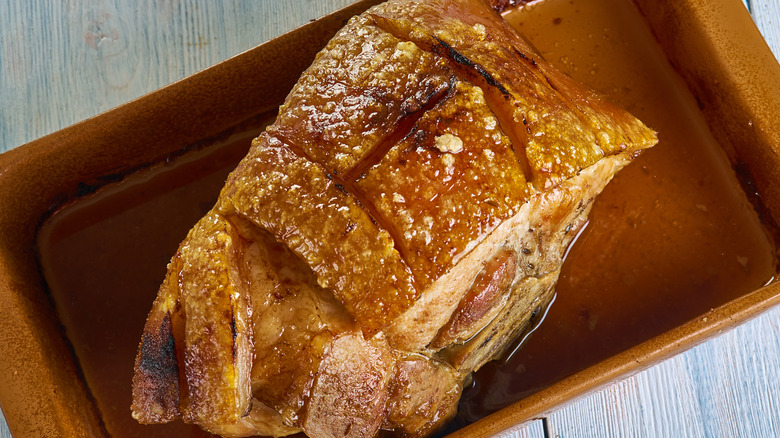
Since flavors are a crucial highlight for pernil, make sure you season and marinate the pork right. This could mean scoring deep lines on the meat underneath the skin flap or poking holes all over it for the seasonings to seep deeper inside. Depending on the recipe, some also stuff the adobo, sofrito, or even fresh garlic cloves straight into the meat's cavities. However, since ultra-crispy skin is another distinctive feature of pernil, leave the top layer of the skin bare, save for a few sprinkles of salt so that it roasts well later on.
Before all of this, of course, there's the flavoring preparation. The adobo, for example, can either be dry (seco) or wet (mojado). While they both hinge on a lot of garlic cloves for sharp aroma, the wet version utilizes citrus juice, like lime or orange, vinegar, and olive oil to make a delightful marinade. Alternatively, your pork marinade may also include toasted aromatics, such as pepper, coriander seeds, and cumin seeds, for an even more intense fragrance, and if you'd also like an earthy, nutty undertone, achiote oil is the ingredient to try.
Already imbued with flavors from within, the pernil only needs one or two simple sides. Take this opportunity to try more popular Puerto Rican dishes. This might be arroz con gandules, a traditional Puerto Rican dish of rice cooked in tomato paste and adobo seasoning. For something richer, try maduros (fried plantains) or pasteles, similar to Mexican tamales, consisting of boiled root veggies and plantains wrapped in banana leaves. Of course, considering this is still a pork roast after all, you also can't go wrong with regular roasted veggies and mashed potatoes.