

Transform Classic Prime Rib With One Breakfast Staple For A Major Flavor Boost
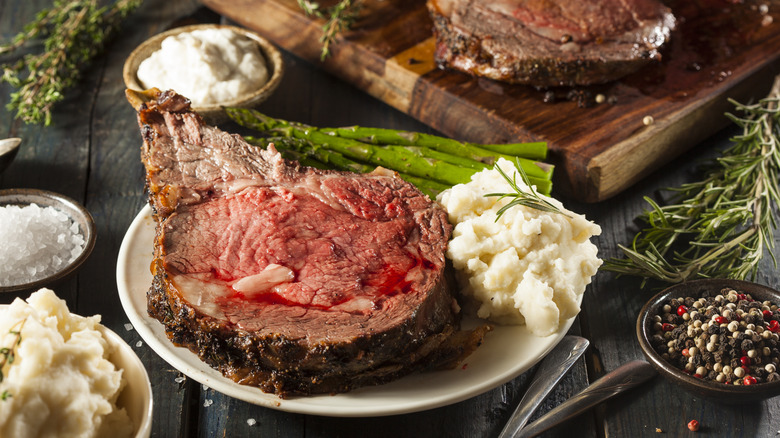
The secret to a more decadent prime rib may be sitting in the pan after breakfast. Instead of discarding the fat left over from a batch of cooked bacon, strain it and save it for your roast. A coating of fat helps protect the meat's exterior from drying out in the oven, and it gives your seasonings something to cling to as the roast develops a crust. Plenty of cooking fats can perform these jobs, but bacon grease comes with a major advantage: it tastes like bacon.
This technique utilizes bacon grease as a seasoning. It infuses the smoky, savory character of the cured pork into the roast, adding another, somewhat subtle dimension to prime rib's rich flavor without going so far as to cover the roast in strips of bacon. It works primarily at the surface, where you're building the flavor and texture. The cut is usually generously endowed with internal marbling, so the meat within is already taken care of.
After cooking your bacon, whether it's crispy and oven-baked or pan-fried, just strain the rendered grease to remove any solids and save it until you're ready to make your roast. Make sure your bacon grease didn't scorch (it should smell bacon-y but not burnt), because whatever flavors are in the fat are going to be imparted onto the meat. When you're ready to use it, let the refrigerated grease soften until it's spreadable, pat the prime rib dry, and rub a thin coating to the exterior. You can also mix bacon grease with softened butter for a mellower, sweeter version, or concentrate mainly on the exposed cut ends of the roast, where the fatty coating will protect them from drying out during the long cook.
Bacon grease can enhance your homemade prime rib
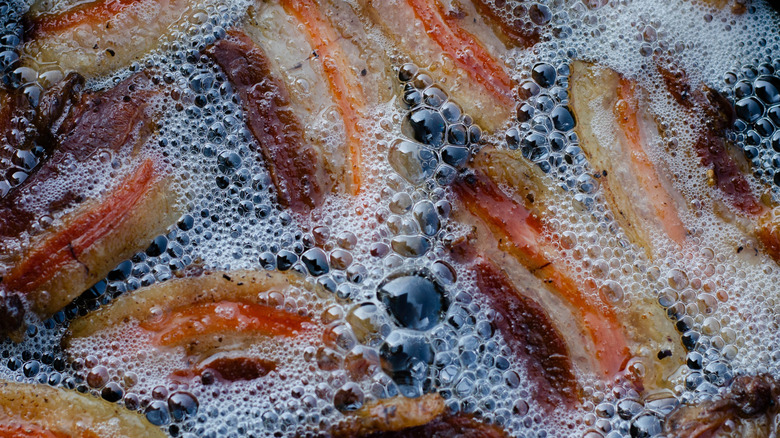
Think of the bacon grease as the foundation of the rub. Once you've decided to season your prime rib with the smoky richness, the crust's flavor can develop around it. Aromatic compounds in spices will bloom and infuse in the fat as it heats; black pepper and garlic will deepen the savory notes, and garden herbs like rosemary or thyme will build the familiar, woodsy aroma of a classic prime rib. You can work the seasonings directly into the softened bacon grease, using it as a sort of spreadable compound paste by spackling it on. This will glue the herbs and spices to the meat as it roasts.
There can also be room for something sharper without veering too far away from a faithful prime rib flavor profile. A little stoneground Dijon will bring some acidity and mustardy heat, creating some resistance between the grease and beef instead of just stacking richness upon richness. Keep the bacon you started with in mind when adding more salt. The fat isn't flavor-neutral, and the level of salinity that makes its way into the rendered grease can vary by bacon brand, so season accordingly.
The interplay between the rich meat and sharp flavors can continue once it's plated. Some creamy prepared horseradish (a classic accoutrement to prime rib) provides a nose-clearing bite, whereas au jus leans further into the roast's deep, savory-umami base notes. Bacon grease may begin as a byproduct of breakfast, but if you save a few spoonfuls in the morning, you've already started making dinner.