

Is Your Grocery Store Produce Really Local? Here's What The Label Means
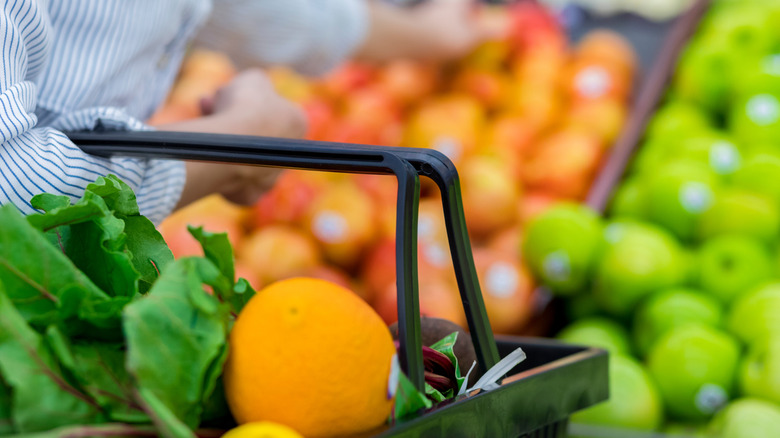
Ever got drawn into picking something from the produce aisle just because of the word "local" stickered on it? You can find it on chalkboard signs over the tomatoes, on labels wrapped around bunches of kale, and sometimes even in the form of cute little flags stuck in the peach bin. All of it conjures a nice mental image of farms you could drive to on a Saturday and produce harvested three days ago from somewhere nearby instead of across the country, transported in a refrigerated trailer. That same picture makes it easier to swallow the higher price tag of local foods. But unless you're shopping at a farmers market or buying from a CSA subscription (one of the best ways to get fresh, local produce), the local label in your grocery store is probably just marketing.
Unlike the term "organic," there's no federal labeling rule that concretely defines what local means for fruits and vegetables. So currently, the state, the store, and the customer are all left to define it on their own. For example, New Jersey passed a law in 2022 to to ensure that the local label only applies to fruit and vegetables grown, harvested, and packaged in-state. In contrast, Whole Foods calls anything that's made within a seven-hour drive from its store as local. Maryland goes further and puts the decision on the shopper directly: it only requires manufacturers to state which state the food was grown in, then leaves it up to the customer to decide if that counts as local. There are reportedly nine states with no laws on origin. Here's the kicker: Congress did actually put one definition on the books. It just wasn't written for labeling.
The only federal definition of local was written for a loan program
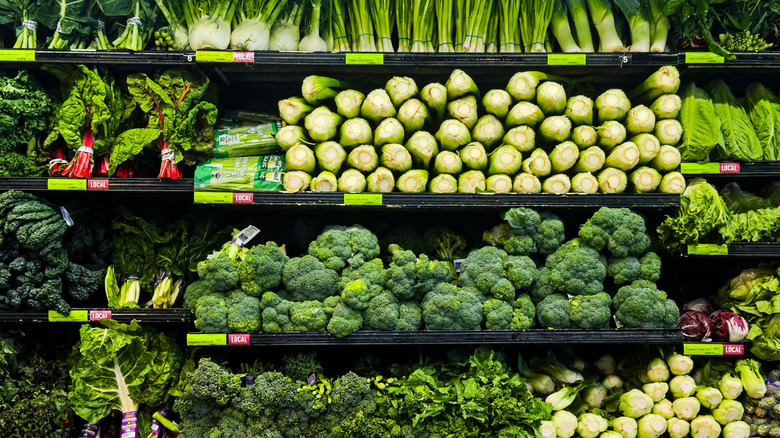
Congress took a swing at the term in the 2008 farm bill. Under that language, a "locally or regionally produced agricultural food product" is one that's transported less than 400 miles from where it started, or produced and distributed within the state where it was made (via Congress.Gov). But instead of broadly applying this rule to produce labeling nationwide, this clause is only used to set eligibility rules for the Business and Industry Guaranteed Loan Program — a USDA loan program that backs financing for companies that process, aggregate, store, and distribute food. It tells a lender which applicants qualify for a funding set-aside. So despite lawmakers technically having a definition for it, there are yet to be any federal laws utilizing it to tell what manufacturers and grocery stores can and cannot print on a sign.
Even taken at face value, 400 miles is a generous read on the word local. That's Cleveland to Washington, D.C., with miles to spare, or a full day behind the wheel. A tomato can cross a few state lines and still land inside the only federal benchmark on the books ... so perhaps it's a good thing that it's not yet used.