

The Easiest Way To Ensure You Make The Absolute Best Rotisserie Chicken At Home
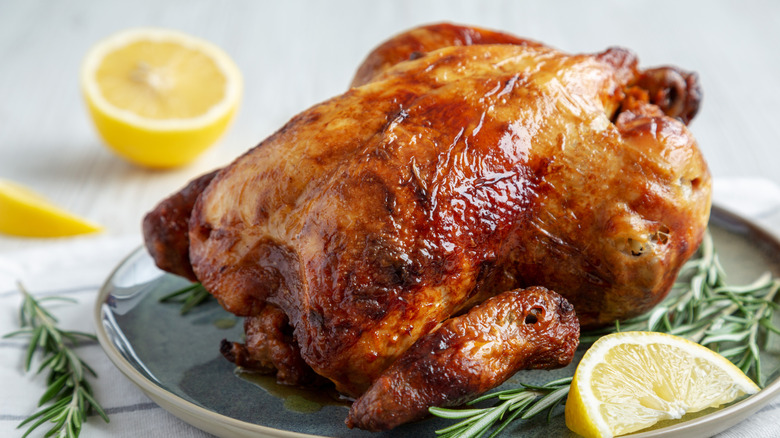
Why is rotisserie chicken so popular? It's self-basting, moist, crispy-skinned, and full of flavor. There's a reason Costco sells millions of rotisserie chickens every year. Still, while it's quick and convenient to buy at a store, rotisserie chicken can be even more delicious when you make it at home. The idea of making your own may be a little intimidating if you're new to it, but a few simple tips can improve your results. To get the absolute best result, one tip is to dry-brine your chicken ahead of time.
The difference between dry brining and wet brining lies in the ingredients. A dry brine involves rubbing the surface of the chicken with salt and other dried seasonings and letting it sit in the refrigerator so the salt draws out moisture. That moisture combines with the salt to become brine, eventually reabsorbing into the meat by diffusion. To learn more about this process, Tasting Table consulted CookedByJess — Jess is the creator and cookbook author behind the CookedByJess website.
"I think dry-brining overnight is one of the easiest ways to elevate homemade rotisserie chicken. It gives the seasoning time to penetrate the chicken, so every bite is flavorful instead of just the surface," she told Tasting Table. Brining chicken is so important that it's recommended you do it every time.
The secret to better homemade rotisserie chicken is a dry brine
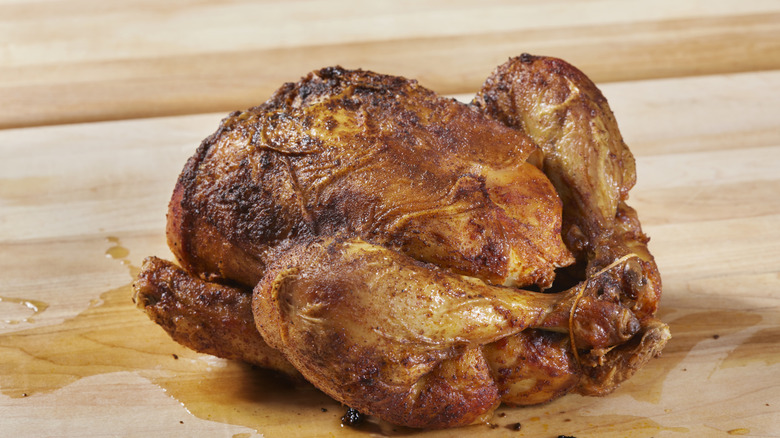
It's not just the flavor of the meat that dry brining improves — it also improves the texture of the chicken, particularly the skin. "As it sits uncovered in the fridge, the skin dries out, which helps it crisp up beautifully during cooking. And once you get that crispy skin, the seasoning really shines. You can actually taste every flavor instead of it being watered down by excess moisture," said Jess.
Rotisserie chicken can be hard to make at home, but it doesn't have to be. To get the most out of a dry brine, Jess recommended a few steps beyond simply rubbing salt onto the chicken. "My biggest tip is to pat the chicken as dry as you possibly can before adding the salt. I like to dry it until the skin feels slightly tacky instead of wet or slippery, that's usually my sign that it's ready," she said.
If you want the crispiest skin possible, Jess explained that the surface you use for dry brining also matters. "One tip I never skip is placing the bird on a wire rack instead of a plate. It allows air to circulate around the entire chicken, helping the skin dry evenly for a more consistent crisp when cooked," she said.
There are different kinds of salt you could use to dry brine chicken, but Jess specifically recommended kosher salt. "I also love using kosher salt because I find it's much easier to season the chicken evenly without accidentally over-seasoning one spot," she said. "Then let it sit uncovered in the fridge for at least 12 hours, preferably 24, because the longer it sits, the more the skin dries out."