

A Better Way To Fertilize Your Vegetable Garden Without Harsh Chemicals Is Hiding In Your Liquor Cabinet
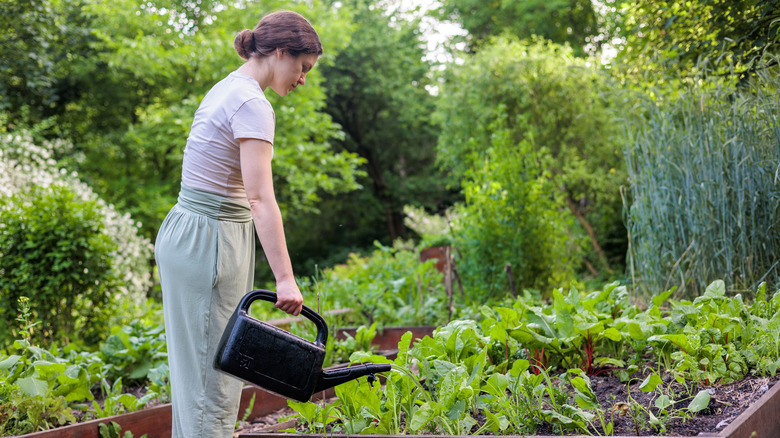
Hands up if this sounds familiar — you opened a nice bottle of red wine, had a glass or two, then sensibly refrained from drinking to excess, and put the bottle away. A week later, the wine left in that bottle is undrinkable, and you find yourself punished for your own moderation. Do not despair — thanks to spoiled wine, you now have on hand a better way to fertilize your vegetable garden without harsh chemicals.
Whether for environmental reasons or to prevent your plants from becoming dependent on them, there are good reasons to eschew chemical fertilizers when gardening, so a more natural alternative is to be welcomed. Red wine contains slight amounts of magnesium, potassium, and other nutrients that can help boost soil health. Nice as it would be if all you had to do was pour your foul-tasting wine onto the soil and watch your vegetables thrive, there are a few considerations you must take into account first.
Let's say you have wine that's past its best but is not yet spoiled (check for discoloration and bad smells to tell if wine has gone bad). This can be diluted with water (as too much alcohol is bad for plants) and then applied directly to the soil, either via a watering can or by letting your potted plants sit in a watering dish of the diluted wine. The reason for using wine this way before it has fully gone off is that spoiled wine will start to turn into something like vinegar due to bacterial growth and exposure to oxygen. Vinegar can damage the plant's roots, prevent seed germination, and because of its acetic acid, act as an herbicide — not what you want to be sprinkling on plants you are trying to nurture.
Spoiled wine is fantastic for composting

If your wine has gone vinegary, it will release nitrogen, which encourages the desirable bacteria that helps plants grow, making spoiled wine excellent for compost. If you have your own compost pile (be sure to read our ultimate guide to composting at home for everything you need to know), you can pour your leftover wine directly onto it. Give the compost a good stir to make sure the wine is thoroughly incorporated with the other compost ingredients and to make sure there are no patches where the wine is too concentrated. The wine's sugars will feed the microbes that break down the compost's organic elements, meaning it will decompose faster and be ready to use sooner.
Alternatively, you can combine one part leftover spoiled wine with three parts water, then combine that with a pre-mixed "tea" of compost and water that has a source of air circulation, such as an air pump. After letting it steep for one or two days, this nutrient-rich potion can then be strained and used to water your grateful vegetable plants. If you don't have a garden, there are plenty of recipes that put a bottle of red wine to good use so that you can still use up the rest of that bottle.