

Wood Grill Vs Smoker: How Each Is Unique (And Why They Make Your Food Taste Different)

Grilling, smoking, barbecuing, charbroiling ... so many different ways to enjoy the simple pleasures of outdoor cooking. It's easy to lump them in a single "barbecue" category, but the truth is they're very distinct, from the types of appliances involved to the heat and cooking techniques, and even the way they flavor the foods landing on waiting plates. To gain insight into two of these cooking tools/methods — wood grills and smokers — and how they differ, we reached out to Matt Abdoo, executive chef and co-founder of Pig Beach BBQ with locations in New York, Boston, and Florida.
To avoid confusion, it helps to first understand that the term "wood grill" also covers grills intended for charcoal use, since charcoal is simply real wood from which moisture and volatile compounds have been removed by a separate heating process. Typically, both wood grills and smokers can use solid chunks of wood or charcoal as fuel, but they differ considerably in other ways.
As Abdoo notes, wood grills are excellent choices for high-heat applications and for quick-cooking foods such as burgers, steaks, and grilled chicken. "The direct flame creates a beautifully caramelized exterior with the signature char and flavor that only live-fire cooking can deliver," he explains. A smoker, on the other hand, takes things low and slow, using indirect heat over several hours. "It's best suited for cuts like brisket, ribs, and pork shoulder, allowing the meat to absorb a deeper, more pronounced smoke flavor while becoming incredibly tender and juicy," says Abdoo. Here's a closer look at each method and why they make food taste different.
Wood grills: Char, browning, and a whisper of smoke

With a wood grill, much of the flavor comes from what happens when food meets intense heat. High temperatures encourage the Maillard reaction, which is what causes sugars and amino acids to create those lovely browned surfaces and complex roasted flavors in a good steak, burger, or piece of grilled chicken. And an even more intense layer of flavor happens over the flames below. When juices and rendered fat drip onto the hot fuel (whether wood chunks or charcoal briquets), they tend to vaporize and send flavorful compounds surging back toward the food. Meanwhile, the burning fuel also creates smoke compounds with smoky and slightly sweet aromas — which, you guessed it, lightly flavor the food on yet another level.
Put those elements together, and you get wood-grilled deliciousness that tastes roasted, charred, and fire-smoked all at once. However, keep in mind that, unlike a dedicated outdoor smoker, the light smokiness from a wood grill is more of a hint and not the dominant flavor. As Matt Abdoo notes, that makes a wood grill particularly good for foods that flourish with high-heat charred exteriors.
It's not just red meats and chicken; fish is an excellent choice for wood grilling, as are somewhat sturdy vegetables such as corn, asparagus, eggplant, mushrooms, peppers, and even cauliflower. And don't forget firm fruits, including the Precious P's: pineapples, peaches, and pears. As Abdoo describes it: "A wood grill, on the other hand, emphasizes the rich, charred flavor that comes from cooking directly over a live fire."
Smokers: Deeper wood-smoke flavor from longer cook times
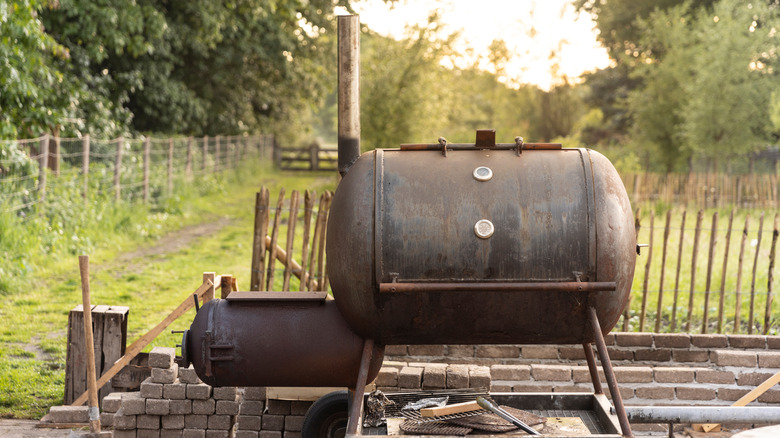
When comparing wood grills and smokers, Abdoo reiterates how each affects food. "The biggest difference in flavor comes down to time and cooking method. Because food spends hours exposed to wood smoke in a smoker, the flavor is much more developed." So, instead of relying on a blast of high heat to get that magic flavor, as with wood grilling, slow smoking provides longer exposure to the taste-enhancing compounds released when wood burns.
As smoke slow-dances with fats and proteins in the meat, it also breaks down tissues and melts fat, making the meat tender and tasty. If you really want to cultivate a custom smoked-food flavor, pay attention to the types of woods you pop into the smoker. Different types add distinct flavors, aromas, and personalities, ranging from slight sweetness to bold earthiness, and everything in between.
Alder wood is a gentle option that adds a light sweetness, ideal for fish, chicken, and vegetables. Pecan wood brings mellow, nutty sweetness to the party, while wood from apple, pear, and peach trees creates a soft, rounded fruitiness. For stronger, richer smokiness, you might use hickory or mesquite, or combine various wood chips for unique flavors, especially if smoking meats. When all is said and done, and it's down to just you and your smoker, the song and dance eventually becomes routine. "The effort of using a smoker is absolutely worth it because it delivers a completely different style of barbecue," says Abdoo before adding, "Cuts like brisket and pork shoulder simply can't achieve the same tender, low-and-slow results over the high heat of a wood grill."