

9 Canadian Drinks That Haven't Made It Big In The US
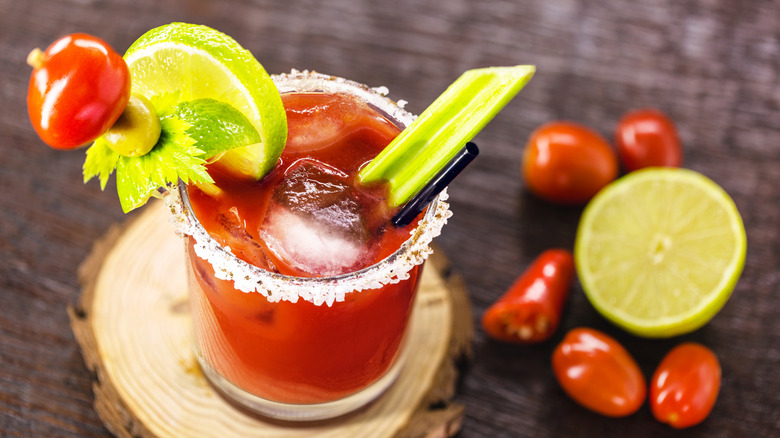
When it comes to Canadian drinks, they run the gamut. From non-alcoholic sodas to those with notably high ABV, Canada is home to various unique beverages that are a testament to the country's climate, history, and traditions. While there are many Canadian brands that have made waves in the United States, these nine beverages are generally reserved for Canadians only. Why they have failed to make a splash elsewhere is a mystery, because all these drinks are undoubtedly delicious.
Many of these beverages take inspiration from Canadian terroir: maple, wild berries, fir trees, apples, and rye to name just a few. Sometimes, they're cheekily named, proof that as Canadians, we don't always take ourselves too seriously. As one of the resident Canadians here at Tasting Table, I've been privileged enough to try almost every beverage on this list, so take it from me: They're worth trying. If you're planning a trip to the Great White North and are looking for a souvenir that's more than a simple bottle of maple syrup, consider hauling back one (or several) of these on your way through the duty-free.
Caesar
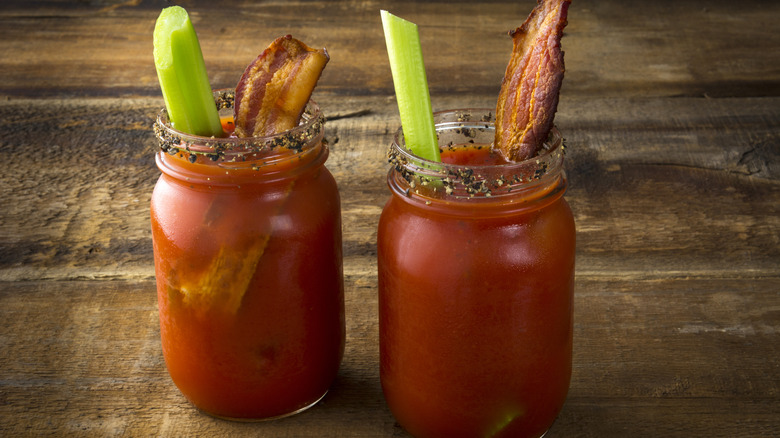
The Bloody Mary cocktail –– a drink containing vodka, tomato juice, Worcestershire sauce, and various seasonings –– is popular in the United States, where it's frequently enjoyed at brunch. Up north in Canada, however, you'll find the classic drink turned up a notch and transformed into a Caesar, a drink that's often dubbed as the country's favorite cocktail.
The Caesar also uses vodka, but it eschews plain tomato juice for Clamato, a drink that combines tomato and clam juices with spices to create a briny, savory, and umami-laden delight. Canadians are more than happy to whip up their own Caesars to their specifications (extra spicy and pickle-filled are two popular options), but plenty of stores in the Great White North also offer a variety of ready-to-drink options for those who prefer their Caesars on the go.
The history of this savory cocktail dates back to 1969 in Calgary, Alberta, where it was invented. Created by bartender Walter Chell, it was inspired by his favorite Italian pasta dish. The cocktail became more popular once Clamato hit the scene, making it easier for people to create the drink at home without having to find the perfect ratio of clam juice to tomato. Sure, it might sound questionable, but any true Canadian knows that a Caesar is absolutely delicious (and also a welcome morning-after cure when you need some hair of the dog).
Brio
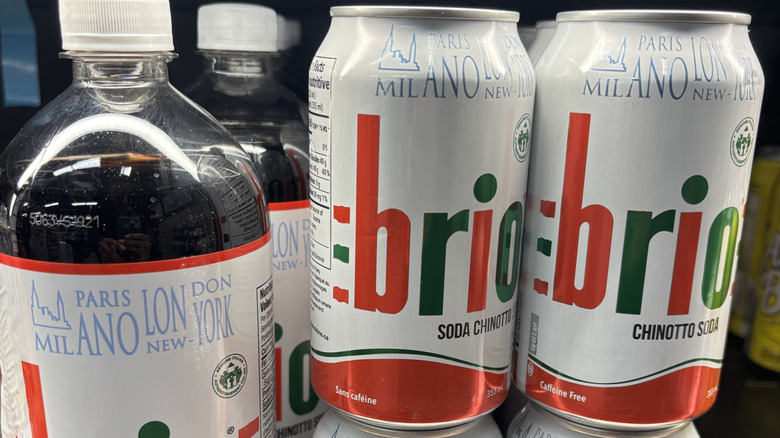
Canada doesn't have a whole lot of real estate when it comes to proprietary sodas. However, we do have Brio. Invented by Italian immigrants in Toronto, Ontario in 1959, Brio was inspired by the popular Italian soft drink called chinotto (or cinotto). Chinotto is a small citrus fruit that grows in Italy and is famous for its bitterness and acidity. Out of a sense of homesickness, the new Torontonians began importing chinotto in order to make the beverage they knew and loved, and Brio was born.
The drink was a hit among Italian immigrants and today is distributed all across Canada. Unlike many other sodas, Brio didn't attempt to mess with a good thing and add new flavors to the roster until 2017, when five new varieties joined the lineup: Aranciata (orange), Aranciata Rossa (blood orange), Gassosa (lemon-lime), Limonata (lemon), and New Chinotto (with added cane sugar). However, many mostly know Brio by its original flavor, which is bittersweet and slightly herbal in a way that's both intriguing and moderately addictive.
Ice cider

Many of us are familiar with apple cider, but have you ever heard of ice cider? Canadians are adaptable when it comes to our unforgiving climate, and one of the ways we handle those extreme cold months is to use it as an excuse to make (or consume) different kinds of alcoholic beverages. One such example is ice cider, which is created by fermenting concentrated apple juice — freezing the juice helps separate water from the juicy concentrate. This is done by freezing the fruit and then pressing it or by freezing pressed apple juice.
Ice cider is a relatively recent invention. It was the creation of Christian Barthomeuf in the 1990s in Québec, who drew inspiration from ice wine. True to its name, ice cider is usually served chilled, to better appreciate its extreme sweetness. It's often enjoyed as an after-dinner drink and is especially popular during the winter months — which is understandable, considering that the cold is used to make the beverage in the first place.
Ice cider is a sweet beverage that hasn't quite made it big in other countries. Although, as a relative newcomer to the beverage world, there's still time. It is a great, unexpected gift choice for those traveling to Canada.
Sortilège
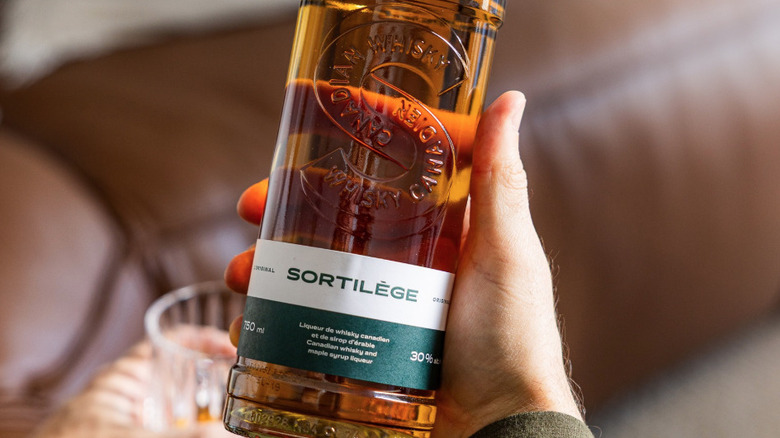
Few things are as Canadian as maple and whisky, and that's exactly what Sortilège is. According to the brand, this liquor is derived from a recipe that dates back to Quebec's early settlers, who flavored their alcohol with maple syrup, which was abundant in the new country. Today, the drink combines Canadian whisky and maple syrup and is easy enough to drink on its own, but it also blends with other beverages, especially coffee. My personal favorite is adding a generous pour of Sortilège to a cup of hot apple cider during the fall –– pick one of our top-ranked apple cider brands to try this yourself. It's sweet but not overpowering, with notes of toffee and, naturally, maple.
While the original is a standout, Sortilège also comes in a variety of different flavors, all of which sound delicious: Sortilège Maple Cream, which uses the same maple-whisky combination but adds cream; Sortilège Wild Blueberry, which incorporates the flavor of Québec-grown wild blueberries; Sortilège Prestige, an aged version of the original; Sortilège Rye Whisky, which is macerated with maple wood; and Sortilège Apple, made by infusing the liqueur with McIntosh apples. In addition to the iconic Caesar, if there's one drink I can recommend from this list, it's Sortilège.
Beer and clam
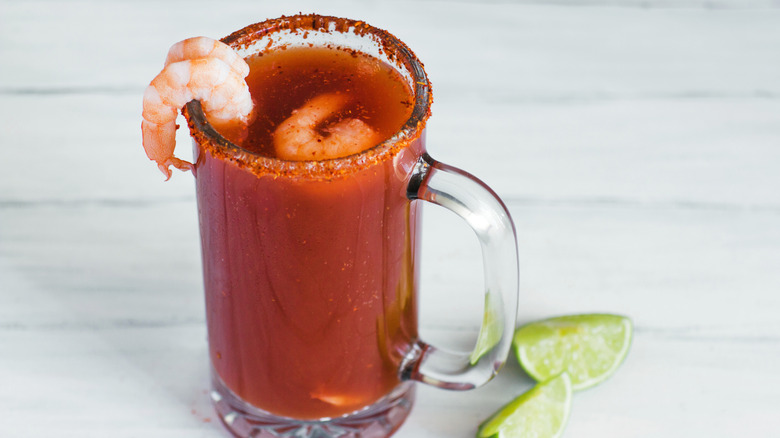
We have a thing for clam juice and Clamato in Canada, what can I say? Similar to a Mexican michelada, which combines tomato juice and beer, Canadians like something called beer and clam, a drink that combines beer and Clamato. It's also known as clam eye or red eye (although some say red eye only applies to tomato juice and beer, so if you're ordering one at a bar, you may need to specify). In fact, Clamato is sometimes recommended as an ingredient swap for michelada, but let it be known that it was popular among Canadians first.
While michelada adds tomato juice, hot sauce, and a squeeze of lime to Mexican lagers, the beer and clam is a lot simpler, containing only Clamato juice and beer, frequently light beer such as pilsner. The drink, just like Caesar, is briny and strangely refreshing, often touted as a hangover cure.
In my time working as a bartender, I saw more than a few orders of these. The ratio that was most preferred was a pint of beer and about an ounce and a half of Clamato juice. While not a drink I'm particularly fond of, there's no doubt that it's popular among Canadians.
Spruce beer
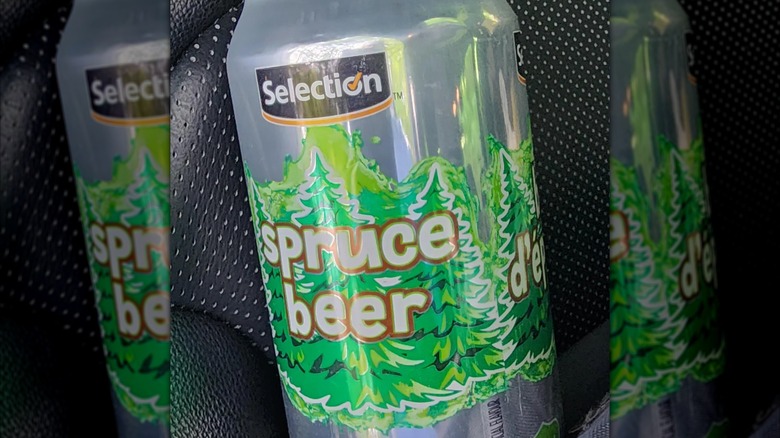
Spruce beer is a unique drink available in alcoholic and non-alcoholic varieties. Alcoholic spruce beer has existed in Canada since about the 18th century, when rye, wheat, fir tree shoots, dandelion, and hops were used as a base, with water, sugar and yeast incorporated later before the blend was allowed to ferment. There is a non-alcoholic soda with the same name, much in the same way root beer can also be non-alcoholic. The flavor is citrusy and slightly floral, with distinct piney notes.
If you were to search for spruce beer (the soda version) in Canadian grocery stores, it's unlikely that you'll find a brand actually made with real spruce needles. Instead — much like corn syrup is used to cut costs — artificial spruce flavoring or extract is used to evoke that resinous taste. To get the real stuff, you'll have to turn to artisanal soda companies that use actual buds and needles from the spruce trees to get the iconic taste that's been enjoyed by Canadians for centuries.
Caribou
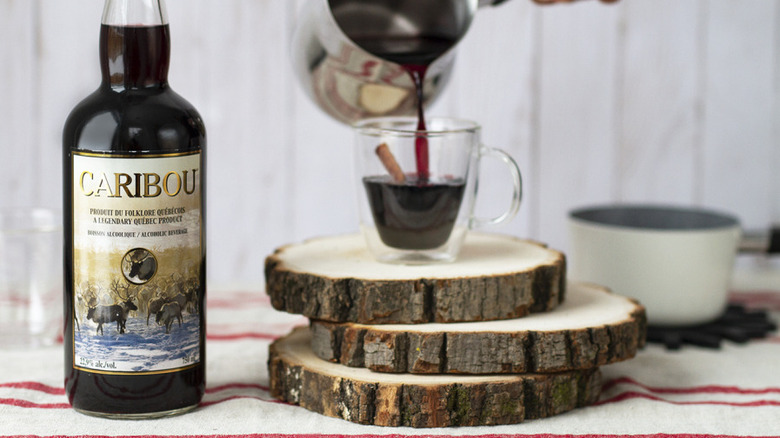
Yet another creation from the French-Canadian part of our country, Caribou is a sweet cocktail that dates back to colonial times. Allegedly, the original incarnation was a blend of whisky and caribou blood. (If that were still the iteration today, it would be extremely understandable why it never became popular outside of Canada.) Additionally, it was said that families who tried to write down the recipe for Caribou would be unlucky, so the recipes were never written down.
Fortunately, the modern-day version is completely different –– although it is strong, about 23% ABV. At its core, Caribou is a blend of red wine, liquor (usually whisky), and maple syrup. Spices are occasionally added. It's sort of like mulled wine with a little extra oomph to keep things interesting. Like the Caesar, Caribou is available in ready-to-drink formats, but there are recipes even novice bartenders can mix. Caribou can be served cold, as it is during winter festivals, but it's preferable to enjoy it hot or warm, ideally in front of a roaring fire during the winter months.
Moose milk
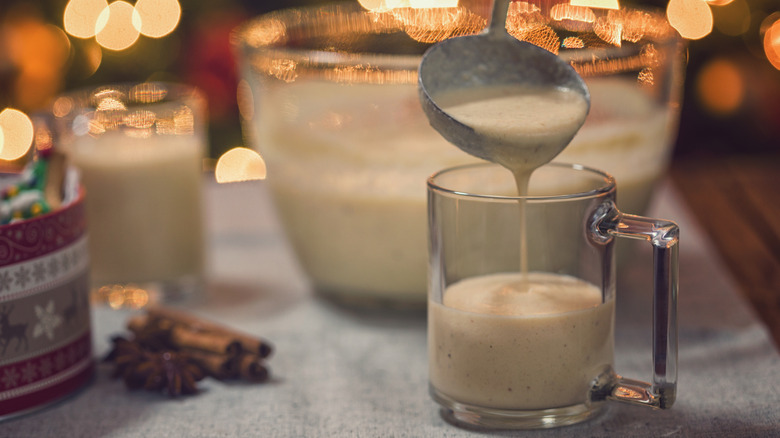
Moose milk is another sweet, alcoholic concoction from Canadians that hasn't quite managed to get a foothold in the United States, although that could be because even in Canada, it was once only enjoyed by a select few. Moose milk was originally the creation of members of the Canadian military, although now it's enjoyed by everyone, particularly around the holidays.
The recipe for moose milk varies, although it has a few core elements that remain the same across all iterations: multiple types of dark liquor, like rum or whisky; a coffee liqueur; egg yolks and milk (sometimes swapped with ice cream); a sweetener, like Canadian maple syrup; and usually a spice, like nutmeg or cinnamon, sprinkled on top. A big batch would be mixed and served to soldiers, with plenty of booze to keep things lively and enough sweet stuff to mask the taste of whatever bottom-shelf liquor the moose milk used. Like Caribou, moose milk also comes in a ready-to-drink option at about 16% ABV, but Canadians know that the actual ABV of real moose milk (i.e. the stuff you make yourself) can be much, much stronger than that.
Maple water

Is there anything more Canadian than drinking the water that comes right out of a maple tree? That is essentially what maple water is. While maple syrup is one of Canada's most famous exports, maple water is sort of the underdog when it comes to goodness tapped from trees. Maple water is the clear, watery sap that comes from trees before it's cooked down into maple syrup. It's light, refreshing, and subtly sweet. It's about 97% water, with the remaining percentage made up of vital minerals like zinc, calcium, and potassium. Maple water can also have numerous health benefits, such as aiding digestion, balancing blood sugar, and having anti-inflammatory effects.
While maple water does exist in the United States, it hasn't quite gained traction the way it has in Canada, where multiple grocery stores throughout the country sell canned, boxed, and bottled maple water from a multitude of brands, usually cozied up next to mineral water, coconut water, and plain old spring water. Available flavored, plain, sparkling, or flat, there's a vast array of maple water options that Canadians are able to taste and enjoy while reaping numerous benefits they bring.