

Once You Make Canned Baked Beans Korean BBQ-Style, You'll Never Go Back
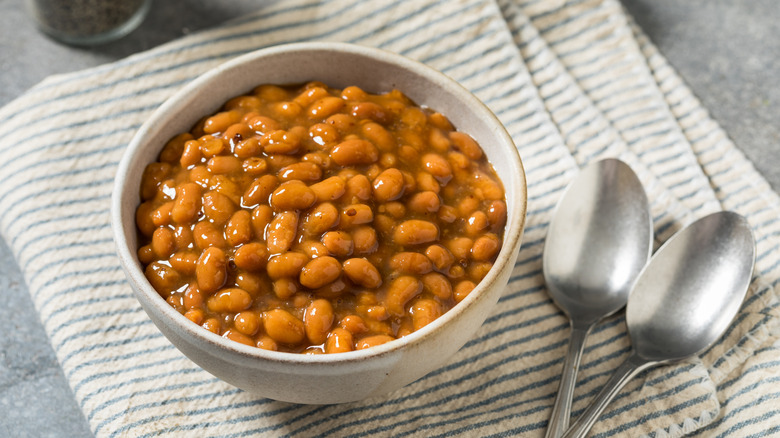
Canned baked beans are always there for you, whether you've run out of time or simply don't feel like cooking another side dish for family dinner. They're one of our favorite short cuts, but there's no reason to stick to the standard sweet-and-smoky flavor profile. There's so many creative uses for canned baked beans, and this latest pairing makes perfect sense. Give them a Korean BBQ makeover with a little splash of gochujang, soy sauce, mirin, and bits of pork belly, and that humble can of beans just transformed into something special.
This culinary mashup works because the flavors in Korean-style pork dishes are remarkably compatible with good ol' American baked beans. Gochujang alone will upgrade your baked beans, as the fermented red chile paste brings heat, sweetness, and deep umami. Soy sauce adds another savory layer, while mirin contributes sugar and acid and loosens the thick sauce.
To start, grab a can of your favorite baked beans. You don't even need to drain them, as that existing sauce provides a sweet base for your flavors and spices to blend into. For roughly 28 ounces of beans (two cans), stir in two tablespoons of gochujang, three tablespoons of soy sauce, and a splash of mirin. Be sure to taste and adjust as you go, as canned beans are already pretty salty and sweet. Then comes the pork. Diced pork belly is particularly fatty, so let that fat render as long as it takes to produce crispy, browned pieces that contrast nicely with the soft beans.
There's a variety of Korean BBQ flavors to incorporate into your beans
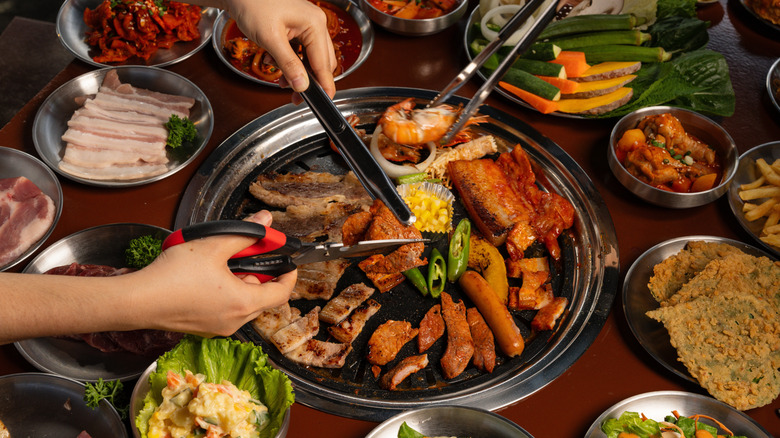
Pork shoulder is more affordable than belly, and also works well if you prefer meatier chunks in your Korean baked beans. It will also require much longer cooking times, so low and slow is the way to go. Whichever meat you pick, don't just dump raw pork into the beans. You'll always want to brown the pork and aromatics first, then add in beans and ingredients like minced garlic, grated ginger, or rice vinegar. You can finish everything on the stovetop, or transfer it to a baking dish and let it bubble and caramelize in the oven.
There's plenty of ways to keep riffing on those beans by adding a very small spoonful of doenjang, another essential ingredient in Korean cuisine. Similar to miso, it's an intensely savory fermented soybean paste that's great as a base seasoning for soups and stews. It's also quite salty, so you may want to skip the soy sauce if you choose to go this route. If it's texture you're after, kimchi can add acidity, spice, and a nice crunch. For additional heat, add a healthy sprinkle of gochugaru, which is Korean chile flakes. Toasted sesame oil adds nuttiness, while sliced scallions and toasted sesame seeds make an easy finishing touch.
Serve them alongside your barbecued meats, spoon them over rice, or just eat them straight from the bowl. Once you've transformed regular baked beans into an explosion of Korean flavors, the traditional version might just be a little boring from now on.