

8 Old-School Sherry Cocktails You Should Try At Least Once
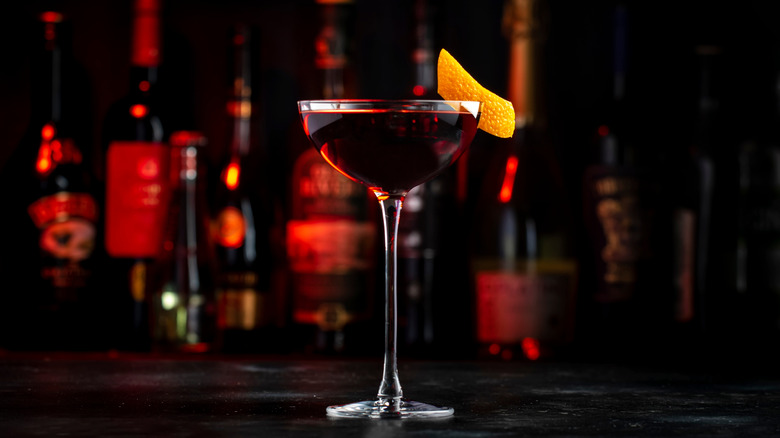
Classic sherry cocktails are like hidden gems, adding a little bit of sparkle and shine to any drink menu. If you're lucky enough to be somewhere that features at least one, you're in for an absolute treat. Think of them like a bartender's handshake — order one, and you're bound to earn some serious street cred.
In addition to being a great ingredient to have on hand in the kitchen, sherry adds complexity to a cocktail, no matter which variety you happen to be sipping (more on that later). The history of sherry and sherry cocktails goes back centuries, so each time you drink one, you're celebrating an important part of classic cocktail culture. Well done. We salute you.
To get the inside pour on which classic sherry cocktails you need to try at least once, we tapped some true sherry experts: Miguel Munoz of Renwick Hospitality Group, Ian Adams of Merchants of Thirst, Matt Piacentini of The Up & Up, H. Joseph Ehrmann of Elixir, and Harry Kaufman of Odo Lounge and HALL. All spirits experts, all well-versed in cocktail history, and most importantly, all lovers of sherry.
Sherry 101: A quick rundown
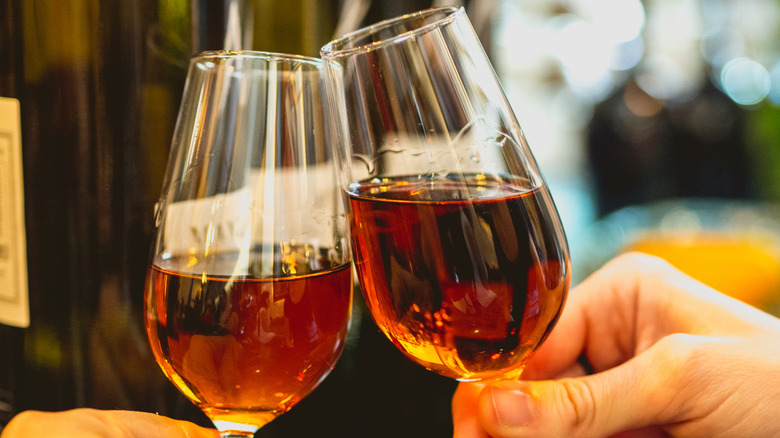
Before we get into our old-school sherry cocktail list, it's important to understand what exactly sherry is and the different kinds that are available. Simply put, sherry is a fortified wine from the Andalusian region of Spain. The wine is fortified after fermentation with a high-alcohol neutral spirit, raising the alcohol percentage from around 12% to anywhere between 15% and 22% alcohol by volume.
Within the sherry category, varieties abound, ranging from bone-dry to syrupy-sweet. According to H. Joseph Ehrmann, there are many different roles that sherry can play in a cocktail. You have fino and manzanilla, with their crisp brightness and salinity, which can add a unique character to martinis and other lighter drinks. Amontillados are light and crisp, with notes of nuts, dried fruit, and tobacco. Oloroso is darker and more intense, with more nuttiness and a slightly funkier flavor. Palo cortado is even more complex, with notes of roasted nuts, dried red fruits, balsamic, and some fresh acidity.
Cream sherry is a turn towards sweet, usually blending oloroso and pedro ximenez, occasionally taking the place of liqueurs in cocktails that call for them. Moscatel is a lesser-known sherry variety, but it makes for a great dessert tipple with notes of golden raisin, lemon curd, dried apricot, and potpourri. And then there is pedro ximenez, a rich dessert wine with intense notes of fig, chocolate, and toffee.
The Adonis
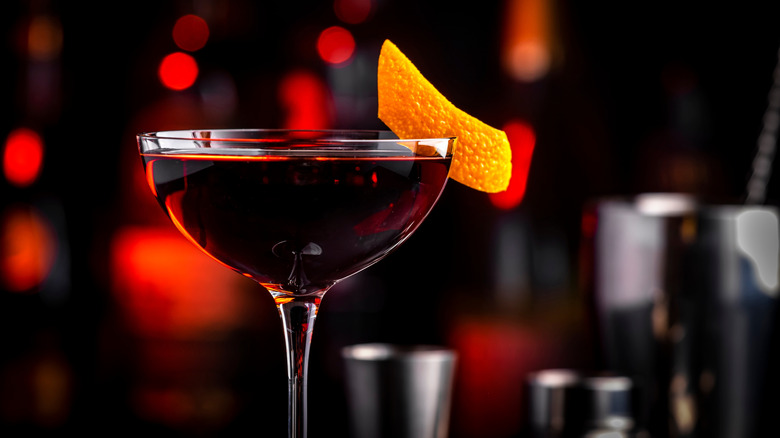
In 1884, the musical burlesque "Adonis" made its debut on Broadway at the Bijou Theater. It ran for a whopping 603 performances, making it the longest-running musical in Broadway history at the time. The Hoffman House, a celebrated hotel bar in New York City, found it only fitting to mark the occasion with a namesake cocktail, and so, the Adonis was born. The success of the drink and the Broadway show gave the bar plenty of notoriety over the next several years, and to this day, the drink remains one of the oldest documented low-ABV cocktails in classic cocktail history.
For a cocktail that celebrates a feat in the dramatic arts, it's a fairly simple cocktail in and of itself. Traditionally made with a dry sherry such as fino, manzanillo, or oloroso, sweet vermouth, and orange bitters, it's a good representation of how to let the featured spirit, the sherry, be the star in the glass without any unnecessary pomp. For the sherry novices out there, the Adonis is also somewhat of a gateway cocktail, helping a newbie ease themselves into the category.
"The Adonis is definitely one that deserves more love," notes Miguel Munoz. "It's simple, low ABV, incredibly balanced, and a great introduction to sherry if you've never had it in a cocktail." Ian Adams also views the Adonis as a standout in the old-school sherry cocktail collection, comparing it closely to a Manhattan, both in its simplicity and in the ease with which a seasoned bartender should handle the order.
The Bamboo
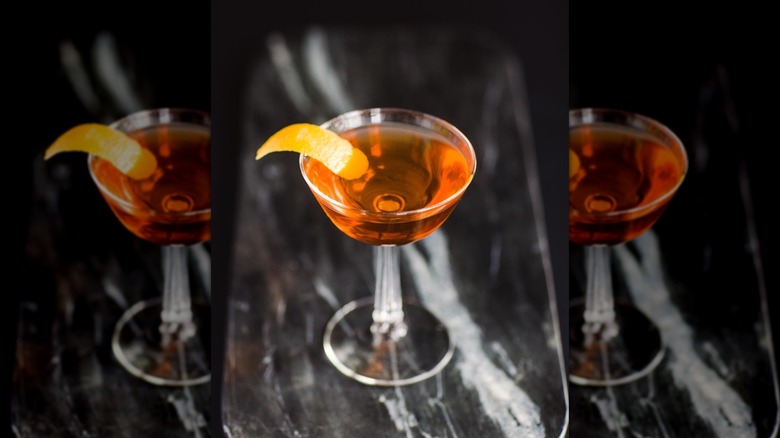
If the Adonis is somewhat of a sherry Manhattan, think of the Bamboo like a sherry martini. The history of the Bamboo is slightly more disputed than its sibling, the Adonis, with some claiming it was inspired by the 1902 song "Under the Bamboo Tree" by Bob Cole. Others believe it was invented in Japan by a German bartender named Louis Eppinger, who mixed the drink at The Grand Hotel in Yokohama. Yet another theory concludes that the drink dates back to 1886, before Eppinger was even in Japan, and to an Englishman.
While the history is a bit shaky, the recipe we have today for the Bamboo is steadfast. Made with a dry sherry of your choice — Matt Piacentini prefers oloroso in his — dry vermouth, and a dash of bitters, the Bamboo is another classic representation of sherry in its most open and honest form. And just like the Adonis, the Bamboo is a slightly gentler tipple, relying on the low alcohol content of sherry to keep this on the tamer side.
At Elixir, H. Joseph Ehrmann has the Bamboo on his current cocktail menu, leaning into the current (and hopefully never-ending) martini craze. "It's a low-ABV cocktail that leans into the martini style and highlights the sherry without the kick of a high-proof gin, providing a similar experience."
Sherry Cobbler
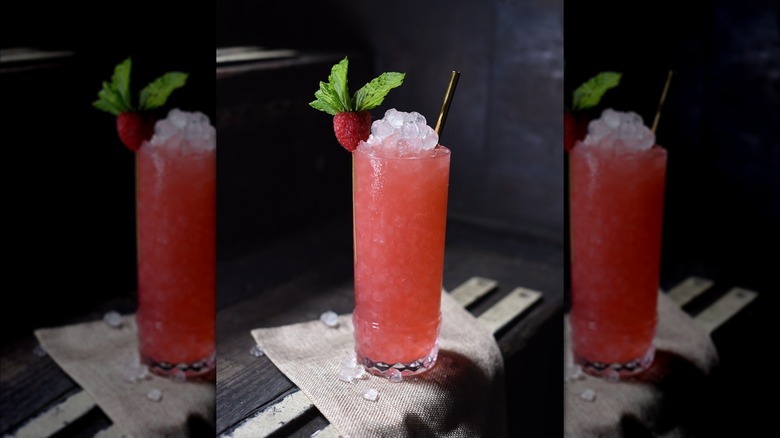
Unlike the Adonis and the Bamboo, both of which are exercises in simplicity, the Sherry Cobbler has a lot more action happening in the glass. In our opinion, it's the most fun on the list. Dating back to the 1820s or early 1830s, the Sherry Cobbler really gained its notoriety courtesy of none other than Charles Dickens in his 1843-44 novel, "The Life and Adventures of Martin Chuzzlewit."
Sherry, fruit, and sugar are muddled in a glass, then shaken with ice and poured over cobbled ice and dressed up with mint, fruit, and, very importantly, a straw. Sweet and refreshing, the Sherry Cobbler is a cocktail genuinely worth looking forward to sipping through that very important straw, without which we may still be fighting with glasses full of ice to reach the final dregs of a delicious cocktail.
"Oh man, the Sherry Cobbler is such an underrated classic, especially in the summer when it's hot and humid," notes Harry Kaufman. "Sherry Cobblers were big in the 19th century as like a liquid AC, because they were very cold, light, and refreshing, and since the mechanical AC wasn't around yet." If you opt to use a drier sherry in your Sherry Cobbler, like an amontillado, Kaufman recommends bumping up the sweetness by adding in some extra fruit, and the booze level with a bit of bourbon or rum for an extra kick.
Rebujito
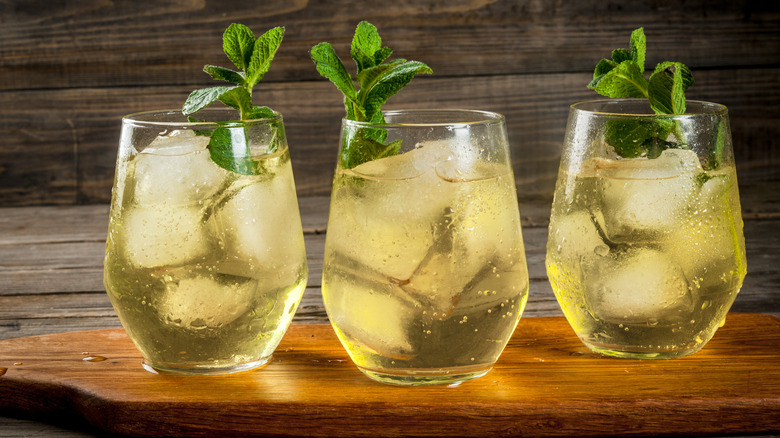
Unlike the Sherry Cobbler, which dates back to the 1800s, the Rebujito is much younger, but still a classic. In fact, the Rebujito was inspired by the Sherry Cobbler and found its widespread popularity in Andalusia, becoming a refreshing drink enjoyed during the Andalusian spring festivals in cities like Seville, Córdoba, Granada, and Jerez. The invention of the Rebujito was a natural progression resulting from the growing popularity of carbonated sodas in Spain in the 1950s. Those who wanted a light, refreshing tipple mixed up this simple drink to enjoy the flavor of the sherry with some bubbles, too. Made with fino or manzanilla sherry, the Rebujito is a highball cocktail served with nothing more than lemon-lime soda and ice.
To enjoy those same refreshing qualities of the Sherry Cobbler but without the added sweetness in the glass, the Rebujito makes all the sense in the world. H. Joseph Ehrmann describes the Rebujito as a drink that just hits the spot, especially under the sweltering sun of the Andalusian coast. "Nothing like eating tapas of fresh fried fish and olives and washing it down with this while sitting at a beachside cafe." Excuse us while we buy our flights to Málaga to do just that.
Eggnog
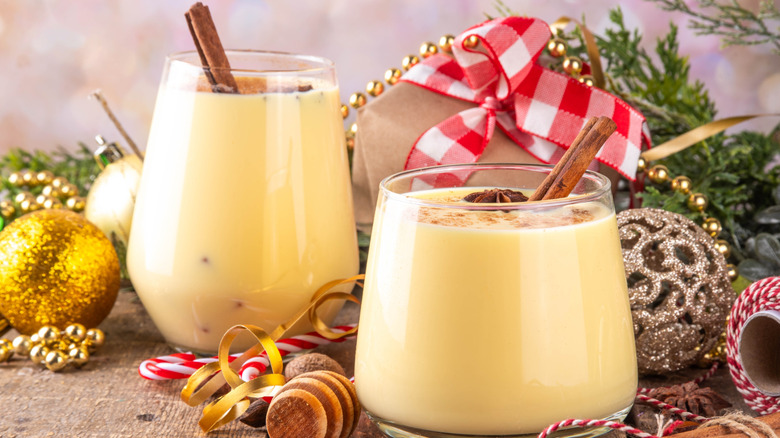
We're taking a pretty hard pivot away from the spirit-forward entries in classic sherry cocktail canon, but truth be told, eggnog — yes, that creamy, sweet drink that rears its milky head every December — is yet another example of a classic sherry cocktail that needs to be tried at least once. While traditional versions tend to feature a dark liquor like brandy, bourbon, or rum (which Tasting Table readers prefer), sherry has been an important part of eggnog's history.
Eggnog was inspired by posset, a milky, ale-based beverage that 13th-century monks enjoyed. And just like any good beverage, that posset was often spiked with none other than sherry. Combine that with eggs and milk, and you've got yourself some eggnog.
As a true cocktail evangelist, H. Joseph Ehrmann is following in the footsteps of one of his cocktail contemporaries, bartender and author Jeffrey Morgenthaler, when he adds sherry to his eggnog. "Like minds," notes Ehrmann. "The math is not hard on why this works, especially when combined with the further fortification of almost any aged spirit." In other words? Just because you're adding sherry to your eggnog doesn't mean you have to leave out any other spirits, like an aged whiskey or rum. 'Tis the season, after all.
La Perla
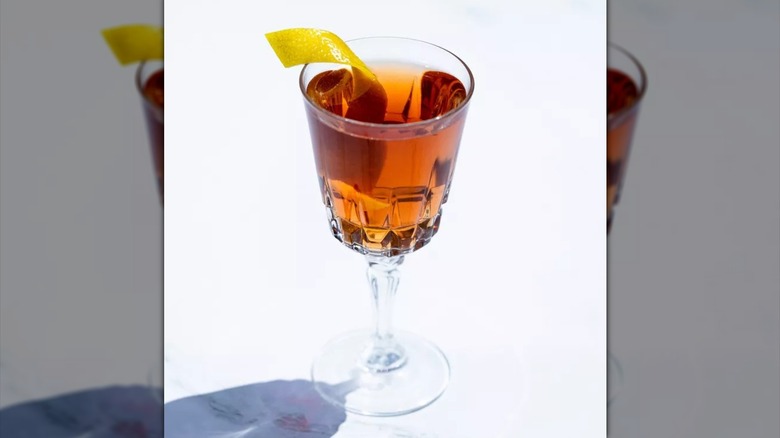
"I've always loved tequila, I've always loved sherry, and it was a natural thing for me to combine the two," said San Francisco bartender Jacques Bezuidenhout to Liquor.com about the La Perla, a cocktail he invented. "Add a little bit of pear liqueur and you have this wonderfully dry aperitivo-style drink." Designed to be a smooth, deeply flavored pre-dinner tipple, the La Perla is a simple cocktail that comes together with reposado tequila, manzanilla sherry, pear liqueur, and a lemon twist.
Bezuidenhout is a friend of Ian Adams, but Adams confidently notes that even if he didn't know the inventor of the cocktail personally, he would still be inclined to enjoy a drink featuring these ingredients. "... This cocktail has rightfully found its place among the modern classics and should be enjoyed any time these three ingredients are found together in any one room," said Adams.
As one of the more adaptable spirits behind the bar, Miguel Munoz notes that sherry has the ability to really play well with others, which may explain why the La Perla is such a delightful concoction. "Honestly, it's one of the most versatile ingredients behind the bar. It pairs really well with tequila, rum, whiskey, gin, vermouth, and amari. It also plays nicely with citrus, bitters, and herbal or fruit-forward ingredients, so there's a lot you can do with it."
East India Negroni
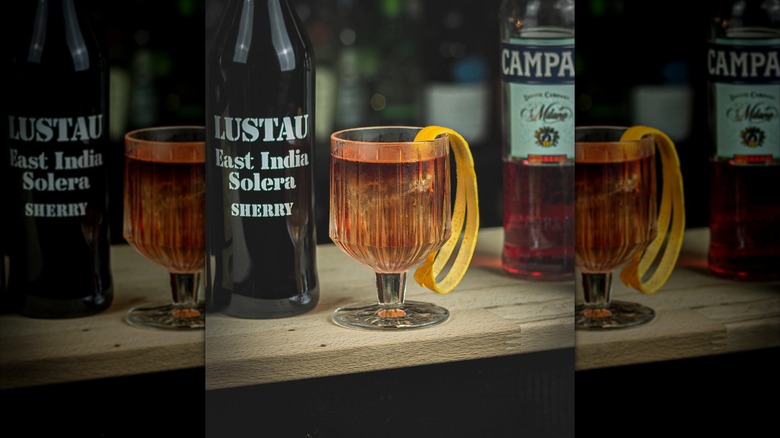
For Ian Adams, no cocktail list is truly complete unless it has a cocktail from Jim Meehan, the mixology mastermind behind PDT, one of New York City's first true speakeasy-style bars, and one of Tasting Table's best cocktail bars in New York City. Per the James Beard Association, Meehan created the East India Negroni in 2009 as a rum-based riff on the classic Negroni. Made with Banks 5-Island rum, Lustau East India Solera sherry, Campari, and an orange twist for garnish, Meehan describes the cocktail as a way to open bartenders' minds to the versatility of rum.
Meehan also touches on the cream sherry that he uses, specifically East India sherry, which is a blend of oloroso and pedro ximenez sherries. Each sherry is matured separately for 12 years in soleras, blended together, and then returned to a 45-cask solera for another three years of aging. According to Bodega Lustau, which produces East India Sherry, the aging process recreates the wines that crossed the oceans in the 17th century, returning to European ports with greater complexity and silkiness.
Meehan is creating a riff on a Negroni using rum and sherry, which isn't exactly a coincidence — this is a pairing that Matt Piacentini uses often on his menu at The Up & Up. On his current menu, an homage to Trader Vic's, home of the original Mai-Tai cocktail, Piacentini is pairing agricole and dark rum with oloroso and rare cream sherries.
Fino martini
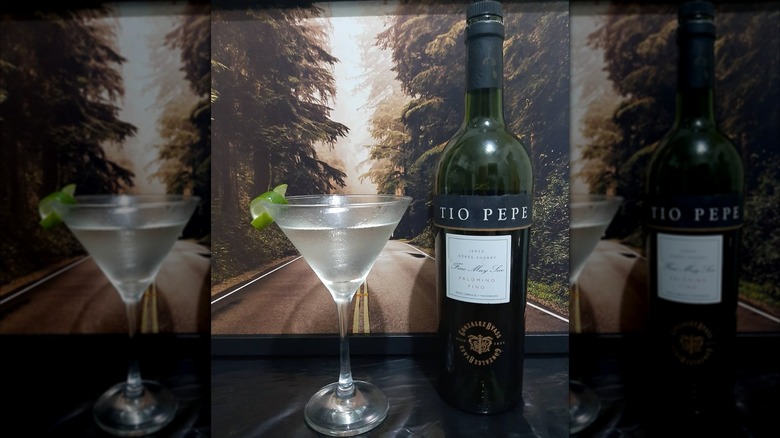
There are a lot of beautiful things to say about the martini, and one of them is this: Its strength is in its versatility. The martini style can be adapted over and over again with various spirits, swapping one for another and creating new flavor profiles and memorable concoctions. We're fairly certain that was the mindset of Stan Jones when he included the fino martini in "Jones' Complete Barguide" in 1977. Made with gin, fino sherry, and a lemon twist or olive for garnish, the fino sherry replaces the dry vermouth from a classic martini, delivering an entirely different drinking experience. While dry vermouth is herbal and bitter, fino sherry has more acidity and salinity to it, making the fino martini a more complex sip.
As a two-ingredient cocktail, a fino martini is a game of balance — you want to get those portions just right to make sure neither ingredient is overpowered. For Harry Kaufman, sherry is the ideal ingredient to add to a cocktail when aiming for balance. "Sherry has acidity that is chemically different from citrus, as well as more complex nuttiness or oxidized notes," he explains. "I like to use it when I'm looking to balance a cocktail but I don't want to bring in bitterness."