

Repurpose Almost Any Of Your Kitchen Scraps Into Affordable Soup Cubes — Here's How
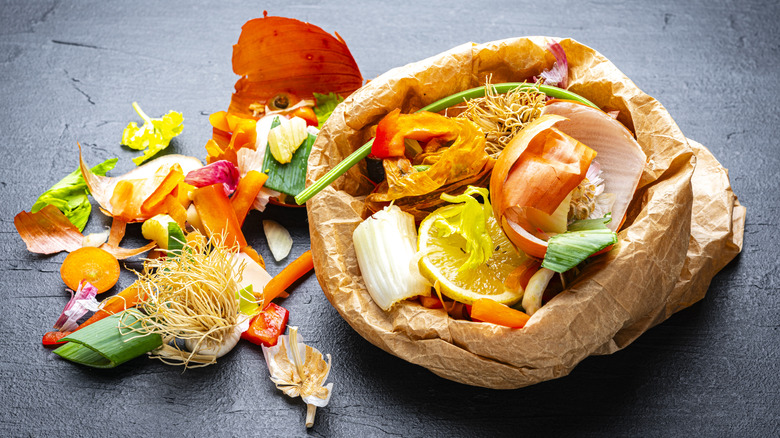
Onion ends, celery leaves, carrot peels, mushroom stems, a leftover corn cob, a rind of parmesan — if they all sound like trash to you, bad news: You've been missing out on what many chefs call liquid gold. By simmering all those scraps in a saucepan, you can get a deeply flavorful stock going. But when you go the extra mile to reduce that stock down and freeze up the remains, you get something far more useful: soup cubes.
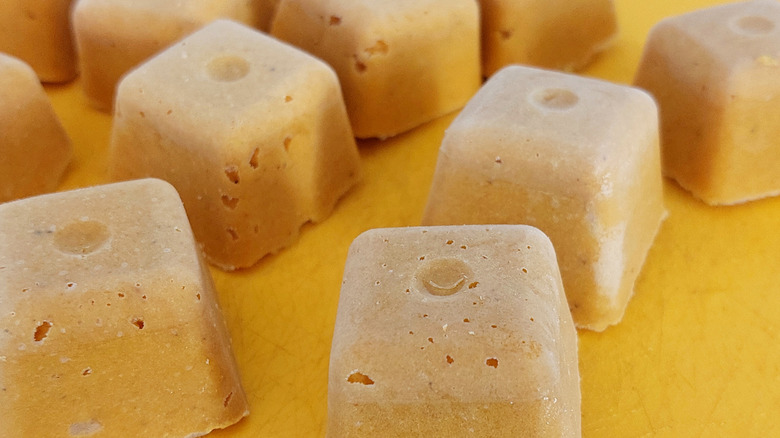
A quart of homemade broth takes up a lot of valuable freezer space, and using it means thawing out way more than any single dish calls for. A single frozen cube doesn't have that problem — it's stock reduced to its most concentrated form, packing the flavor of a much bigger batch into a fraction of the space. And, unlike liquid stock, you don't have to do any measuring when you want to cook with soup cubes. Made in ice trays, every one is the same — you only need to drop one into a pot of rice, a bowl of ramen, a pan of sautéing vegetables, or a simple soup, and it'll consistently give the dish the same flavor boost.
And since they're made from kitchen scraps, they cost next to nothing to make. All you need, outside of the raw materials, are two freezer bags, a pot, some water, and time.
Making your own soup cubes from kitchen scraps
First, you need a sorting system for your scraps. Put all the veggies — trimmings, peels, and so on — in one bag, and animal products like bones, skin, and fat in the other. They impart different flavors and qualities to your stock, so separating them will make the end results easier to control.
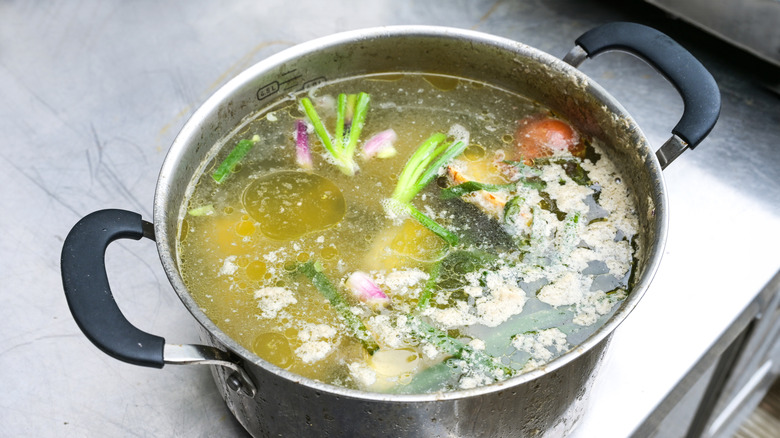
Dump everything into a pot, cover with water (preferably leftover pasta water), and bring to a simmer. Vegetable scraps take around an hour, while bones need several hours to release their collagen. For a deeper result, roast the scraps and any bones before they go into the pot — the browning adds richness. There's no need to season, since the liquid is about to be concentrated several times over — even a pinch of salt risks inedibly salty soup cubes later. Strain the finished liquid twice, first through a colander to catch the solids, then through a fine sieve or cloth to clear out the sediment that would otherwise concentrate.
The last — and most transformative — part is reduction. Crank the stove to a fast boil, then drop to a simmer for a few hours. You know you've got it when what's left is thick enough to coat the back of a spoon. Put into a freezer in a muffin or ice cube tray until solid, then pop out the frozen blocks and store them in a bag. Properly frozen, they'll keep for as long as you need them to.
Tips to get the perfect soup cubes
In a perfect world, all kitchen scraps are welcomed in the pot — but that's not how it is. Some things have no business anywhere near the pot, such as cruciferous vegetables. All your broccoli, cauliflower, cabbage, Brussels sprouts, and kale — they'll turn the stock bitter very quickly (with some even reporting a sulfurous taste). It's best to keep them out entirely, or just add one or two if you prefer a bit of bitterness.
Another thing to avoid is scum. The straining steps you did before reduction remove a lot of impurities, but not all. They'll steadily float to the surface and create a foamy layer on top of your stock that you'll want to skim off as it appears. If left in, the foam will muddy the flavor and turn everything greasy.
Like most kinds of cooking, you want a nice balance between the ingredients in your stock. If ¾ of the pot is just red onion ends and peeled skins, you get something oddly cloying. Too much beet trimmings? If you're alright with having the entire pot (and whatever it touches) dyed pink ... feel free. A cube made of a mixed bag of vegetables, kept roughly even, plays well with more dishes. One last thing: label the bags. A freezer full of unmarked brown squares a few months from now is nobody's idea of a fun guessing game.