

Malt Vs Single Malt Whiskey: What's The Difference?
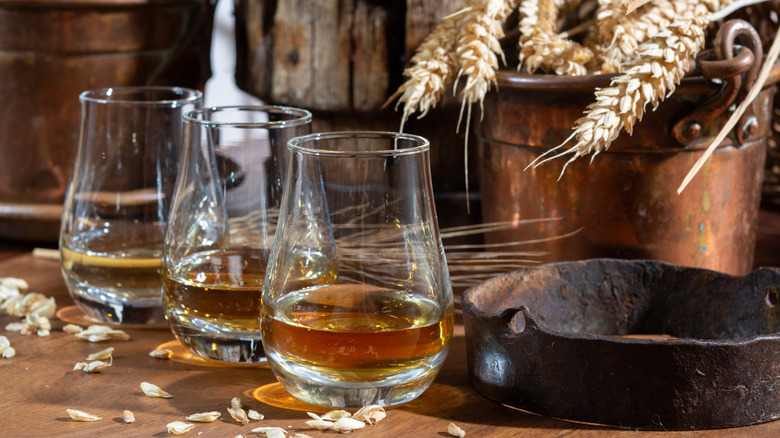
Whiskey terms can get pretty technical, which is the last thing you need when you're trying to pick the perfect bottle. From the nomenclature to government regulations to whiskey versus whisky, there are all sorts of nitty-gritty details to get lost in. So when it comes to malt versus single malt, remember that malt is the broad category for all whiskeys produced using only malted barley and distilled using only copper pot still methods. Single malt falls under that category, but it must also be sourced from just one distillery.
Malt whiskey is exclusively made with 100% malted barley, which is a grain that's been moistened, germinated, and dried. This sets off enzymes that convert the starch into sugars. If you like the taste of malted milkshakes, which have notes of toasted cereal, roasted nuts, and soft honey, those are all flavors that can come out of malting. Malt whiskies are traditionally associated with richer, more complex flavors than grain-based whiskies. But malt doesn't tell you how many distilleries it blended, only the type of grain used. Brands that are known for their malted blends include Johnnie Walker Green Label, Chivas Ultis, and Monkey Shoulder.
If you want all your juice to come from only one distillery, grab a single malt. Single malt whiskeys tend to get all the acclaim and fanfare, but "single" does not mean the number of barrels or batches. A single malt can contain whiskey from multiple barrels and multiple years; it just all has to happen under the same distillery roof.
Single malt is specifically tied to one distillery
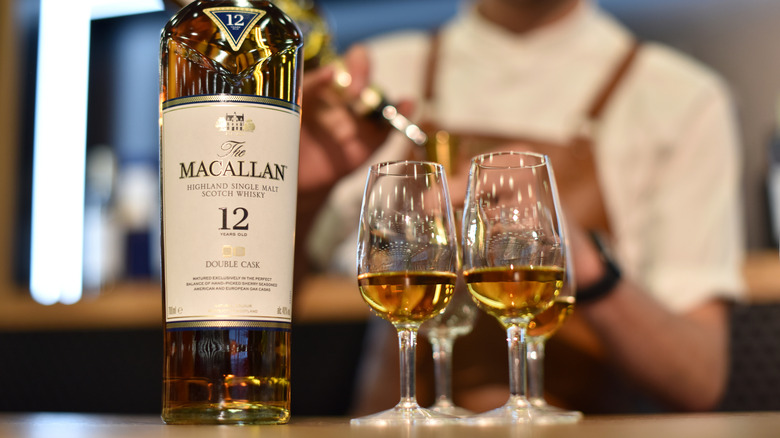
Now that those two categories have been laid out, it's time to get even more detailed. If the single malt is hailing from Scotland, it must have all of the above attributes, as well as be aged for at least three years in oak barrels. Single malt Scotches are a legally protected category, just like France's Champagne or Italy's Parmigiano Reggiano. But while Scotland is the birthplace of single malts, American single malts have been trending since the 2010s, with the official legal definition only just established in 2025.
The reason for all this hullabaloo around single malts is simply because it shows off the personality of a single distillery and its surroundings. Much like how the concept of terroir is tied to wine, the specific geographic region of one distillery affects the taste of single malts, as well as its styles and traditional preparations. If you've ever heard someone at a bar droning on about peated whisky and its distinct flavor profile, now you know. Given that peat is only found in certain parts of the world, this is where the distinction of a single distillery comes into play.
Purists like to believe single malt is superior to blended whiskeys because of its unique character, craftsmanship, and connection to a specific producer – and the higher prices certainly reflect that. Ultimately, the choice comes down to what you're looking for: a greater sense of place, or a whiskey crafted for balance and consistency. Both are equally delicious.