

The World's Best-Selling Candy Company In 2026 Beats Chocolate Giants Hershey And Ferrero
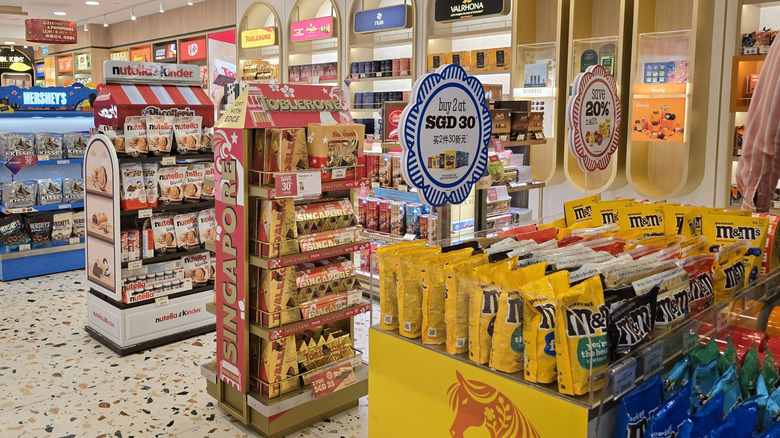
Ask someone to name the biggest candy or chocolate company on the planet, and you're likely to hear names such as Hershey, Ferrero, or Nestlé. That seems reasonable, since the various brands produced by those confectionery giants occupy countless square footage in retail outlets. However, according to Snack Food & Wholesale Bakery's 2026 Global Top 100 Candy Companies, none of those companies hold the top spot when it comes to actual sales figures. That honor instead goes to Mondelēz International, the snack empire with a chocolate lineup that includes some of the most familiar names in North America, Europe, and beyond.
According to the SF&WB ranking, Mondelēz landed in first place with $38.5 billion in reported sales, putting them slightly ahead of Mars at $36 billion, and considerably higher than Ferrero at $22.2 billion and Hershey at $11.7 billion. The figures are not a measurement of how many pounds were sold, instead reflecting the total sales revenues, which cover chocolates and other confectionery products sold by each company, such as hard candies, gums, mints, jellied candies, caramels, snack bars, and more. A company landing atop that huge heap of sweetness is a pretty impressive achievement.
The Chicago-based company came into being on October 1, 2012, when Kraft Foods split into two companies, creating Mondelēz International as its global snacks business. That technically makes Mondelēz a newbie amongst candy companies, but in realty, many of the brands in its portfolio date back more than a century — with founder names like John Cadbury and James L. Kraft, you get the picture. Today, Mondelēz employs about 90,000 people and sells products in more than 150 countries.
Luxurious chocolates produced by Mondelēz International
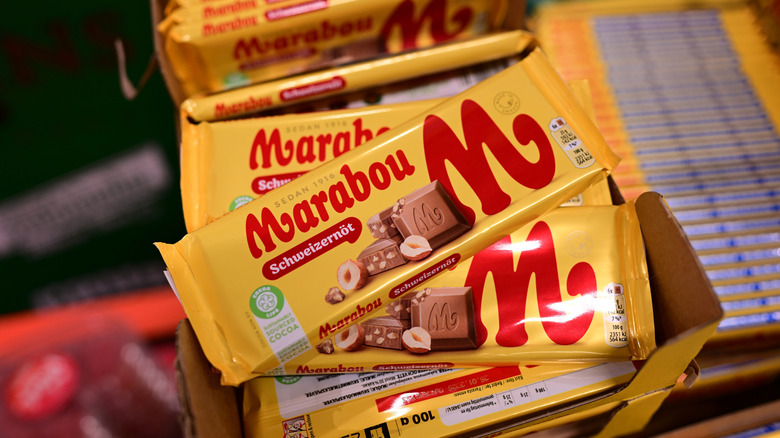
Apart from candy, the stable of goods within the Mondelēz brand ranges from baked snacks, beverages, gum, and biscuits (cookies and crackers to U.S. consumers). They include some old-school snacks that are making a comeback, as well as newer top snacks that consumers still demand even despite price hikes, such as Oreo, Triscuit, Chips Ahoy!, and Ritz. But it's the chocolates earning passionate devotion across the globe. SF&WB notes the company's broad sweep of chocolate offerings, from standard chocolate bars and chocolate-covered wafers to a parade of filled, panned, molded, and candy-coated chocolates — and even chocolate drinks.
Some of its biggest stars are names that most consumers recognize, including Cadbury, one of the most popular chocolate bar brands around the world. The Cadbury name was first linked to chocolate in 1824 when John Cadbury made drinking chocolate by mortar and pestle in his grocer's shop in Birmingham, England. By 1905, the first Cadbury's Dairy Milk bar arrived, and it still thrives more than 120 years later the under Mondelēz umbrella, available in 23 varieties and 33 countries. It sticks to old-fashioned methods such as using 1.5 glasses of fresh liquid milk for every half-pound of chocolate.
The roots of Mondelēz chocolate brands dig deep across Europe, including the Alpine-milk chocolate bars known as Milka, which debuted in Germany in 1901. Its name combines the German words "milch," meaning milk, and "kakao," meaning cocoa. The bars are now sold in at least 15 countries, to the tune of 150,000 Milka products sold every hour. Then there's also Toblerone, the triangular, honey-almond Swiss chocolate bar commonly spotted in airport shops, gift stores, and elsewhere, including Costco. They're mostly still made in Switzerland, earning sales of about 4 million per day.