

Tartar Sauce Vs Aioli: What's The Actual Difference
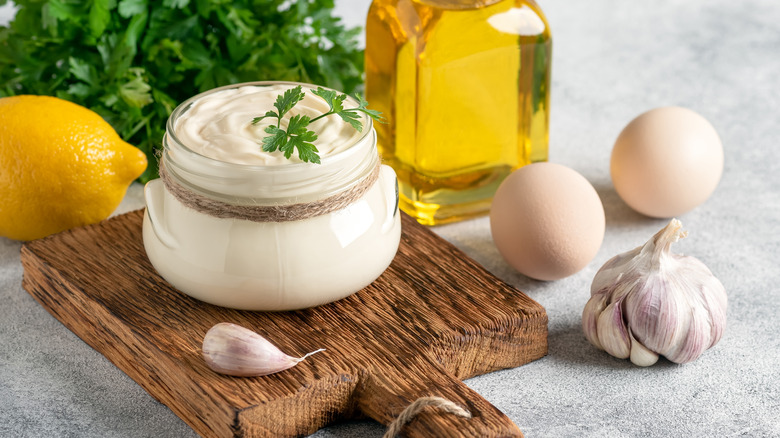
If you've been out to eat at a restaurant in the past decade or so, chances are you've come across the term "aioli." Likewise, if you've ever visited any seafood joint, you've likely seen tartar sauce on the menu. While both are similar in look and consistency, assuming the two are the same would be a grave mistake.
At its most traditional, aioli is an ancient sauce of Mediterranean origin made from garlic and olive oil emulsified into a smooth, creamy paste, and seasoned with a dash of salt. The emulsification process is laborious, and ingredients like egg are commonly added to speed up the job. The combination yields a base similar to mayonnaise, but distinct thanks to its strong garlicky flavor.
A simple tartar sauce recipe, on the other hand, uses mayonnaise as the base. Tangy ingredients such as pickles, capers, and mustard are added. It's the addition of these bright ingredients that helps cut through the rich base — making it perfectly complementary to fried seafood. As such, aioli has its own set of complementary dishes.
Tartar sauce is tangy while aioli is garlicky
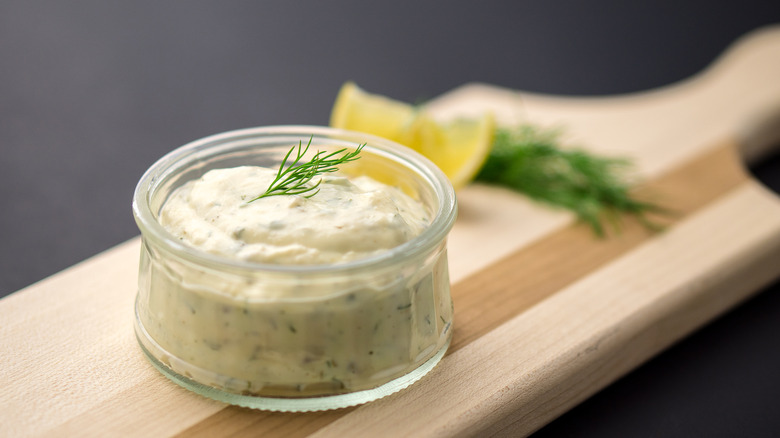
Where tartar sauce is chunky, aioli is smooth and homogeneous. If you like dipping your French fries in mayonnaise, this alone makes it the perfect garlicky upgrade. However, the real beauty of an aioli is that you can really add whatever additional flavorings and seasonings you prefer, like wasabi, chipotle peppers, or fresh herbs. With these additions, it's good spread on just about any sandwich, but can also be used as a dip for chicken wings and veggies. Tartar sauce, on the other hand, comes with a multitude of flavors already packed into the sauce.
The brininess of the capers in tartar sauce mirrors the oceanic flavor notes in seafood, which is why it pairs so well with fried fish, shrimp, and crab cakes. Depending on who makes the sauce, you may encounter tartar sauce made with extra add-ins like citrus, herbs, and olives — the secret ingredient that makes Culver's tartar sauce taste so good. Although tartar sauce is flecked with tiny chunks of pickles, capers, and sometimes other chunky ingredients, it's still a perfectly spreadable and dippable texture.
When you're ready to make your own versions of the sauces at home, Tasting Table will have you covered. Try mixing up a simple tartar sauce recipe when you're looking for an ideal pairing for your fried fish sandwich, or our homemade garlic aioli recipe for a perfectly pungent condiment on your hearty steak sandwich.