

What Happens When You Eat Expired Ketchup?
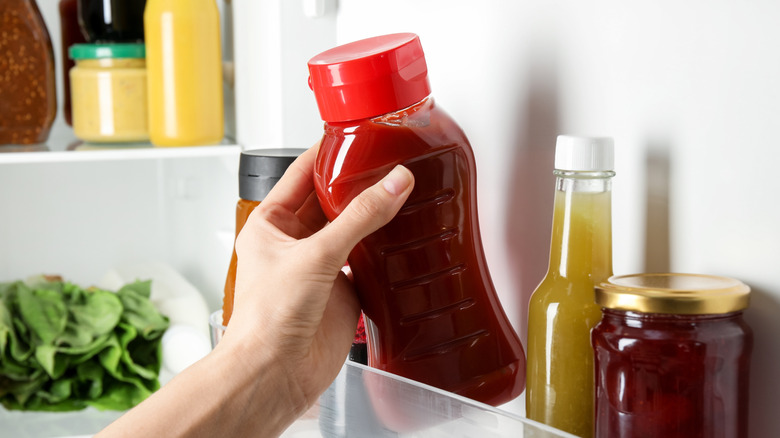
No one wants to suffer the ill effects of eating spoiled food. According to data from the Center for Disease Control and Prevention, nearly 48 million Americans fall sick due to foodborne illnesses every year, with 128,000 of them getting hospitalized. So, if you have inadvertently consumed expired food, there's a good reason to be worried. Having said that, the chances of falling seriously ill or ending up in the hospital from eating expired ketchup are extremely slim.
How long condiments last depends entirely on the condiment in question. Those made using dairy products or eggs, like mayonnaise or aioli, will spoil faster than mustard or hot sauce, which use ingredients that have natural preservatives. Ketchup falls into the category of condiments that have a fairly long shelf life thanks to its high amounts of vinegar, salt, and sugar, which are all common preservatives. This means it doesn't spoil easily even after it passes the expiry or best-by date. An unopened bottle of ketchup stays good for up to two years past its best-before date if stored properly. Once opened, it's typically safe to eat for about six months if kept refrigerated.
Once a bottle of ketchup has hit its best-by date, that doesn't necessarily mean it has gone bad. The frustrating truth behind "sell by," "use by," and "best by" labels is that in many cases, they encourage people to throw away perfectly good food. The fact is that there are better ways to tell if your ketchup has gone bad, and once you get a handle on these, it's unlikely you'll ever end up eating spoiled ketchup.
How to tell if your ketchup has gone bad
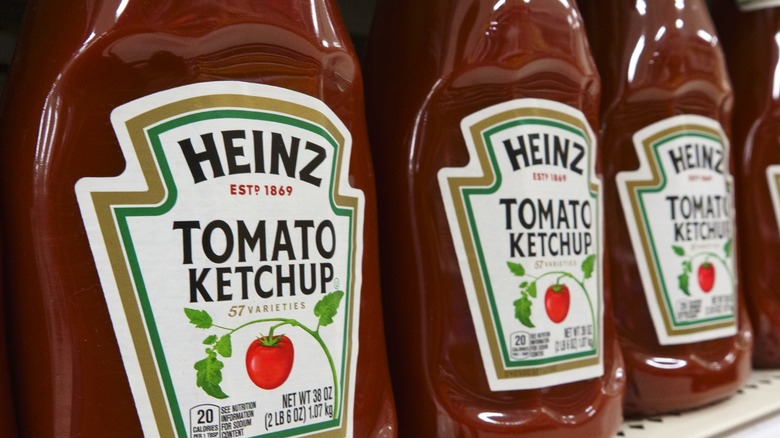
Just because ketchup doesn't necessarily turn inedible on or around its best-by date doesn't mean it doesn't spoil at all. Like any food, it can get contaminated by bacteria and other microorganisms. The quickest way to tell if ketchup has gone bad is by looking for simple visual and olfactory clues. If your ketchup starts smelling off or sour, or you see mold forming on the rim of the bottle, toss it immediately. Also, if your ketchup is in a squeezy bottle that is looking bloated, it's a sign that the condiment has started fermenting and needs to be thrown away.
To keep your ketchup from spoiling quickly, make sure the lid is tightly closed and store it in a dry, cool place. Any exposure to heat and light will result in oxidization. In fact, Heinz says that the proper place to store ketchup is only in the refrigerator. "Although we're aware many Heinz Tomato Ketchup fans have been storing their ketchup in the cupboard, we do recommend refrigeration after opening," Olivia Lennon from Heinz told The Daily Mail. "This is the best way to maintain the delicious tangy taste of our Heinz Tomato Ketchup that you know and love." The company sells around 650 million bottles of ketchup every year, so we can take its word as gospel.