

11 Common Mushroom Myths, Debunked
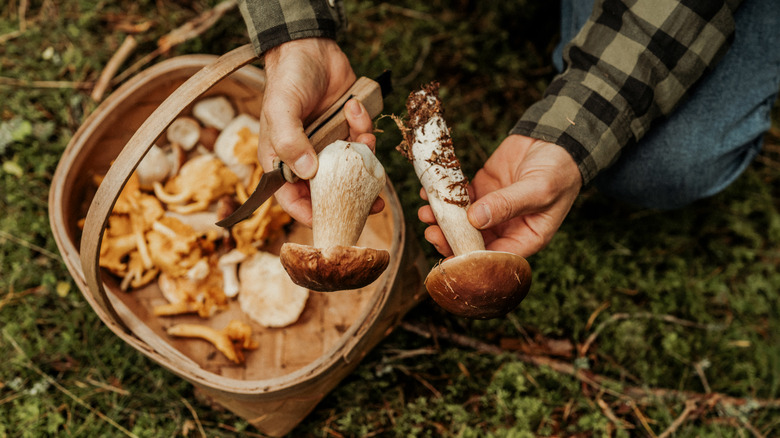
Did you know that if you step into a circle of mushrooms, you might be transported to another world? That's because these circles are actually fairy rings, created by fairies and elves, and they have magical abilities to turn into portals to another realm. Okay, you got us, that's just an old folklore tale, and it has no basis in reality. Shame, it would have been fun.
Fairy rings are clearly a myth, but not all inaccuracies around mushrooms are so strikingly obvious. In fact, there are many pervasive myths surrounding mushrooms, plenty of which sound perfectly plausible, making them much harder to spot.
To figure out and debunk some of the most common mushroom myths, we had to turn to the experts. We spoke to chef Juan Pajarito, the executive chef at New York restaurant Avant Garden and former executive chef at mushroom restaurant Third Kingdom, as well as Alan Bergo, forager, cookbook author, and founder of Forager Chef, to put to bed some of the most common and widely believed mushroom myths. Prepared to be schooled.
There are only a handful of mushroom varieties
Small, smooth, and rounded with a thick stem, white button mushrooms are what most people imagine when you say the word "mushroom." It makes sense: They're the main option on grocery store shelves, often accompanied only by brown button mushrooms or larger varieties, like portabella. According to the Mushroom Council, 90% of all mushrooms consumed in the U.S. are those classic white button mushrooms.
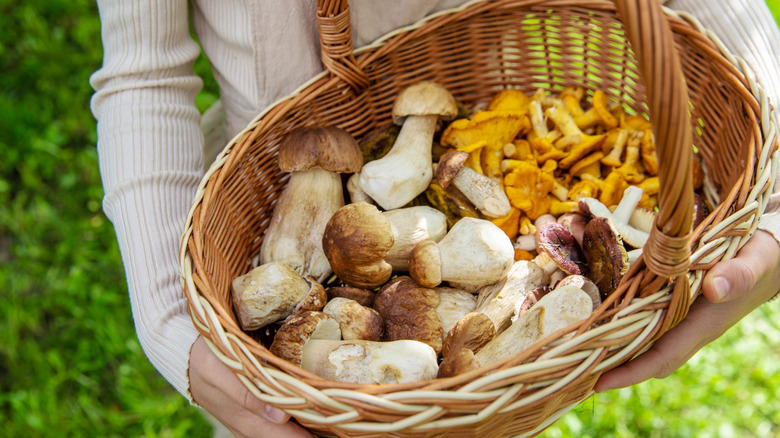
But if you look beyond the grocery store, you'll find that many, many different mushroom varieties exist, says Alan Bergo. In fact, the shelves of grocery stores are just the tip of the iceberg. "What you see in a grocery store is a tiny fraction of what's actually out there," Bergo explained, adding that he harvests around 20 wild species every year. That sounds like a lot, but it's still a fraction of what's possible — there are around 300 edible species of mushroom.
"Just like heirloom vegetables, there's a myriad of different varieties with incredible shapes, forms and flavors to try," says Bergo. "I like to say that if you don't like mushrooms, you just haven't tried the right one yet." If you want to try different mushrooms, skip the grocery store and head to your local farmer's market.
All mushrooms are the same
White button mushrooms are mild, earthy, and slightly firm, with just the right amount of umami. This makes them a versatile cooking ingredient, and they can become the star of everything from soups and pastas to sauces, salads, and stir-fries. Because of their tender texture and umami flavor, people often cook with button mushrooms when they're having a meat-free day, but Juan Pajarito is keen to point out that all mushrooms have potential beyond a meat substitute. "The biggest misconception is that mushrooms are all variations of the same ingredient: earthy, soft, vaguely savory, and usually treated as a substitute for meat. We think that framing dramatically undersells them," he says.
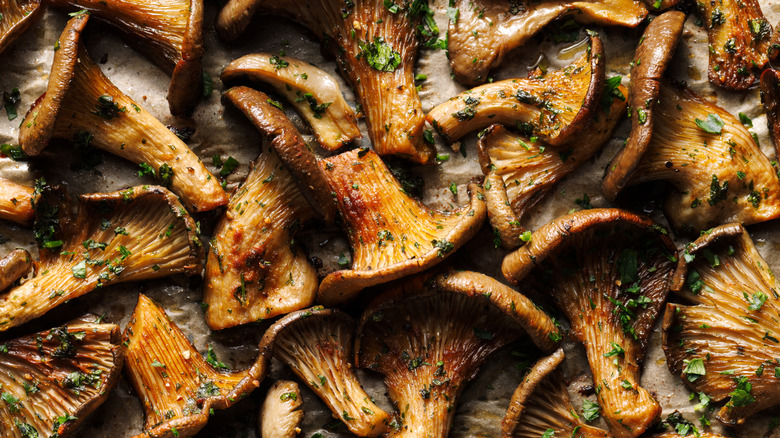
The key to becoming a mushroom master in the kitchen is understanding that not all mushrooms behave and function the same. An oyster mushroom, for example, is not the same as a button mushroom; it's fleshy and fibrous, and while it's also earthy and full of umami, it also has a hint of licorice to it, too. "A maitake does not behave like a king oyster, and a morel has almost nothing in common with an enoki beyond both belonging to the fungal kingdom," adds Pajarito.
They only have earthy, umami flavors
Most people think of the mushroom flavor as earthy, savory, and full of umami, and in many cases, that's accurate. In fact, it's a big reason why people love and cook with mushrooms so often. But actually, did you know that some mushroom varieties can be fruity or floral?
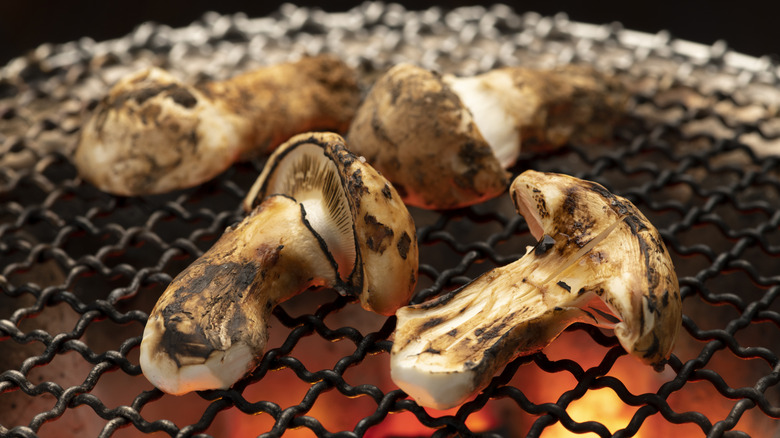
Chef Juan Pajarito points to the matsutake, a Japanese variety of mushroom that also grows in the Pacific Northwest. Also known as pine mushrooms, matsutake are typically harvested during fall, and they're thick stemmed, a little stubby, and incredibly fragrant and aromatic. "[Matsutake] completely upend the expectation that every mushroom should be an 'umami bomb,'" says Pajarito. "They certainly have savory compounds, but that's almost besides the point. Their defining qualities are all aromatic. You got pine, spice, cedar, fruit, even something slightly floral."
Another example of a different kind of mushroom is the candy cap. As the name suggests, this variety of mushroom, which also grows in the Pacific Northwest, as well as California and Oregon, tastes almost like caramel or maple syrup. They're sweet enough to be used in dessert recipes, and some bake them into cakes or cookies. To better understand how different mushrooms taste, Pajarito says the best thing to do is to spend some time getting to know your mushroom. "Buy one variety you have not cooked before," he says. "Smell it, tear it apart, notice its density and texture, and research how that particular mushroom responds to heat."
Mushrooms are vegetables
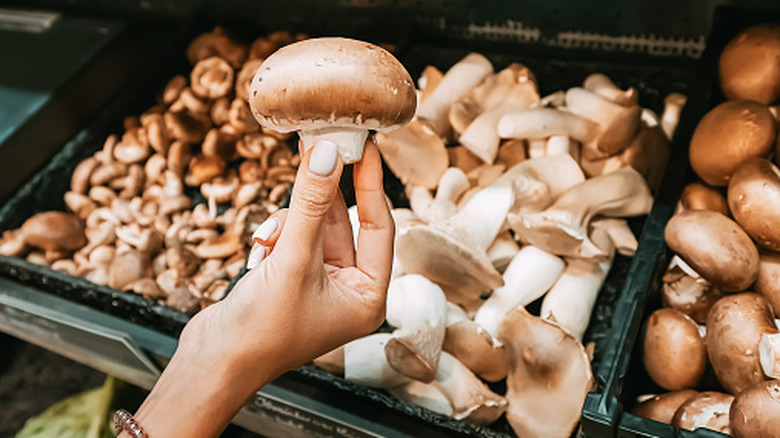
In the grocery store, you'll nearly always find the mushrooms in the produce section. And, because they're hanging out with the carrots and the potatoes, many shoppers take this to mean that mushrooms are vegetables. But that's not actually the case — mushrooms are fungi, an entirely different kingdom. Brace yourself, it's about to get a little icky. While vegetables come from plants, which use photosynthesis to get energy, mushrooms get their nutrients from dead things. We did warn you. They break down decaying matter, like dead trees and plants, and, in basic terms, turn it into food.
The reason many people assume mushrooms are vegetables is because of their position in the grocery store, and because of how we cook with them. "Grocery stores organize food according to how we use it, not according to biology, so I think that correlation is made based on this," says chef Juan Pajarito. Alan Bergo agrees, adding that "it makes sense for suppliers to arrange them next to vegetables in the supermarket because they're cooked and served similarly to vegetables."
You should never wash mushrooms
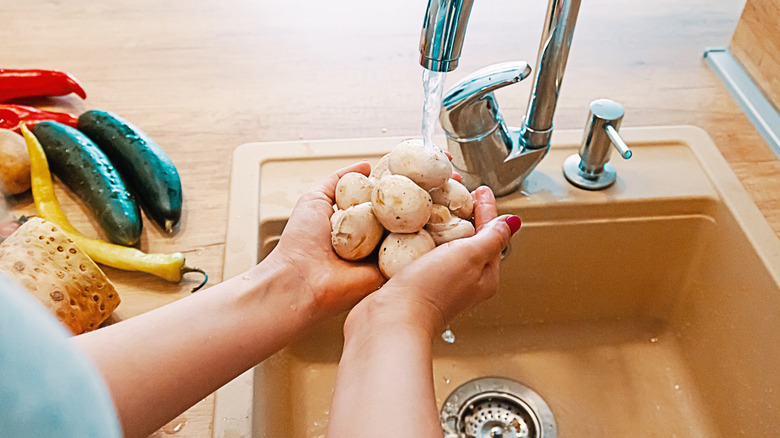
If you've ever been served a plate of soggy mushrooms, you'll know that water can make a big difference to the taste and texture of the fungi. Many people think that if they so much as splash a mushroom to clean it, they're going to end up ruining their dish. While it's true that too much water can make for a soggy mushroom, that doesn't mean you need to turn aquaphobic when you're cooking with them.
"The real problem is not water touching a mushroom; it is putting them into a pan while its surface is still wet, or seasoning them while they're cooking," says Juan Pajarito. "A quick rinse will not ruin them." The key is to wash them, dry them well, and then start cooking with them. Pajarito explains that at Avant Garden, chefs even place mushrooms on an absorbent towel before they start cooking.
Alan Bergo is also an advocate for washing mushrooms, especially the wild ones. Again, he says they'll need to be drained on a towel first, but most of the water will burn off during cooking. "Generally speaking, 99% of the wild mushrooms I harvest must be cleaned in order to be safe and provide a pleasant dining experience," he explained. "I once had a customer break a crown from a rock growing directly inside the flesh of a hen of the woods. Once something like that happens you tend to take cleaning much more seriously."
You need to move them around when frying
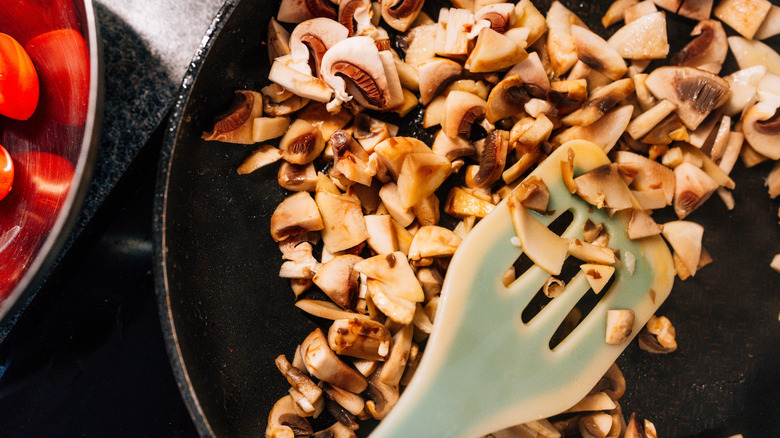
When you're frying vegetables, you need to move them around to make sure they cook evenly. In fact, that's why stir-frying is called stir-frying; everything is moved constantly over the heat to avoid burning and make sure everything is nice and crisp. If you're frying mushrooms, the temptation is to do the same. But experts say you need to step away from the wooden spoon or the spatula when you're cooking mushrooms. If you leave them, this will help to stop the mushroom from releasing its moisture into the pan, and prevent you from ending up with that unappetizing soggy texture.
Another common mistake when frying mushrooms is to simply put too many in the pan in one go, says Juan Pajarito. "When mushrooms are piled on top of one another, they release water faster than it can evaporate, so they steam rather than brown," he explains. "People also tend to move them around constantly and season them without accounting for how much moisture they will release, or take them off the heat as soon as they soften."
They're just a side dish or a vegetarian option
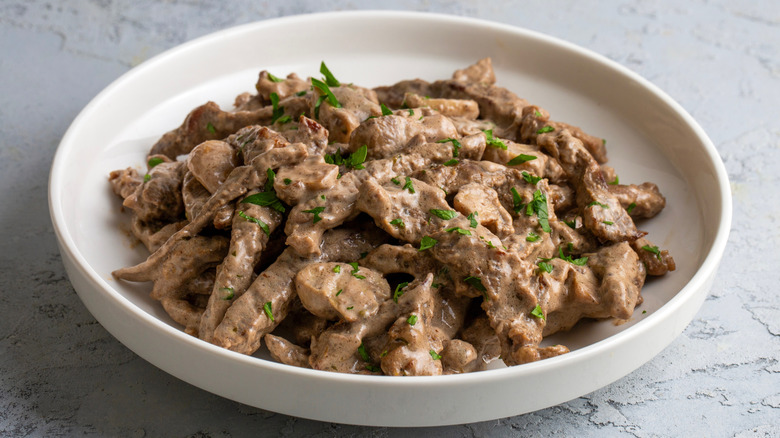
If you're a vegan or vegetarian and you don't like mushrooms, that's a problem. Many restaurants rely on mushrooms as a meat alternative. Slap a portabella in a bun, and that's a veggie burger, for example.
For non-vegans, mushrooms are usually regulated to the side of the plate, cast as the supporting role to mains like steak and pasta. There's nothing wrong with this, says Juan Pajarito, but in his mind, it's not doing the fungi's true potential justice. "Some do really well as the centerpiece of a dish," he says, before adding that "their greatest culinary value is not that they can imitate another ingredient." He continues: "It is that they allow a dish to become something it could not otherwise be."
When you're feeling stuck in a rut with your mushroom recipes, Alan Bergo recommends looking to other cultures for ideas. "In the Mihoacan region of Mexico you might find varieties of wild mushrooms boiled, then fried with lard, onion and peppers and served as tacos," he says. "Looking at how people around the world [cook mushrooms] can give you great inspiration."
Wild mushrooms are always poisonous
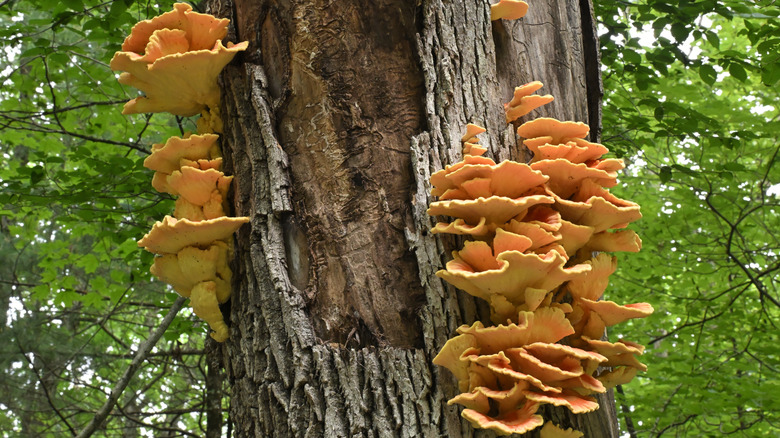
Wild mushrooms have a bad reputation. Many people are afraid of them, which, let's be honest, isn't entirely irrational. The truth is that some varieties of wild mushroom are extremely dangerous. If consumed, mushrooms like death caps, destroying angels, and autumn skullcaps can cause fatal liver and kidney damage.
But not all wild mushrooms are going to land you in the ER, says Alan Bergo. "[A big myth is that] wild mushrooms are generally poisonous and should be feared," he says, before adding that wild mushrooms have actually sustained populations for centuries. And it's true, many historians believe that foraged mushrooms were important for the survival of ancient communities. In fact, in Nola, Italy, archaeologists once found critical supporting evidence for this theory: A Bronze Age bowl with traces of mushroom residue.
"The fungaphobia, in my opinion, stretches back to anglo-saxon mythology and lore, where mushrooms are often seen as dangerous, to be avoided, associated with witchcraft," adds Bergo. In some ways, this folklore still exists. Take stinkhorn mushrooms, for example, which are still nicknamed witches' eggs in the U.K. because people used to believe they were a sign of a witch's curse on your home. But despite the name and myths around them, stinkhorn mushrooms, like many other wild mushrooms, are actually perfectly safe for human consumption. You probably wouldn't actually eat a stinkhorn, though — the clue is in the name. More appetizing wild varieties include chanterelles, morels, and western giant puffpalls.
You don't need experts to identify wild mushrooms
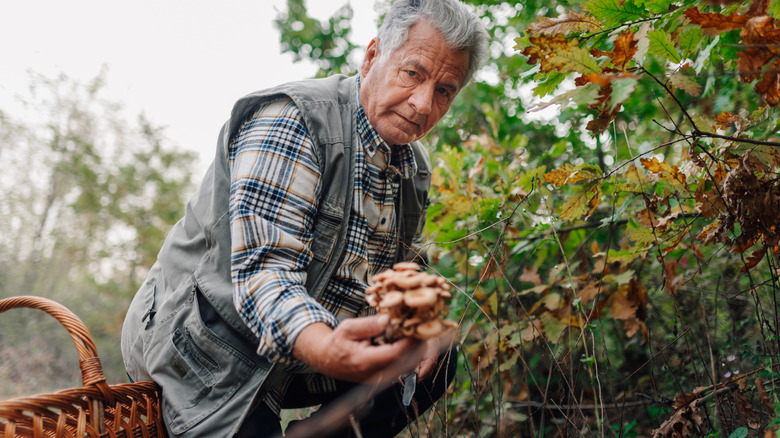
Amateur foraging has become more popular in recent years. Maybe because people want to become more self-sufficient as grocery store prices have risen exponentially, or maybe because people want to get outside and touch grass in a world increasingly dominated by artificial intelligence and social media trends, or maybe both. If you're tempted to try a spot of foraging, there are many benefits: Connection with nature, getting your steps in, eating nutritious food untouched by pesticides. But. And that's a big but. Don't be tempted to start filling up bags of wild mushrooms without an expert there to guide you. Yes, even if you've got an app.
"The most harmful myth is that identifying a wild mushroom is intuitive," says Juan Pajarito. He adds, "some edible and toxic species can look extremely similar, and confident amateurs are often more dangerous than cautious beginners." Case in point: A deathcap looks very similar to the harmless and popular field mushroom. That's not a mistake anyone wants to make.
"Unlike plants, mushrooms have many more features to look at that distinguish them, and some can only be separated at the species level by viewing the spores through a microscope," adds Alan Bergo, who believes anyone can become a mushroom expert, but they must be prepared to put in years of work first. "Mushroom foraging is a learned skill that takes time and effort, like anything else worth doing," he says.
You can't grow your own
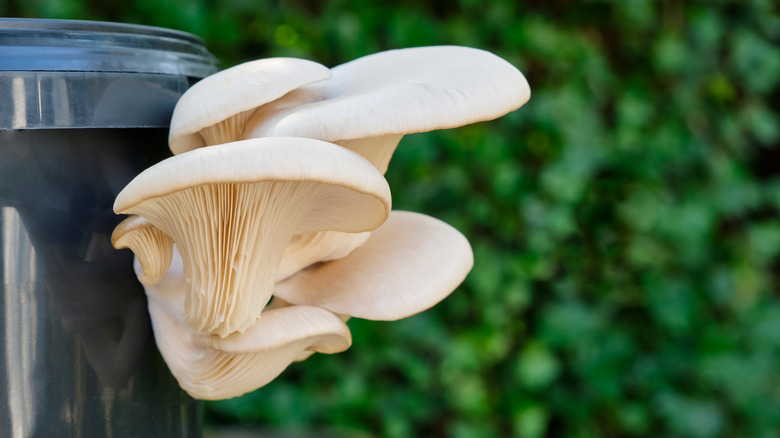
If you're interested in trying new mushrooms away from the grocery store, but you're not keen on the idea of foraging, there is another option: Growing your own. But, wait, you can't just head to the garden center and pick up a packet of mushroom seeds, so how does it work? Well, you just need a kit.
Yep, you can now buy mushroom kits with everything you need to grow your own mushrooms at home, like pre-incubated soil substrate and humidity bags. It's an easy and fun way to get involved with mushroom foraging, without needing to become an expert in identification.
"As mushrooms are expensive, I also recommend growing mushrooms at home if you can as it's a great way to get enough to really experiment without breaking the bank," says Alan Bergo. He also recommends that anyone interested in growing or foraging for mushrooms joins their local mycological society. "There's a vibrant community out there ready to help you get started," he says.
They're a wellness cure for everything
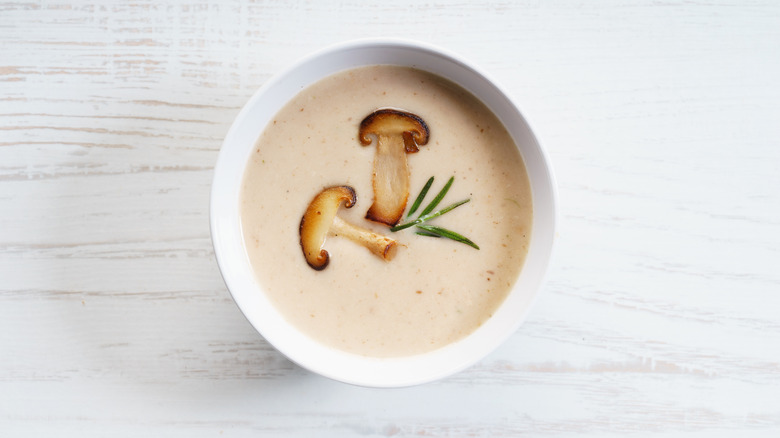
We've established that mushrooms are fascinating, versatile, unique, and tasty. But on top of this, they're also a great source of nutrition. They contain fiber, for example, as well as B vitamins, minerals like copper and iron, and antioxidants. But, despite folklore and what those who have a penchant for the psychedelic variety might believe, they're not actually magic.
Lately, as wellness trends have gripped social media, some content creators have even claimed that certain recipes for mushroom soup can prevent or cure cancer. But it's important to note that, while some research has explored the potential role of mushroom extract in cancer treatment and they certainly play a role in a healthy lifestyle, there is no current evidence that eating mushrooms or cooking them in a certain way is a direct cure for any chronic disease.
"While I don't deny mushrooms can have some positive effects, the extent to which they can help people is greatly exaggerated," says Alan Bergo. He added: "I eat mushrooms because I think they taste good and I love their individuality, not because I think they'll cure everything that ails me."