

How Long Is Too Long To Leave Water In A Coffee Maker Reservoir?
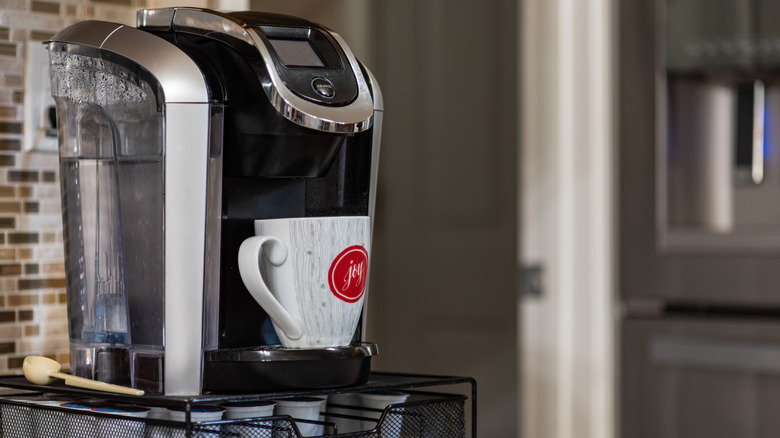
Coffee maker reservoirs require regular cleaning and maintenance to prevent contaminated or stagnant water from affecting the quality of your beverage as well as your wellbeing. In most cases, you shouldn't leave tap or filtered water in a coffee maker reservoir for longer than 24 hours, and distilled water shouldn't be left for more than 48 hours. After a couple days, the water can become contaminated with dust, debris, bacteria, algae, or mold. Draining, cleaning, and refilling the reservoir on a regular basis will ensure the water you use each day is clean and safe, and that the only flavors you detect in your coffee are the ones intended.
This advice applies to all models and brands. Clear containers are especially susceptible to rapid bacterial and fungal growth, but you should never leave water in any Nespresso canister, Keurig reservoir, or drip coffee maker. Although the water may be safe after two days, it's best to get into the habit of dumping out leftover liquid each day and washing the container. Clean the reservoir with hot water and mild soap or place it in the top rack of your dishwasher, if it's safe to do so. Let it air dry completely before refilling it with fresh water — and consider only using filtered or distilled water to prevent mineral buildup. If you have a drip coffee maker, the easiest way to clean the reservoir is with vinegar. Fill it with a mixture of equal parts white vinegar and water and start a brew cycle. When complete, refill the reservoir with tap or filtered water and run the cycle again, repeating to remove all traces of vinegar.
Neglecting to regularly drain and clean your coffee maker reservoir can be dangerous
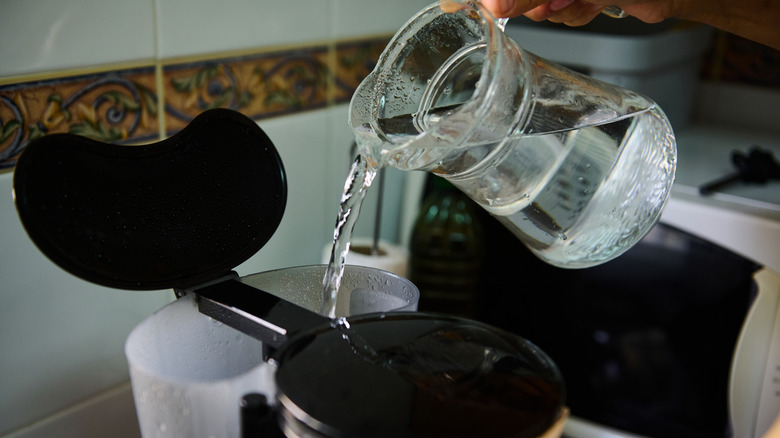
Leaving water in the reservoir of your coffee maker for extended periods of time creates the perfect breeding ground for bacteria, algae, and mold that could be dangerous to your health. It can also cause minerals from tap water to build up on the surfaces, which will impact the taste and quality of the coffee as well as the lifespan of your appliance. After 24 hours in the reservoir, you may notice that the water tastes different. After two days or more, it can become contaminated by dust, airborne contaminants, bacteria, and mold spores. Within three days, a biofilm may start to form on the walls of the container. This process may be accelerated by indoor temperatures, humidity levels, and even the machine's exposure to light and heat.
Contaminated water can be dangerous to consume because it can activate allergy symptoms, exacerbate existing respiratory issues, or cause illness depending on the level of mold and bacterial growth. Elderly people and those who are immunocompromised are at a higher risk of illness; however, even healthy individuals can become ill if they consume water infected with dangerous microbes or bacteria like E. coli or salmonella. If you notice that the water in your coffee maker reservoir is cloudy, has floating particles floating, or that the container is slimy or dirty, immediately drain the water and clean the tank. If your coffee starts to taste funny or the water in the reservoir has a strange odor, those are also signs that it's been sitting for too long.