

Are Organic Berries Worth It?
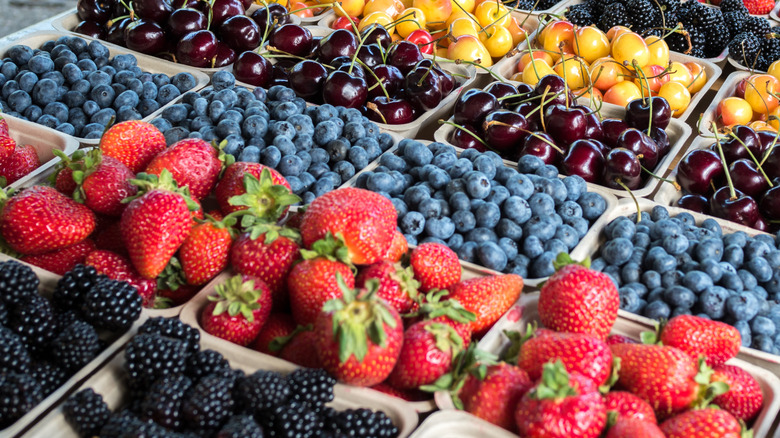
Many berry lovers find relief and a feeling of safe harbor when sticking to organic blueberries, strawberries, blackberries, and more — but are organic versions really worth the extra cost and effort to obtain them?
To gain some insight on that very legitimate question, we reached out to an expert, Linda Ziedrich, the blogger behind A Gardener's Table and the author of "First Fruits" and "The Curious Kitchen Gardener." She feels that, "organically grown fruit is always better for your health and the health of the Earth." She points to the Environmental Working Group (EWG) assessment that commercial, non-organic strawberries are highly likely to be contaminated with pesticide residuals. As to the price factor, she notes that, "only you can decide whether going organic is worth the extra cost."
There's plenty of consensus on the pesticide issue, with Harvard Chan School's Environmental-health professor Philippe Grandjean making a strong argument for eating organic food, noting that pesticides remain on commercial non-organic produce even after it's been washed. Some studies also suggest these pesticides can harm the brain health of children, so choosing organic is wise as a precaution, including for pregnant and breastfeeding women. However, when discussing organic berries versus conventionally grown ones, not everyone feels the situation is quite so urgent. That includes our second expert, who discusses blueberries in particular.
Buying organic berries may not be entirely necessary
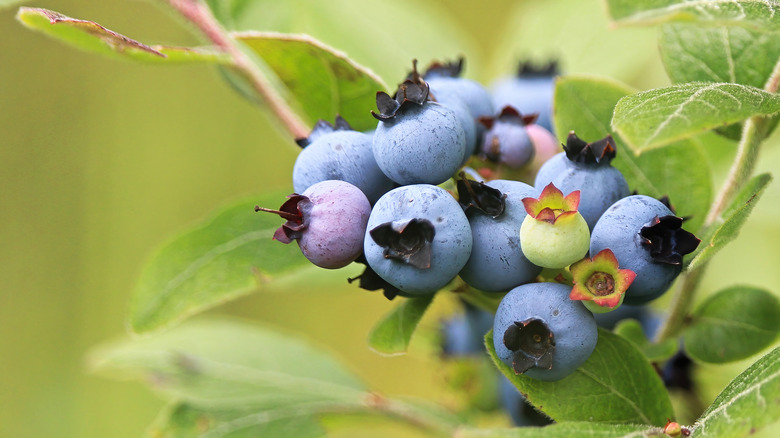
Buying organic is the golden goal of many shoppers. But according to our discussion with Meaghan Ormsby, MS, RDN, wellness travel expert, and founder of The Nutrition Travel Exchange, it may not be as crucial as some think. There are a multitude of mistakes to avoid when you buy blueberries, one of which is assuming that you absolutely have to buy organic.
Ormsby explains that, "organic blueberries have lower pesticide residues, but both are regulated, considered safe to eat, and are extremely similar nutritionally." Since organically grown berries aren't necessarily more nutritious, if they stretch the family grocery budget too far, conventional berries do still contain healthy vitamins and nutrients. As Ormsby says, "When it comes to organic versus non-organic, we can choose based on budget and preferences without it impacting nutritional content."
That said, strawberries are a bit more nuanced than other berries, declared by the EWG in 2022 to contain the most pesticides of all produce. In earlier tests of non-organic strawberries by the U.S. Department of Agriculture, 99% of of them detected residues of at least one pesticide, and some had many more, averaging about eight pesticides per sampled strawberry. As expert Rachael Ajmera, MS, RD, and founder of Nutrimental shared for our article on 10 foods you should always buy organic, the reason "is largely because they have a thin, edible skin that can easily absorb pesticides." She also notes that, if your budget doesn't allow for buying organic, you can use a baking soda wash to help remove pesticide residues before biting into those luscious red berries.