

Goodbye Wood And Tile: This Eco-Friendly Kitchen Floor Looks Stylish While Sparing Your Wallet

Kitchen floors carry a lot of responsibility in typical households, creating a mighty bulwark to constant foot traffic, dropped utensils, cooking splatters, and heavy appliances. Hardwood and tile materials may get plenty of attention for new kitchen floors. However, there's an overlooked option that combines practicality, personality, and even surprisingly eco-friendly traits: linoleum. It's a largely forgotten mainstay of decades past, but today's versions are way different from the worn, yellowed floors in many older homes.
Genuine linoleum is not to be confused with vinyl, even though the names sometimes get used interchangeably. Traditional linoleum, invented in the mid-1800s, is made by combining ingredients such as linseed oil, wood or cork flour, natural resins, limestone, pigments, and a jute or canvas backing. Thanks to these largely natural and renewable sources, it is a particularly durable, eco-friendly flooring option. By comparison, vinyl flooring is a synthetic plastic product.
Adding to the environmental benefits is the longevity of linoleum, which can last up to 40 years when properly maintained. That means more time between floor replacements, more preservation of natural resources, and less discarded material adding to the streams of waste generated every year. And then, of course, there's the power of pocketbook persuasion. National estimates show installed linoleum costing about $3 to $12 per square foot. Different variables, such as the type of linoleum and how much subfloor prep you need will influence the final tally. By comparison, hardwood installation commonly runs around $6 to $18 per square foot, while ceramic tile can climb much higher when including the material and skilled labor.
What today's linoleum is actually like
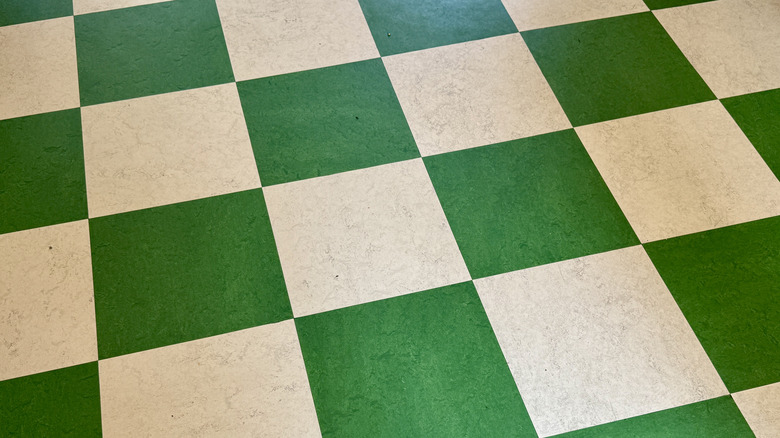
There's no denying the old-school reputation of linoleum flooring, and not always in the "cool vintage" kind of way. On a stylistic level, it often conjures images of dull beige sheets or unattractive patterns — but it may be time to change that perception. Manufacturers now roll out intricate collections featuring multiple designs and dozens of colors. It's true that ceramic tiles can form checkerboards, borders, or graphic layouts, but linoleum sheet flooring provides similar patterns with a more streamlined effect. Many even bring back the colorful or black-and-white checkered patterns of earlier decades, as noted in this guide to creating the retro kitchen of your dreams.
One practical consideration is that linoleum is generally water-resistant rather than completely waterproof. Professional installation, carefully finished seams, and quick cleanup of spills can help protect both the flooring and the subfloor. Before purchasing linoleum, check to see if it's been factory coated to avoid sun exposure. If not, it helps to wax the floors periodically, especially if your kitchen has sunlit windows.
With those precautions, modern linoleum provides a very reasonable middle ground — less expensive than many premium floors, and stylish enough to make this old-fashioned material feel fresh again. Though not the cheapest material for kitchen floors, since basic vinyl or laminate may cost less, linoleum is still way easier on the household budget than wood, ceramic, and natural-stone floors.
For a deeper look at this returning home material, check out why linoleum floors feel out of favor and why they might be worth reconsidering. And for comparison's sake, here an explanation of the pros and cons of eight kitchen flooring materials, including linoleum.