

The Popular Mexican Dishes That Trace Back To Texas' Original Cowboys
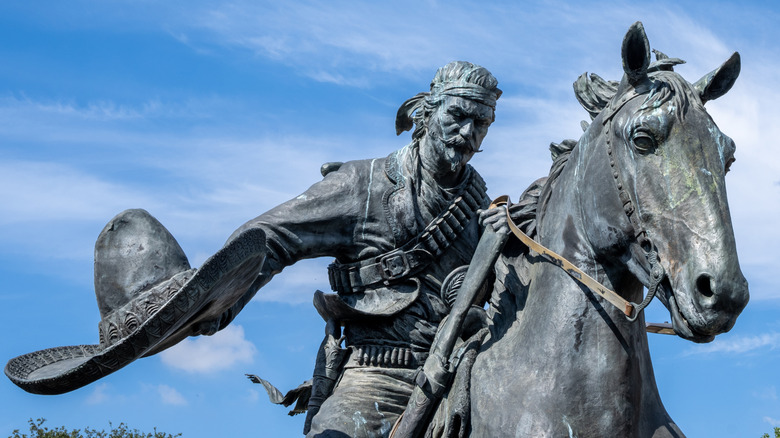
For all the debate over what counts as authentic Mexican food, the cuisine of Mexico has been in a state of evolution for hundreds of years. Once the country's independence was achieved in the 19th century, a culinary identity emerged from both the traditions of Mexico's Creole population (those born in the Americas, but of European descent) and the influences of European cooking, which in turn would produce what we now know as Tex-Mex cuisine. Yet many of the oldest and most popular Mexican dishes can be credited to the vaqueros, Texas' original cowboys.
After the Spanish colonization of Mexico, haciendas and Catholic missions started raising cattle on a large scale, and there was an increased need for horseback riders who could herd these animals. Once seen only as a pursuit for Spanish nobles, the skill of horseback riding soon spread among the campesinos — farmers with no land who were often of indigenous heritage — who would become known as vaqueros.
Due to the limited means of food preservation available, the early vaqueros of the 17th and 18th century would need to rely on foodstuffs that could survive for extended periods in the often-punishing heat of what would later become known as Texas. They subsisted on dried tortillas, red chile, and the pounded, salted, dried meat known as ch'arki or charqui (a term that would eventually evolve into what we now call jerky). From these basic ingredients, plus some water from a canteen, a vaquero could make extremely basic tacos, enchiladas (literally meaning "enchilied", or with chile) or, given a pot, a variety of stews.
Next time you enjoy a fajita, remember you have the vaqueros to thank
While tacos historically preceded the vaqueros and were filled with everything from Spanish pork to insects, vaqueros would typically fill their taco with whatever wild game could be found, sometimes mixed with beans or chile (a far cry from the myriad variations to be found among our best taco recipes, from beer-battered fish to pulled jackfruit). With a pot and some water, a vaquero could also cook up a carne guisada, an extremely flavorful stew of beef simmered in gravy, which to some is simply considered "Mexican cowboy stew."
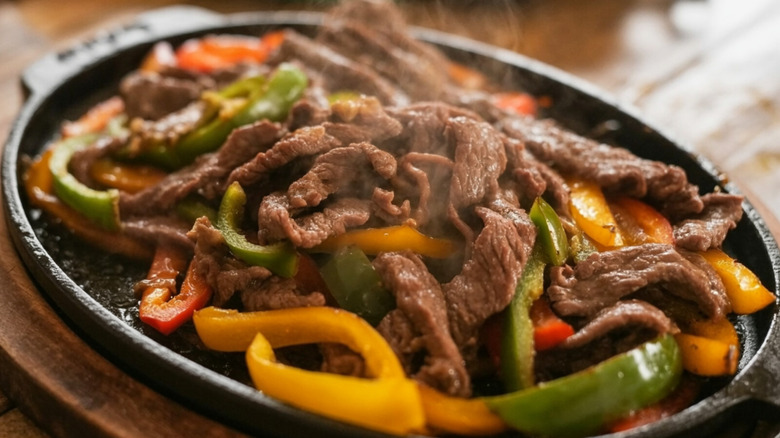
Fajitas were another vaquero creation, though one that would be cooked up once they returned to their cattle ranches. Here, the tougher cuts of beef like skirt steak (a cut we also recommend in our tips for making sizzling steak fajitas) would be cooked over open flames in a process known as "barbacoa", along with a mixture of peppers, onions, and various spices, and served with tortillas. Once the popularity of fajitas began to grow in South Texas, it would steadily become the dish we now recognize.
It is unlikely those early vaqueros — forced to apply ingenuity and Tejano cooking techniques to meagre ingredients in a harsh environment — could have guessed the dishes they subsisted on would help define Mexican and Tex-Mex cooking, or make Mexican food increasingly popular worldwide. Nevertheless, the present-day peoples of Mexico and Texas have not forgotten their contributions, and the communities which now live on the land once ridden by the vaqueros remain dedicated to preserving their culinary legacy.