

Consumer Reports' Highest-Rated Kitchen Sink Material Makes Cleanup A Breeze
Over the years, stainless steel hasn't always been the most popular sink choice in terms of aesthetics, but it certainly hasn't gone away — and it's unlikely to anytime soon. In fact, Consumer Reports rated stainless steel sinks best overall, earning the highest marks in stain resistance, abrasion, and sharp impact.
Stainless steel in the kitchen isn't new, and it makes sense that it became such a reliable mainstay. Depending on the overall design of your kitchen, there's a lot to love about this particular material: It's easy to maintain and cleans up nicely with a mild detergent and a soft cloth. It does well with regular and high-traffic use, and the durability of stainless steel makes it generally long-lasting. It also costs less than alternatives, such as stone or composite sinks, and it's fairly easy to polish a stainless steel sink using natural household products likely already in your pantry, including flour or olive oil.
But while stainless steel is known for its durability and is clearly worthy of its popularity, it's by no means perfect. One of the main reasons people shy away from stainless steel kitchen sinks is that they can feel too sleek, modern, and minimalistic. They can also be louder than ceramic alternatives, which — depending on the acoustics of your kitchen — is worth considering.
How to care for your stainless steel sink
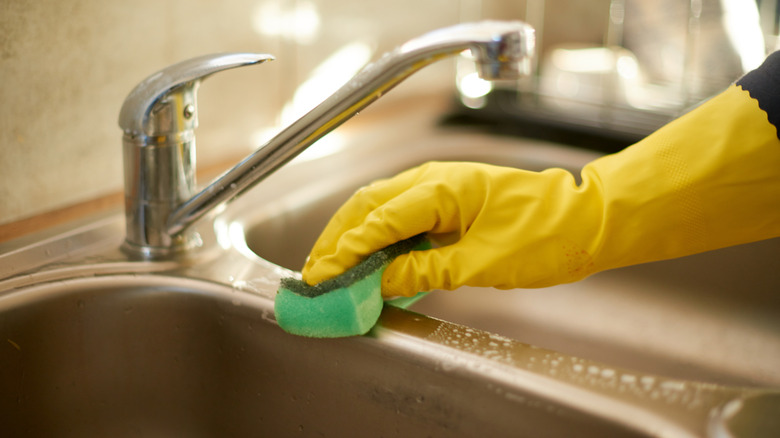
For the most part, keeping your stainless steel sink clean and polished is fairly low effort. This is especially true if, after each use, you wipe the sink dry with a soft cloth, as this is the easiest way to help prevent water spots from building up and can prolong the overall look of your sink between cleanings.
It's also a good idea to give your stainless steel sink a deeper clean weekly — unless, of course, it's needed sooner. Use either warm water and dish soap or a dedicated stainless steel cleaner, and be sure to wipe with the grain rather than against it. In all cases, it's critical to avoid using steel wool, wire brushes, or anything else abrasive that could damage the surface. Once clean, polish when needed.
When not properly maintained, stainless steel can suffer from water spots and minor scratches, especially if it has a polished finish, rather than brushed. And while it performed well in most of Consumer Reports' durability categories, stainless steel received a mid-level mark for blunt impact, as it can dent, warp, or scratch in a way ceramic sinks will not. But with proper care and consideration, stainless steel sinks are a reliable and well-regarded choice that can enhance your kitchen both aesthetically and functionally.