

Why Canned Fish Takes Years To Expire
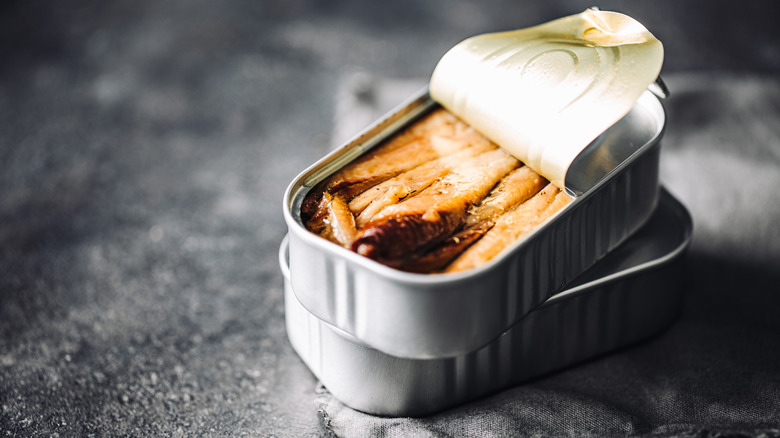
It's no secret that tinned fish has been having a moment in recent years. From budget-friendly canned fish to upscale tinned seafood, those preserved morsels can last for years. It's all thanks to the science behind processing and canning fish, which makes it safe for consumption.
Canning is all about preserving the quality of fresh fish without using additives. This traditional method of storing food for prolonged periods works via careful cooking and sealing (that's it), and it's wildly effective despite its simplicity. Some tinned fish manufacturers don't even print an expiration date on the cans, so hefty is the shelf life.
The commercial canning process forgoes added preservatives, relying on heat and pressure to preserve perishable ingredients into a shelf-stable stasis. High temperatures kill bacteria, while pressure creates an airtight oxygen barrier that develops an anaerobic environment inside the can, slowing oxidation. According to the U.S. Department of Agriculture Food Safety and Inspection Service (USDA), once placed in vacuum-sealed cans, the contents get heat-processed at 250 degrees Fahrenheit to destroy foodborne pathogens that could cause illness. "As the food cools, a vacuum seal is formed that prevents any new bacteria from getting in," explains the agency. "Since the food in the container is commercially sterile, it does not spoil." Some manufacturers may also add oil, salt, or an especially fatty piece of fish to enrich the fish and preserve moisture. Others pack fish exclusively in their own juices, not even adding any extra water.
The commercial canning process creates a stable environment to last the long haul

As stated by the USDA, commercially canned fish can be stored for up to five years. But, to ensure the best quality, it's a good idea to use up those tins within three years after purchase. The food safety of that canned fish may even exceed the five-year point – stored properly, it could technically last for a decade – but its taste, texture, and even nutritional value can be altered over time. Varieties of tinned fish with added oils and spices may have a slightly altered shelf life. Naturally oily fish like sardines and mackerel, for instance, actually improve in flavor over time as their oils break down into a rich, complex, luscious bite.
To maximize the longevity from your favorite tinned fish brands, opt for a storage spot that avoids temperature fluctuations or excessive dampness. A constant temperature of 85 degrees Fahrenheit or lower is ideal. Excessive humidity can also cause cans to prematurely rust. Before chowing down on your favorite canned fish (especially tins that have been hanging out in the pantry for a while), watch for visual signs of spoilage. A small dent or ding is likely no big deal. But, cans of fish that are bulging, leaking, deeply dented, rusting, or loudly hiss upon opening should be discarded. These blemishes may indicate that the can's barrier seal has been compromised, allowing bacteria to contaminate the contents.