

The Best Beef Cuts For Cheesesteak And 3 To Avoid
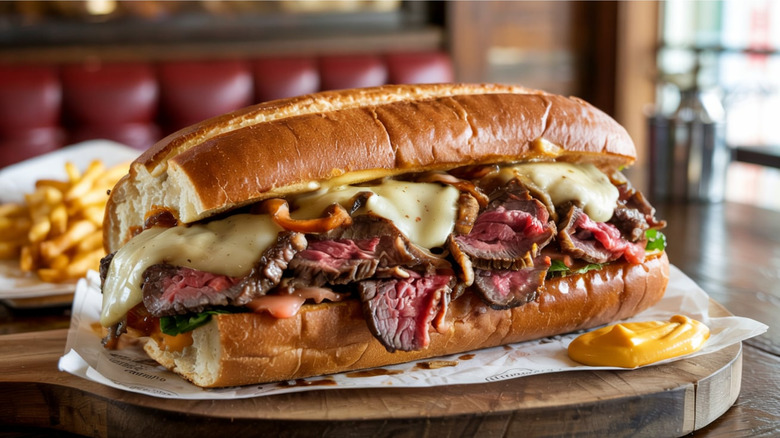
Avid cheesesteak lovers most certainly agree that the slightest imperfection can send this beloved sandwich into blasphemous territory. From the hoagie roll to the cheese and sauteed onions, and especially the meat, there's an authentic way of making Philly-style cheesesteaks — revered as the standard-bearing style against which all variations must compete. In the spirit and pursuit of cheesesteak perfection, we're honing in today on the best cuts of beef to use, and three to avoid.
Sharing some valuable intel and guidance in this arena is Derrick Hayes, CEO and founder of Big Dave's Cheesesteaks. When it comes to choosing that all-important beef component for the best cheesesteak, Hayes shares his own restaurant's preference. "We use a blend of sirloin and ribeye," he says, "because it provides an ideal balance of lean cut and marbling, delivering exceptional flavor, tenderness, and consistency in every bite."
Though not specified as such by Hayes, that combination of ribeye and sirloin cuts also helps balance the cost factor, with sirloin being a more budget-friendly option that's popular at many venues and even commonly used in homemade preparations. Other options do exist, including flank steak, as noted in this classic Philly cheesesteak recipe by recipe developer Susan Olayinka. But Hayes offers guidance on a few other cuts that just don't pass muster, suggesting that you avoid them altogether.
Avoiding inferior cuts, and prepping meat for cheesesteaks
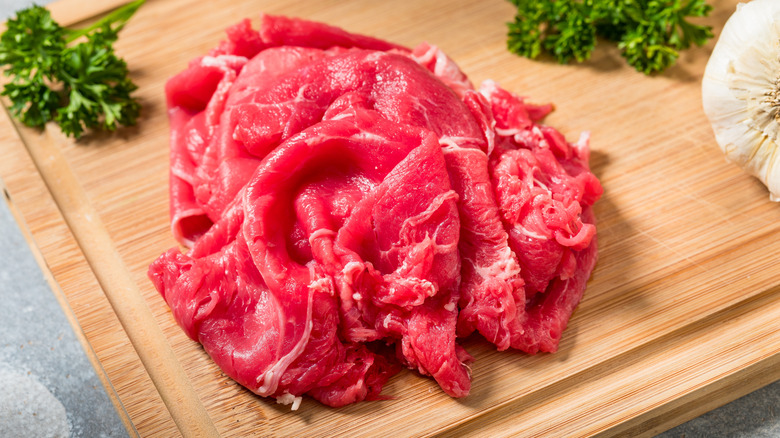
The last thing you want when enthusiastically making homemade cheesesteaks is to discover that the meat you chose missed the mark — here's how to make sure that doesn't happen. "Avoid cuts that are overly lean, such as eye of round, top round, or bottom round, as they tend to be tougher and lack the marbling needed for flavor and tenderness," says Hayes. He also addresses the issue of chewy texture, recommending that you avoid cuts with excessive connective tissue or gristle.
After settling on the best beef cuts to use for your cheesesteaks, it's equally important to prepare the meat properly. That starts with how you purchase that beef before ever bringing it home, which is where your local butcher enters the equation. "For preparation, request the beef to be cut into approximately 2 centimeter thick sections or logs before freezing," says Hayes, explaining how this allows you to easily achieve the important, ultra-thin slices. "Thin slicing is essential for authentic cheesesteaks because it allows the beef to cook quickly and evenly on a flat-top grill while remaining tender and juicy," he notes. As for the practice of partially freezing rib-eye, sirloin, or other cuts of meat, this is a common trick for creating the thinnest shaved steak without a commercial shaving machine. It works for other shaved-meat dishes as well, including Korean bulgogi, Greek gyros, steak fajitas, and others on our list of the 15 best ways to use shaved steak.
When all is said and done, creating the perfect cheesesteak at home ultimately comes down to a few factors. According to Hayes, "The key to a great cheesesteak starts with quality beef, the proper fat-to-meat ratio, and slicing it as thinly as possible before cooking."