

Running Leafy Greens Under Water Isn't Enough — Here's The Safest Way To Clean Them
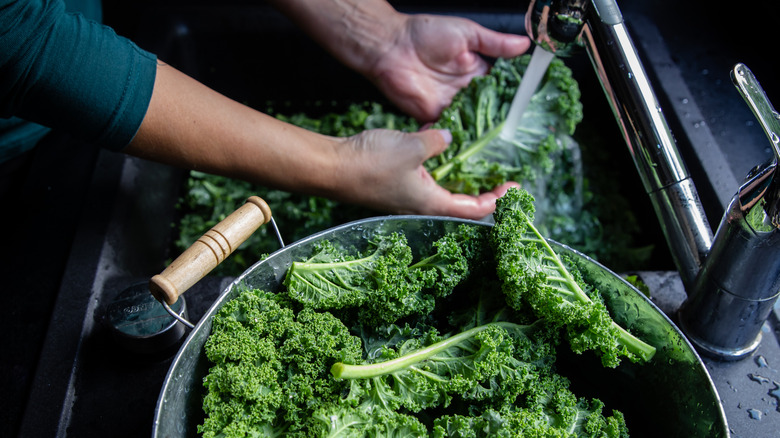
Nutrient-rich leafy greens are essential to a healthy diet, but thoroughly cleaning before you chow down is an important part of food safety — and simply running them under water isn't enough. Harmful microorganisms can adhere to the surface and inner tissue of leafy veggies and, if ingested, cause foodborne illness. Since leafy greens are often consumed raw, they carry a greater risk of harboring illness-causing bacteria and parasites such as E. coli, Listeria, Salmonella, and Cyclospora. Plus, all those ruffled leaves can trap hidden microbes.
While no washing method is guaranteed to remove all potential contaminants, the safest way to clean leafy greens requires more prep work than simply rinsing them underwater. Start by washing your hands, then give those greens a close inspection. The outermost leaves of whole-head lettuce and cabbage should be discarded for their potential to house dirt and germs, and any inner leaves that are bruised or torn should be ripped out. From there, place the pruned greens under cool running water and gently rub them with your hands to remove lingering dirt, germs, or pesticides.
As a culinary bonus, you can use ice water to clean your leafy greens. Beyond cleaning, this has a textural benefit, as ice water is the secret to the crunchiest salad you'll ever eat. The cleaning steps should take place before you cut the raw produce; you shouldn't chop up lettuce before washing it.
Get into those curls and crevices to ensure the safest, freshest leafy greens
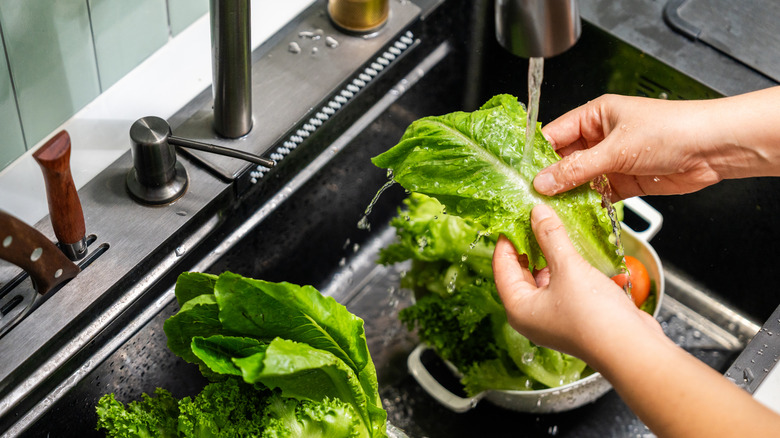
While insufficient for hardier leafy greens, more delicate varieties like spinach can be submerged in a bowl of clean water and then dried to reduce damage. But, word to the wise: You need to stop soaking greens in the kitchen sink. Any lingering germs on the inside of your sink are liable to soak into your veggies. For the crispest bite, dry those freshly washed greens using one of the best salad spinners according to online reviews, or place them on a paper-towel-lined plate and gently blot.
Bagged salads typically arrive commercially pre-washed, indicated by labels like "ready-to-eat," "triple washed," or "no washing necessary." These items do not need to be cleaned again. If the CDC issues a recall of any bagged leafy green product in your fridge, do not ingest or wash it. Promptly discarding contaminated produce (as well as any other foods that touched it) is the most effective way to keep your household safe from foodborne illness.
Food safety doesn't end once produce is washed and cut, either. In the fridge, an environment of 40 degrees Fahrenheit or colder is ideal for storing leafy greens. Be sure to keep them separate from any raw meat, seafood, or poultry. Ideally, don't clean your greens until just before you plan to cook with them. The excess moisture from washing can prompt bacterial growth in the fridge and speed up spoilage.