

The Hidden Signs A Restaurant Is Cutting Corners On Quality
We may receive a commission on purchases made from links.
While there might not be a red notice on the door, there's always the possibility that your favorite restaurant is cutting corners on quality. This might manifest in hidden ways, small details that negatively set the place apart without necessarily screaming: "Hey, we're making bad choices over here!" We spoke to Frankie Weinberg, professor of management at Loyola University New Orleans, co-owner of Pomelo and Good Catch restaurants in New Orleans, and author of "Mentorship," along with Izzy Kharasch, president of Hospitality Works, Inc., about how customers can suss out a restaurant's quality level.
"I think the key question is whether a restaurant is living up to what it promises," Weinberg says, highlighting that "it's important to distinguish 'inexpensive' from 'cutting corners.'" He gives an example, saying, "If a restaurant menu promises a diversity of options by offering a large variety of dishes that, once sampled, all taste remarkably similar, that's a sign that the restaurant is likely over-relying on a similar foundational sauce or cooking style." This can simultaneously signal that the establishment is taking shortcuts and becoming complacent in its flavors and, thus, quality.
Kharasch gives another example. Among the many red flags that indicate a bad restaurant, he notes that he can tell whether a place is less concerned about quality if it "markets Prime steaks but serves Choice or less," or "say[s] they serve fresh fish but the fish is frozen."
A restaurant's staff also provides quality clues
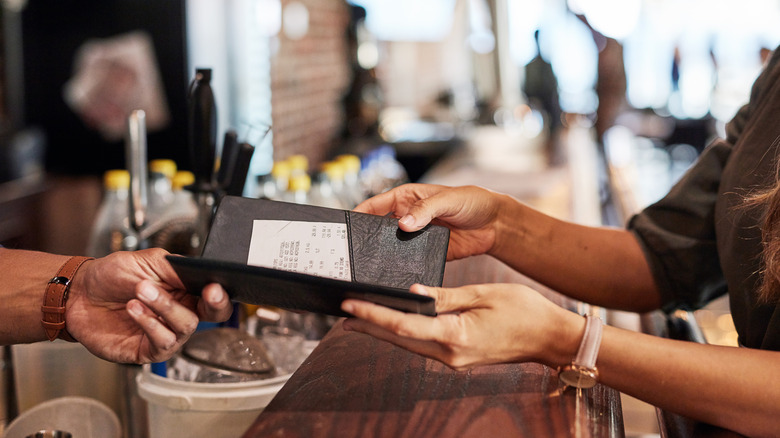
Another way our experts root out cutting corners on quality is by paying attention to the staff. "I wouldn't be surprised to learn that chefs who are unwilling to compromise on the quality of ingredients, but who need to cut costs somewhere, might choose to cut back on labor costs," Weinberg says. He goes on to explain that some restaurants choose to forgo hiring a new employee in favor of "expanding the job role for existing employees" or "forgoing useful training time," which "without a doubt affects quality." Kharasch adds that "because labor costs are so high, many restaurants cut labor deeply and service suffers in both the kitchen and the front of the house." It's fairly clear that if an establishment doesn't want to rely on droids (like these U.S. restaurants where a robot will serve your meal), adequate staff and proper training are paramount.
To combat situations where quality may be low, Weinberg says, "I tend to narrow my order to the items the restaurant clearly serves repeatedly, as those dishes are more likely to be executed well or authentically." Even if a restaurant may have a gigantic menu, it might be known for a particular item, such as these 18 must-visit eateries in the U.S. that specialize in one dish. If Kharasch feels misguided by a restaurant's promises, wherein quality becomes a question, he says he "might not walk out, but [he] would send the item back and order a different dish," perhaps one that the restaurant is better known for.