

Want Tender Pork Chops? The Marbling Should Look Like This
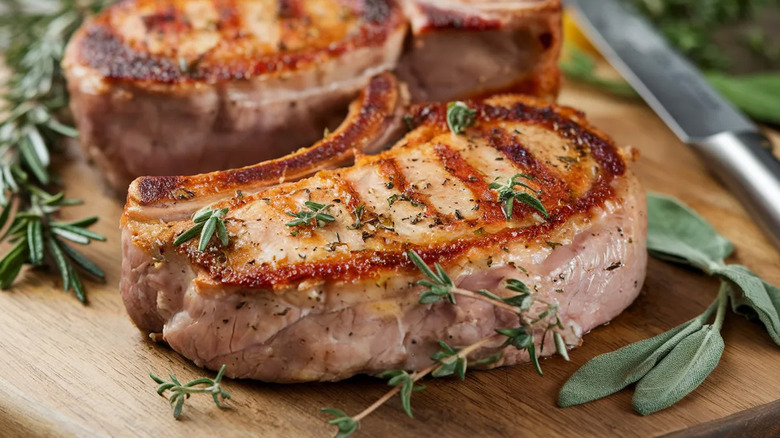
Out of all the cuts of meat that are notoriously tricky to cook, few are as tough as the pork chop, literally. This popular pork cut is quite low in fat, and the leaner the meat, the more easily it dries out and toughens up when cooking. To help you avoid chewy chops, we sought advice from Dennis Littley, chef and culinary expert at Ask Chef Dennis. According to the chef, looking for pork chops with proper marbling is the first step to achieving tender, flavorful results.
As Littley explains, marbling consists of "streaks of fat that are located inside the muscle," as opposed to the larger sections of white fat often seen on the surface of pork chops. Good marbling looks like thin, pale lines that resemble white webbing running throughout the pink flesh of the pork. These threads help to retain moisture and keep the pork tender. "Once you cook those streaks of fat, they melt," Littley notes, "and then they act as an internal basting agent to add both flavor and moisture to the meat."
Even fat distribution throughout the muscle leads to more even cooking, helping you ace your favorite pork chop recipes. As for other factors to keep in mind at the butcher counter, Littley cautions not to hold pork chops to the same standards as beef steaks. The two types of meat are composed differently, and ignoring this distinction will make for a confusing shopping experience.
More tips for buying pork chops that will turn out tender
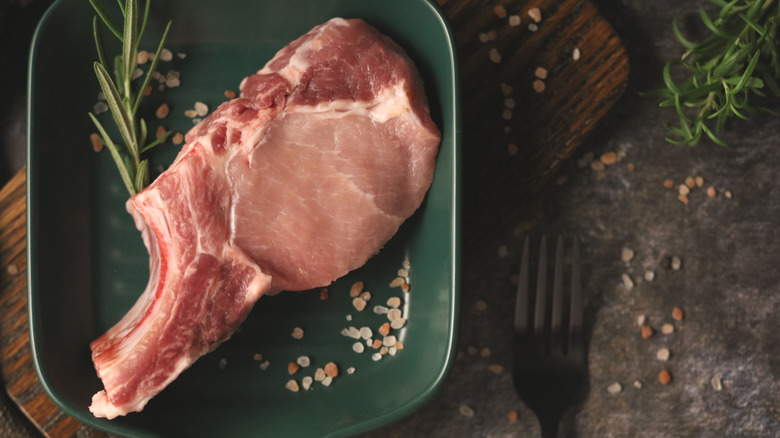
When it comes to beef, fat equals tenderness and juiciness. Thus, many seek out cuts with tons of white fat on the outside. Pork chops, however, require a different approach. "Pork does not have the same heavy marbling found in premium beef such as wagyu or ribeye," Littley explains. "You want to find evenly spaced, fine streaks of fat and not large pockets of fat." As a naturally leaner cut, even a well-marbled chop won't look as fatty as premium beef, so don't start shopping with that expectation.
Another big shopping consideration is whether to get bone-in or boneless pork chops. While boneless cuts cook more consistently, bone-in meat tends to be more tender, flavorful, and juicy, as the area around the bone carries extra fat. No matter what kind of chop you choose, look for an even, deep pink color, firm texture, and uniform thickness. Both the flesh and fat should be free of dark spots and, in the case of bone-in chops, watch out for darkened bones. This likely means that the muscle is older, which means it will be tougher when cooked.
Thickness also matters, so consider your dinner goals when choosing thick or thin pork chops. Thinner pieces cook through quickly, but they also dry out more easily. Thicker cuts, on the other hand, have a better chance of staying juicy in the center, especially when baked or grilled. If you prioritize tenderness, choose thick, bone-in chops with plenty of that all-important marbling.