

Bigger Cherries Aren't Always The Best Choice — Here's Why
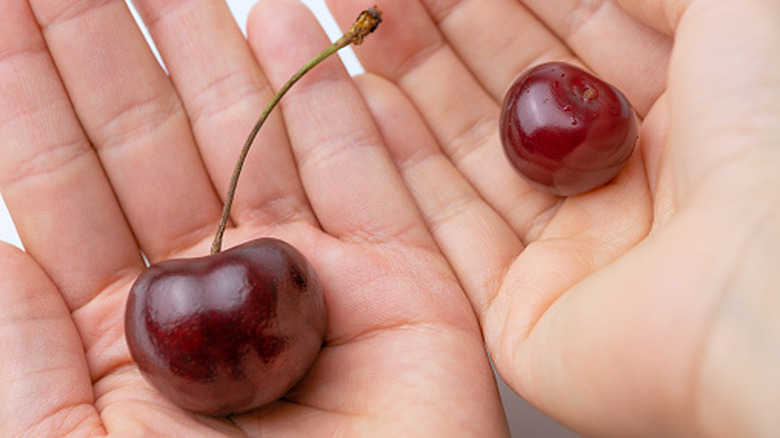
Summertime is the cherry's time to shine. But when you're comparing bags, don't assume the largest ones will be the sweetest and juiciest. When it comes to cherries, size is just one piece of the puzzle — and it doesn't always predict just how flavorful the fruit will be. Luckily, Megan McCarthy — edible garden chef at the Atlanta Botanical Garden who is also the founder of Healthy Eating 101 and a Have A Plant ambassador — shared plenty of pro tips for picking out the perfect batch.
"Bigger isn't always better when it comes to cherries. Size is often influenced by growing conditions, irrigation, and the variety itself, not necessarily sweetness or flavor," McCarthy told Tasting Table. While some naturally large cherries are delicious, others may not be any sweeter than their counterparts. So if you're looking for the best cherry experience, you'll need to consider more than just the fruit's diameter.
One of the biggest influences on cherry size is the cultivar or variety. There are more than 1,000 types of cherries, each with distinct natural growth habits. Naturally, some varieties are specifically bred to produce larger fruit because many consumers associate size with quality. But McCarthy noted, "I've had smaller cherries that were bursting with concentrated sweetness, while larger ones were beautiful but milder."
What to look for when you're buying cherries
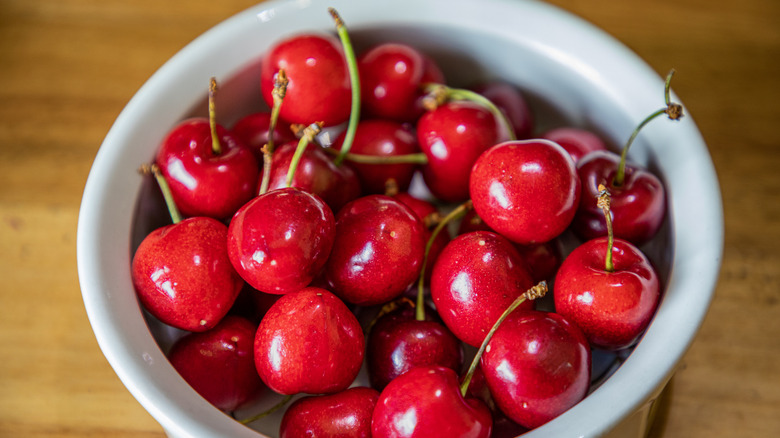
Growing conditions also play a big role in the size of a cherry. Cherry trees that receive consistent watering during the growing season naturally produce larger fruit. Cherry trees also perform best with abundant sunshine. Megan McCarthy confirmed: "Flavor develops from a balance of sunshine, healthy trees, and proper ripening, not simply the diameter of the fruit." As you can see, these fruits are a bit high-maintenance, and they have a short growing season, which is why cherries are so expensive.
Depending on how you plan to use the fruit, size can be a factor. For instance, McCarthy said, "Larger cherries generally offer a slightly better fruit-to-pit ratio, which can be appealing if you're baking or preserving. However, the difference is often less important than freshness." If flavor is tantamount to you, her advice for how to pick out the best fresh cherries next time you're at the market is to look for those with glossy, vibrant skin, a firm texture, and fresh, green stems that haven't detached from the fruit.
That final factor is key. McCarthy noted, "The stem is one of the best indicators of freshness. If it's brown, dry, or missing altogether, the cherries have likely been sitting around for a while." Skipping any of these signs is a mistake to avoid when buying cherries.