

Here's How Long You Can Keep Leftover Prime Rib In The Fridge
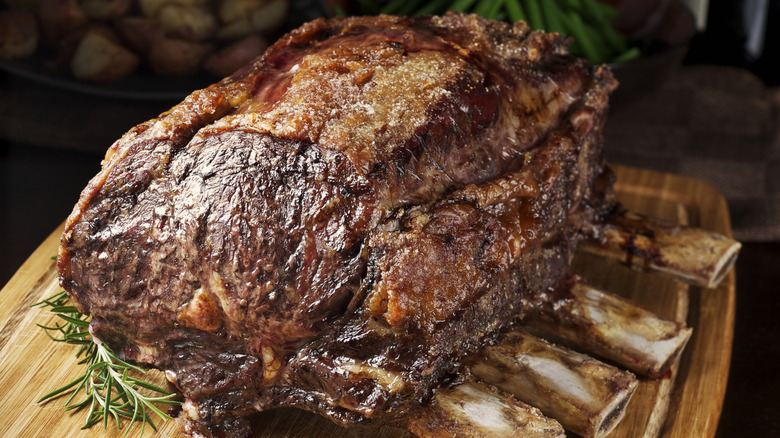
No one can deny that a prime rib roast is a showstopper on the dinner table but giving this cut of beef the respect it deserves doesn't end with finding the best recipe or the most appropriate side dishes. Equal care ought to be put into storing it in the refrigerator. That's why we consulted two experts — chef K.C. Gulbro, owner of FoxFire Steakhouse in downtown Geneva, Illinois, and Sam Hazen, executive chef at Palladino's Steak & Seafood — to find how long you can keep leftover prime rib in the fridge, and how best to do so.
Both experts had their own thoughts on properly refrigerating your precious meat. In Gulbro's opinion, cooked prime rib should ideally be used within 3 to 4 days of being refrigerated, noting that it will be best in the first two days. "Day three can still be good if it was cooled and stored properly," Gulbro explains, "By day four, I consider that the end of the window." Hazen, on the other hand, offers a different perspective. "We do not recommend holding for longer than a day," he reveals, "as the gelatin will solidify and the meat will lose moisture."
Regarding proper storage techniques, Gulbro's rules are simple: "Portion it, vent it, chill it, then cover it." Gulbro urges anyone refrigerating prime rib not to leave it sitting out, seal it while the beef is still steaming hot, or rely on foil alone to cover it. Instead, he advises: "Once the meat has cooled properly after service, wrap it tightly or transfer it to airtight containers or vacuum-sealed bags." This advice was echoed by Hazen, who describes himself as a "huge fan of Ziploc bags and vacuum packs," but disdains wrapping food in easily torn foil.
Refrigerating prime rib before cooking
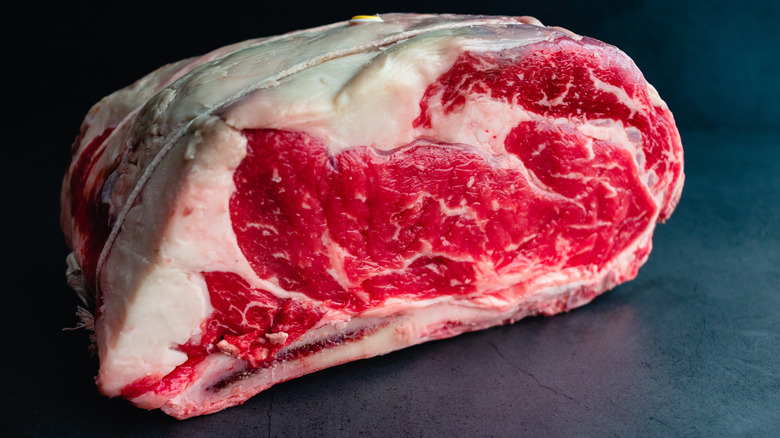
Attention should also be paid to how your prime rib is refrigerated prior to cooking. "Prime rib is a large roast, but I still treat it with the same respect as any other raw beef," Gulbro explains. "Once you bring it home, my general rule is to cook it within 3 to 5 days, assuming it has been kept properly refrigerated." You may have a little more flexibility in this timeframe if your meat has been professionally vacuum sealed by your butcher, but depending on the pack date and storage guidance, Gulbro still recommends you don't push it. "Prime rib is too expensive and is usually made for a larger gathering," he says. "It is too risky to gamble with."
If your prime rib is vacuum-sealed, Gulbro suggests leaving it sealed until you are ready to prep. Hazen is also a fan of vacuum-packing ("cryo-vac"), which is why we think every home cook should own a vacuum sealer. However, he adds that prime rib can be held completely immersed in cold stock as a way of preserving its freshness. When it comes to food safety, where you place your uncooked prime rib in the refrigerator is vital. As is the case with refrigerating any raw meat, Gulbro says that it must be kept on the fridge's bottom shelf: "That way, if the package leaks or juices drip, they do not contaminate produce, sauces, desserts, cooked foods, or anything ready to eat."
Leftover prime rib is perfect for French dips — but don't slice the meat too soon
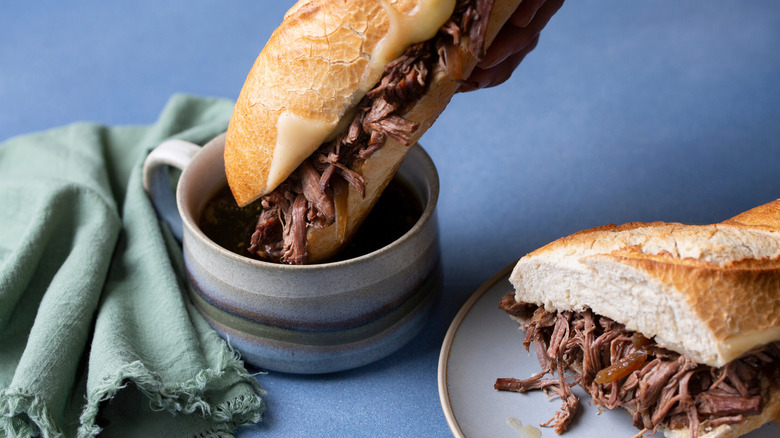
So, having properly refrigerated your prime rib both before and after cooking, what should you do with those prized leftovers? Fortunately, you have many options. For proof, look through our 10 creative uses for leftover prime rib. At both FoxFire Steakhouse and Palladino's Steak & Seafood, leftover prime rib is often transformed into flavorful French dip sandwiches. "I will use the post-cooked prime rib for sandwiches like French dip, Philly cheesesteak, or, in Illinois, like we are from, an amazing Italian beef," Gulbro reveals. "At home, I will use it for steak and eggs, or re-roast it on day 1 or 2 for another serve."
Finally, it may be tempting to slice up your entire roast (or whatever's left of it) before refrigerating, so that convenient, deli meat-style slices will be ready and waiting for you the next time hunger strikes. Gulbro cautions against this, noting, "Sliced meat dries out faster and oxidizes faster." Advice worth listening to — no one wants dry prime rib, whether on your dinner plate or in your sandwich.