

Costco's New Ice Cream Find Is An Eco-Friendly Brand Customers Can't Wait To Get Their Paws On
We may receive a commission on purchases made from links.
If bears could, they'd be lining up at their nearest Costco, trying to beat the summer heat with its latest find: Ice Cream for Bears. Despite the name, diligent human shoppers are the ones buying up the frozen Sundae Cups, and it's safe to say they're bear-y excited about them. "What is this cuteness?!" said one person on Instagram, while another quipped, "Love the marketing on these."
Sold in a box of 12 for $17.99, the Ice Cream for Bears Sundae Cups come in two flavors. Waves of Fudge features vanilla ice cream with fudge ribbons, while Caramel Dunes comes topped with caramel ribbons. Both options are made with grass-fed dairy, sweetened with raw honey, and definitely belong among the hands-down best Costco ice cream finds for summer 2026.
Many have expressed concern about the availability of the Sundae Cups. On Instagram, one such person said, "I am going to be furious if my Costco does not get these." As is the case with new Costco finds, only time will tell when and if all stores will get them — but in the grizzly case that your warehouse doesn't stock them, you can also find Ice Cream for Bears Frozen Ice Cream on Amazon.
Ice Cream for Bears wants to make food wild again
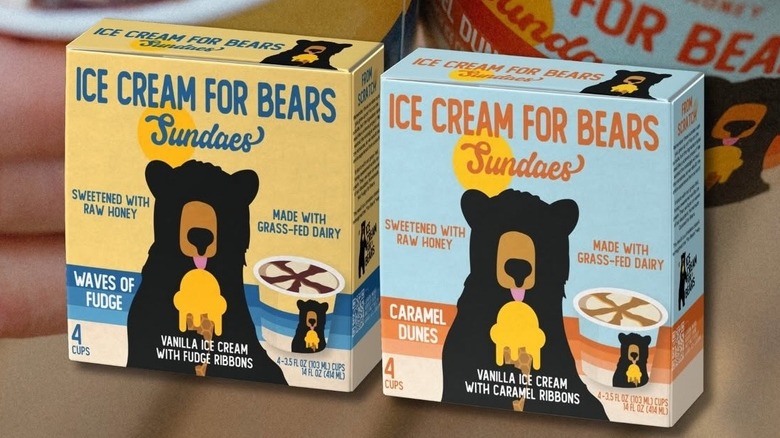
Milk, cream, caramel, raw honey, egg yolk, and pure vanilla extract — those are the simple and straightforward ingredients of the Caramel Dune Sundae Cup. Ice Cream for Bears has built its business around the philosophy that "the future of food lies in the past." Its ice cream is intentionally sweetened with honey rather than cane sugar, not only because that keeps the dessert more nutritious, but because it's been a part of the human diet for thousands of years.
Apart from removing processed foods, Ice Cream for Bears also places great emphasis on supporting sustainable farming practices. The milk used to make Ice Cream for Bears comes from dairies that practice regenerative farming, which focuses on the well-being of the soil. The cows are grass-fed and moved between pastures so that the soil doesn't get depleted. Farmers use no-till techniques and plant native plants to foster biodiversity in the area.
As consumers, we might not directly see a connection between ice cream and the environment, but the dairy industry is closely associated with climate change, and regenerative agriculture could be a key to reaching climate goals. By simply enjoying an Ice Cream for Bears Sundae Cup, you get to support that.