

Riesling Vs Gewürztraminer: What's The Actual Difference
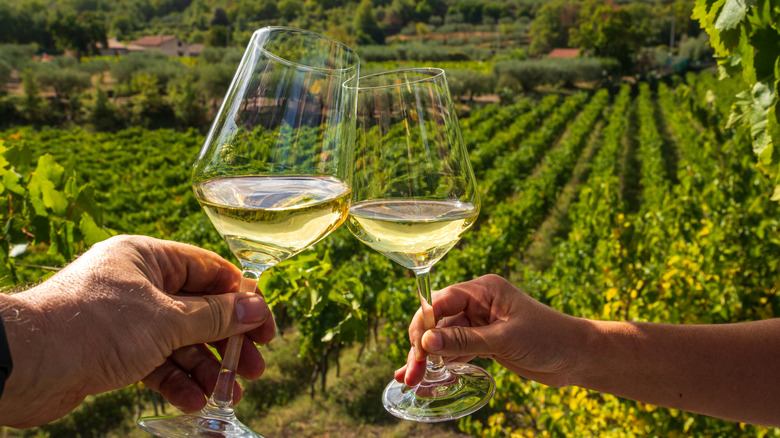
Aside from being food-friendly and refreshing, white wines are incredibly diverse. Hundreds of grape varietals produce white wines with a wide range of flavors, aromas, and colors, from familiar options like chardonnay and pinot grigio to lesser-known regional varietals grown around the world. What's more, there can be significant differences even within the same grape varieties, while completely different ones can share surprising similarities. Such is the case of riesling and gewürztraminer.
Both wines come from grapes that boast intense aromatic qualities, bright acidity, and fruity taste profiles, but there are marked differences between them. Riesling is the brighter of the two varietals, with higher acidity and notes of lemon and lime. It is incredibly versatile, ranging from bone dry to off-dry and sweet. It's even made into a sparkling wine called Sekt. Where riseling is light and crisp, gewürztraminer is richer, with a fuller body, and even more aromatic and bold, with heavy floral and spice notes in aroma and flavor. And while it can be made dry, but it's most often found on the sweet spectrum.
Both grapes grow in similar climates, often overlapping in regions like Alsace, France; parts of Germany and Northern Italy; and the Pacific Northwest. But since gewürztraminer is a bit finicky, its growing range is limited to cool climate regions, whereas riesling has a footprint worldwide, aiding its wider popularity and diversity in styles.
Let's explore these two delicious wines — both among the major types of white wines you should know — so you can make a more informed choice the next time you're looking for something new to enjoy, whether dining out or sipping at home.
Riesling — versatile, bright, fruity, and refreshing
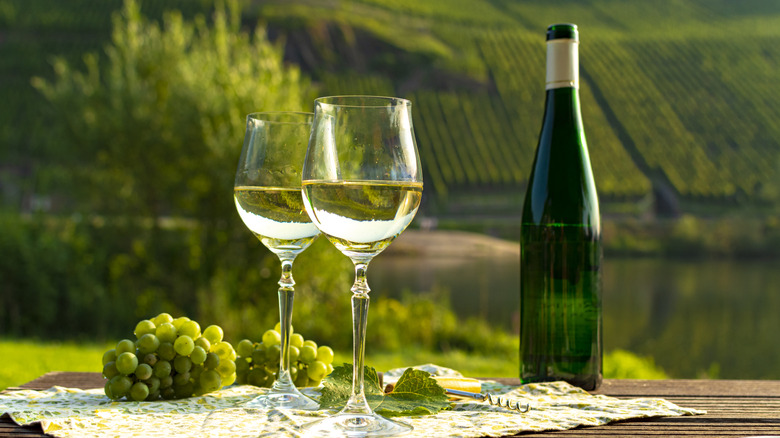
Riesling is one of the few white wines that's equally regarded for its sweet aromatic styles as for bright and dry expressions. It originated in Germany's Rhine Valley, with a history dating back to the Middle Ages. Through DNA tests, we know that riesling derived from a cross between the rare, ancient Gouais blanc grape and a grape that was half wild and half Savagnin, from which sauvignon blanc descended — hence the similarities between sauvignon blanc and riesling.
While it's still Germany's most widely planted grape, with regions like the Mosel Valley, Rheinhessen, Rheingau, and Pfalz producing extraordinary classic examples, riesling has adapted well to many regions across the world. It can be found everywhere from nearby Austria, Alsace, and Northern Italy to far-away places like Australia, New Zealand, South Africa, Chile, Canada, and the United States. Each region produces a different flavor profile, with cooler regions often producing drier styles, while warmer regions can create fuller-bodied sweet variations.
Depending on where it's made, riesling ranges from bone dry to off-dry to sweet. Depending on where it's made, riesling can range from bone dry to off-dry to sweet. Its aromas and flavors vary widely, from bright lemon and lime to green apple, white peach, tropical pineapple, apricot, and pear. It can also feature floral hints of jasmine, pleasant minerality, and honey notes, especially in sweeter styles. Because of their racing acidity, rieslings can age well; however, when they're bottled aged, rieslings can acquire a characteristic aroma of petrol, which might be off-putting to some, but it doesn't affect the flavor, and in fact, adds to the uniqueness of the wines.
Beyond its wide-ranging flavor profile, riesling's color can vary from off-white with green tones to pale straw and deep yellow. It's ideal with spicy Asian dishes like Indian and Thai curries, soft cow's milk cheeses, roasted vegetables, and rich poultry or pork dishes, especially those served with fruit-based sauces.
Gewürztraminer — bold, rich, and aromatic
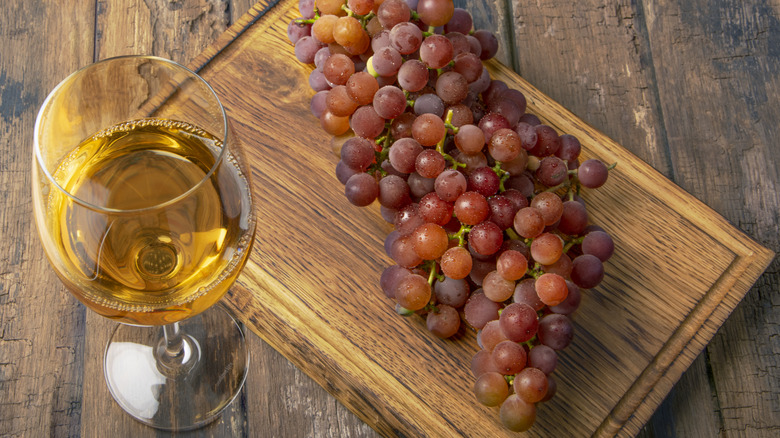
Although the name is unequivocally German, gewürztraminer originated in the Alpine village of Tramin in northern Italy. A mutation of the ancient green-skinned Traminer grape, gewürztraminer is a pink-skinned grape that produces wine with characteristic spicy aromas and flavors. In fact, "gewürz" is the German word for "spiced," making the wine essentially "the spicy Traminer."
Pronounced "Geh-VURTS-Trah-Mee-Nur," this assertive wine is rich and silky, with low to moderate acidity compared to the crisp nature of riesling. But what makes gewürztraminer wines unique are their spectacular aromas and flavors of spices, flowers, and tropical fruits. Expect notes of lychee, rose petal, peach, pear, and pineapple, with ginger, clove, honey, and allspice adding layers of complexity. However, these intense floral and fruity profiles don't necessarily equal sweetness.
Gewürztraminer — gewürz to its close friends — is medium to full-bodied, ranging from dry to off-dry with a hint of sweetness. Like riesling, gewürz grapes prefer cool weather to thrive, so the best expressions of the wine come from places like Germany, Alsace, the Trentino-Alto Adige in northern Italy, and cool climate regions in Australia, New Zealand, the U.S., and Canada — home to the largest single vineyard of gewürztraminer.
Because it's made from pink-skinned grapes, this wine ranges in color from golden yellow to deep amber-gold. Its spiced nuances and off-dry sweetness make gewürz a beautiful wine to enjoy with spicy cuisines such as Asian, Indian, and Moroccan, or spiced with ginger, clove, cinnamon, turmeric, marjoram, or allspice. It also pairs well with traditional German fare like roast pork, schnitzel, sausages, and smoked meats. For dessert, late harvest gewürztraminers are perfect for fruit tarts and spiced cakes.