

Why McDonald's Not-So-Promising Plan To Sell Donuts Failed
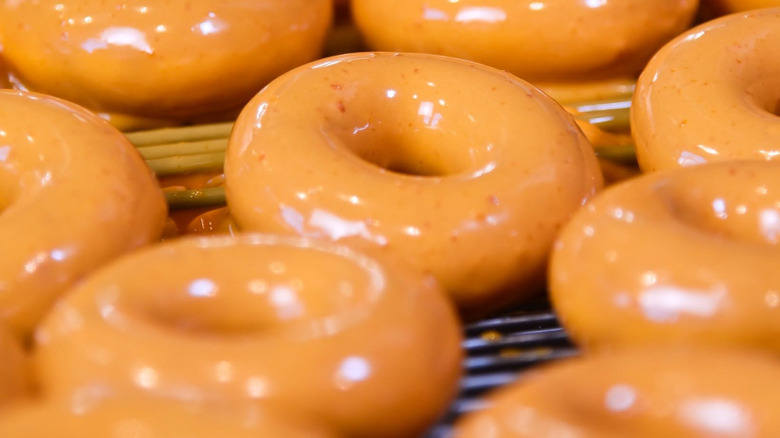
McDonald's is already a savory breakfast behemoth, so you would think adding donuts as a sweet option to the menu would be a slam dunk. While the burger chain does offer hotcakes with syrup and the popular sweet-savory McGriddle's sandwiches, it has lacked a killer go-to sweet handheld option since McDonald's pulled McCafé bakery items, like the apple fritter and muffins, from the menu when they weren't doing the job. Donuts are an obvious next choice, and who better to turn to than Krispy Kreme?
Krispy Kreme was looking for a way to boost business after struggling in recent years, which led them to McDonald's. Unfortunately, it turned out not as many people were looking for sweets from McDonald's as the company may have thought, and keeping things consistent across the chain's massive footprint was a big problem for a smaller 3rd-party supplier.
The plan for Krispy Kreme to sell its donuts at McDonald's was first rolled out in 2022, with tests in Kentucky. Those proved successful enough that nine test stores expanded to 160 in 2023. Shortly after, McDonald's dropped the apple fritter and other sweet breakfast items like cinnamon rolls, seemingly convinced donuts were the future. Finally in 2024, McD's announced the cementing of the partnership, with a plan for Krispy Kreme sales to go nationwide. After all that buildup — and so much menu shuffling to prepare — the partnership would be dead within a year.
Krispy Kreme donuts weren't as in demand at McDonald's as the company thought
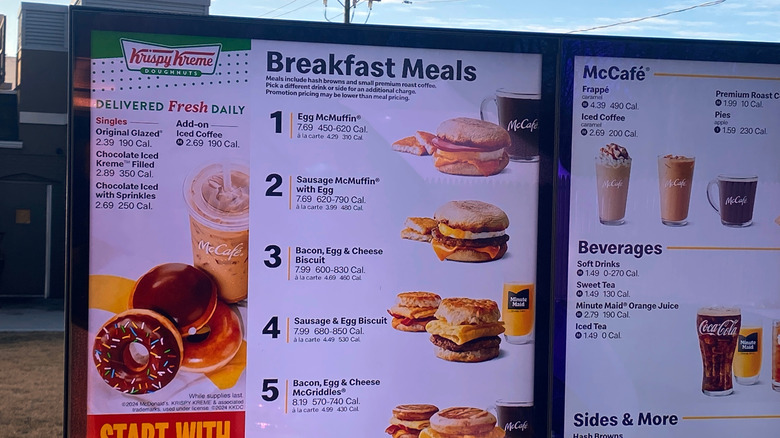
Unfortunately, the national rollout of Krispy Kreme's donuts at McDonald's showed the plan was ill-fated from the start. The first problem was the conviction that McDonald's needing a sweet breakfast option may simply have been unfounded. While the poor sales of the apple fritter and other choices were chalked up to being the wrong product, it has started to look like people simply aren't that interested in pastries from a burger restaurant. It also didn't help that Krispy Kreme donuts are at their best fresh and warm from the oven, hence the stores having a dedicated sign telling passersby that the donuts are currently hot. With piles of donuts delivered from stores to McDonalds and sitting around waiting to be ordered by only a few customers, the quality was hard to maintain.
Then, there was the problem of novelty. Sometimes, the initial excitement around a partnership vanishes after the fun of the new experience fades, and customers return to old habits. McDonald's initially advertised heavily in local markets where the donuts were gradually being rolled out, and that may have inflated the sales numbers. While McD's ads succeeded at first, once it withdrew and focused on other things, awareness of the partnership dropped, and the initially high sales fell along with it. Unfortunately for Krispy Kreme, those high sales were necessary to fuel the partnership going nationwide.
The expense of supplying donuts to McDonald's was too much for Krispy Kreme
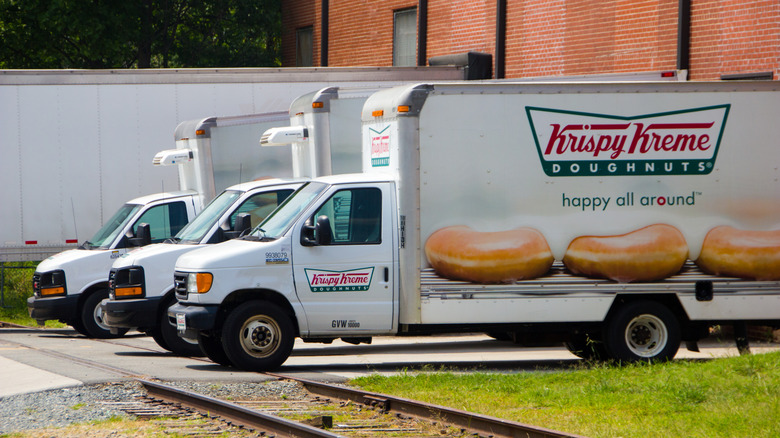
It was actually Krispy Kreme that killed the deal, although the break-up was mutual. The donut chain had hailed the opportunity initially, as it had been dealing with faltering sales and Krispy Kreme franchise bankruptcies were leading to closures. Selling its wares in McDonald's was forecast to triple sales. But that kind of expansion was too sudden, so Krispy Kreme buckled under the weight.
At the time, Krispy Kreme had 377 locations nationwide, while U.S. McDonald's locations totaled — and you might immediately see an issue here — 13,500. Krispy Kreme is also more regional, with most locations clustered in the South and California, while some big states, like New York, had no locations at all. This meant a major investment to match the production Krispy Kreme would need. Things fell apart quickly, with McDonald's franchisees reporting missed shipments and irregular service. The pressure was so high, one Krispy Kreme location was reportedly supplying 100 McDonald's. That might have been justified if sales were strong, but the second they dipped, it spelled disaster. The expense of trying to expand into McDonald's meant Krispy Kreme lost tens of millions of dollars in the first quarter of 2025. Investors revolted, even suing the company, claiming it had misled them on the success of the deal.
And that was the end of donuts at McDonald's. Krispy Kreme simply could not afford the effort to supply them, and the rollout stopped at only 2,500 stores, less than 20% of all McDonald's locations. It was a swing from a company desperate for success, but it wasn't big enough to pull off, and it turns out McDonald's didn't need the donut business that much anyway.