

Growing Tomatoes? This Eco-Friendly Flavor Booster Is Already In Your Yard
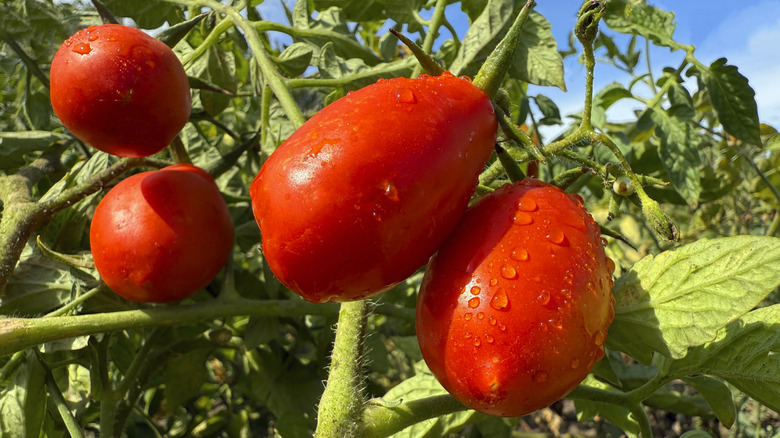
Tomatoes are one of the first vegetables that many beginner gardeners start to grow at home. The plants are forgiving, they tend to produce high yields in small spaces, and they can thrive just about anywhere as long as there is enough sunlight. That being said, nothing in gardening is guaranteed, so it's always best to try to show every plant as much love as you can. One way in which you can do that is to supplement them with commercial fertilizers. Better yet, use the nettles that are already growing in your yard to make a tea that'll naturally boost flavors.
Most of us are conditioned to stay away from nettles, but the stinging weeds are actually packed with micronutrients and minerals (like cobalt, selenium, and sulfur) that are great for plant cell growth. Stinging nettles also contain nitrogen, magnesium, and calcium, which are all important for plant growth. Nitrogen is essential for the development of tomato plants, while calcium is needed for water movement, among other things, and magnesium is required for energy.
If you incorporate nettles into your tomato garden, those nutrients will transfer over, leading to healthier plants with higher yields and more flavorful fruit. Nettles can also deter pests and even protect your tomato plants from disease. It's better to avoid adding them directly, though, and instead make nettle tea. It's just one of the best hacks for growing the juiciest tomatoes, and it's completely free.
How to make nettle tea for the garden
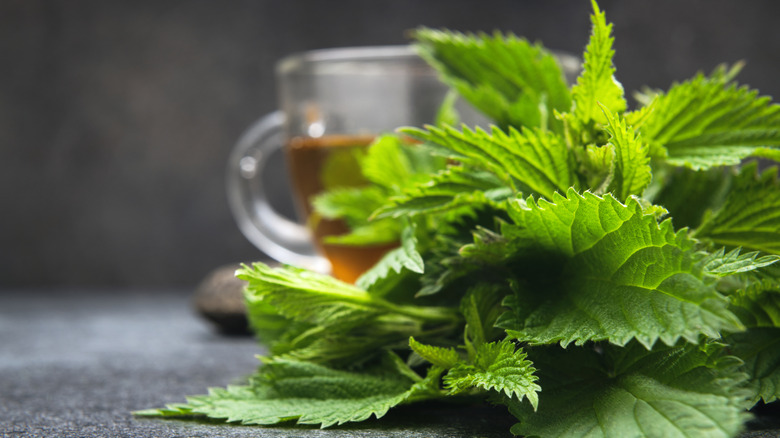
Home gardeners have been adding nettle tea to tomato plants (even leeks, cucumbers, and zucchini) for years. The reason many don't recommend adding them directly is because nettles are very potent, so it's best to dilute them to avoid any damage to the plants.
To make the tea, gather up some nettles from your yard and cut them up, making sure to wear gloves to avoid getting stung. Next, wrap the pieces in cloth and add to a bucket of water. The measurements don't need to be exact — something around a pound of nettles per gallon of water will do. Leave the mixture steep for a few weeks and then dilute it further in a spray bottle following a 1:10 ratio. You'll know the nettle tea is ready when the color of the water has darkened and it's stopped bubbling.
Apply the liquid fertilizer to the base of your tomato plants or the underside of the leaves every few weeks, but only until they begin to flower. Otherwise, it could cause too much foliage to grow around the fruit. If you apply nettle tea to the leaves, double the amount of water you use, and add a little liquid detergent so it sticks better. This baking soda trick can help tomatoes, too. You can even boost the flavor of fresh tomatoes further after harvest — though applying nettle tea should help them along.